Table Of Content
h1, h2
Compare the 10 best influencer reporting tools in 2026 by what they report, how they track sales and what they cost, plus what every influencer report should include.


Table Of Content
Influencer reporting is how you prove a campaign worked. Screenshots of likes don't convince a CFO or a client. A good report shows what creators posted, how many people saw it, what it cost and what it sold.
The problem is that pulling that data together by hand takes hours: chasing Stories before they disappear, copying metrics into spreadsheets and matching discount codes to sales. Influencer reporting tools do it for you. For most brands and agencies, an all-in-one platform like Influencer Hero is the best fit, because reporting runs on the same data as your outreach, gifting and affiliate program.
We compared 10 influencer reporting tools on what they report, how they track sales and what they cost, using each vendor's public product and pricing pages (checked in November 2026). We haven't run hands-on tests of every tool, so treat this as a shortlist and see a demo of your top picks with your own campaign data.
Here's how the 10 tools compare at a glance:
Whatever tool you use, a strong influencer report answers five questions: what was posted, who saw it, how people reacted, what it drove and what it cost. These are the KPIs that matter most:
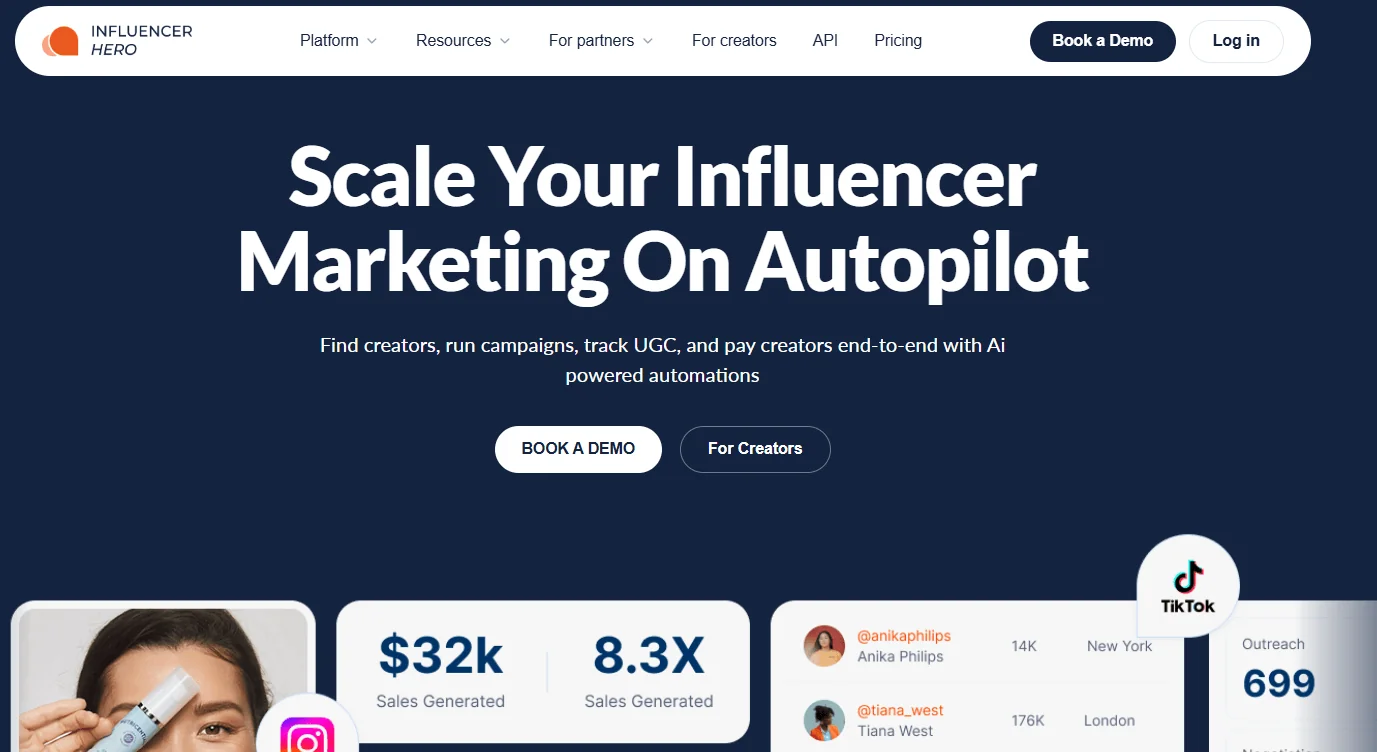
Best for: brands and agencies that want one report covering the whole program, from first outreach to final sale.
What it reports: Influencer Hero's reporting and analytics track contacts, responses, onboarded creators, posts, views, likes, clicks, referrals, sales, EMV, ROAS, CAC and impressions, plus gifting costs, products sent, payouts and cost per influencer.
Standout reporting features:
Limitations:
Pricing: Standard $649/month (200 UGC tracking), Pro $1,049/month (500) and Business $2,490/month (1,500).
Rating: 4.8/5 (G2)
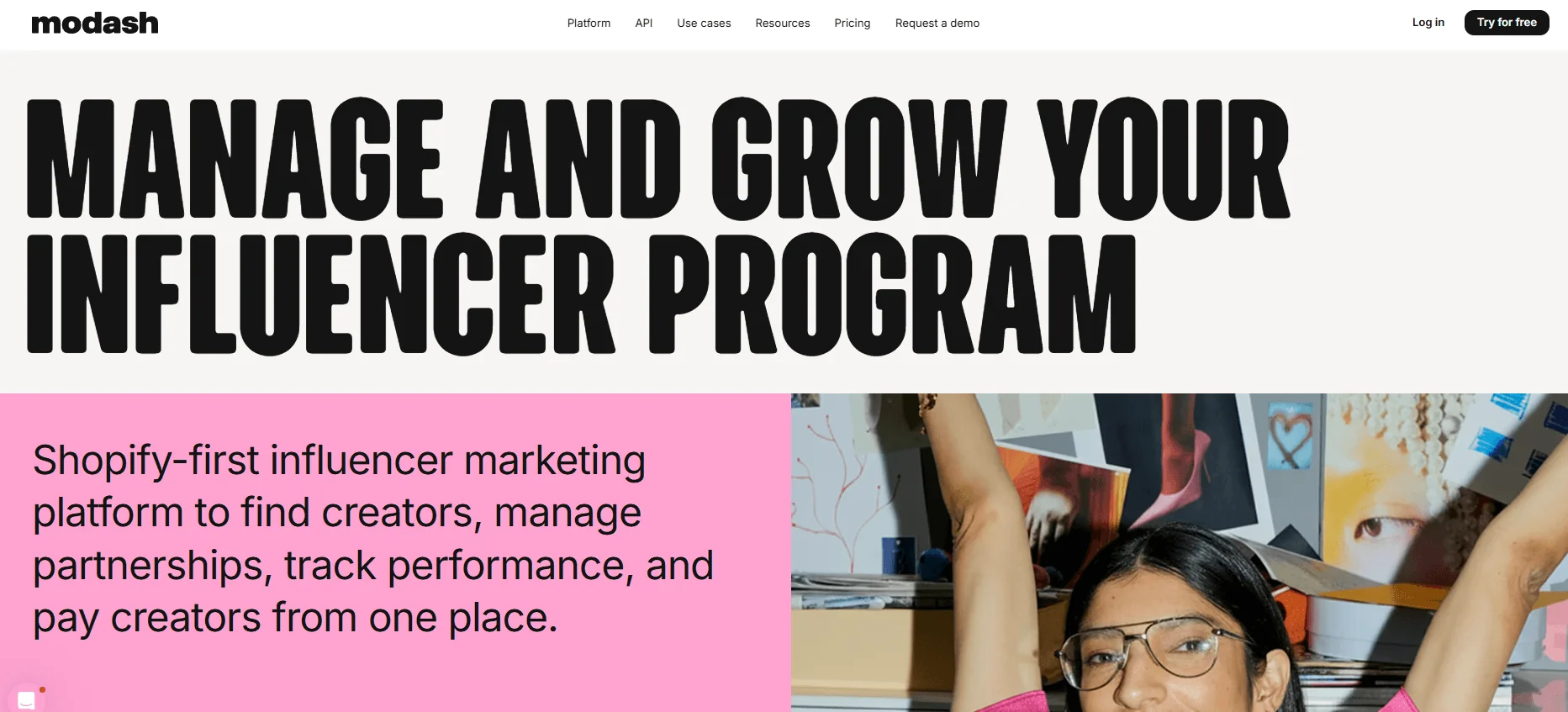
Best for: brands that want automatic campaign tracking with Shopify sales at a lower entry price.
What it reports: once creators are added to a campaign, Modash captures their branded posts, videos and Stories on Instagram, TikTok and YouTube (no Stories on TikTok). Reports cover views, clicks, engagement, EMV, CPM and ROAS, plus flags for posts missing ad disclosures. Through Shopify it tracks code and link sales and ROAS per creator. If you're comparing it with an all-in-one platform, see our take on Modash alternatives.
Limitations: data export and content downloads are only on Performance and Enterprise plans, and only public content is tracked (no Close Friends Stories or deleted posts).
Pricing: Essentials from $199/month and Performance from $499/month, billed yearly. 14-day free trial.
Rating: 4.9/5 (Capterra)
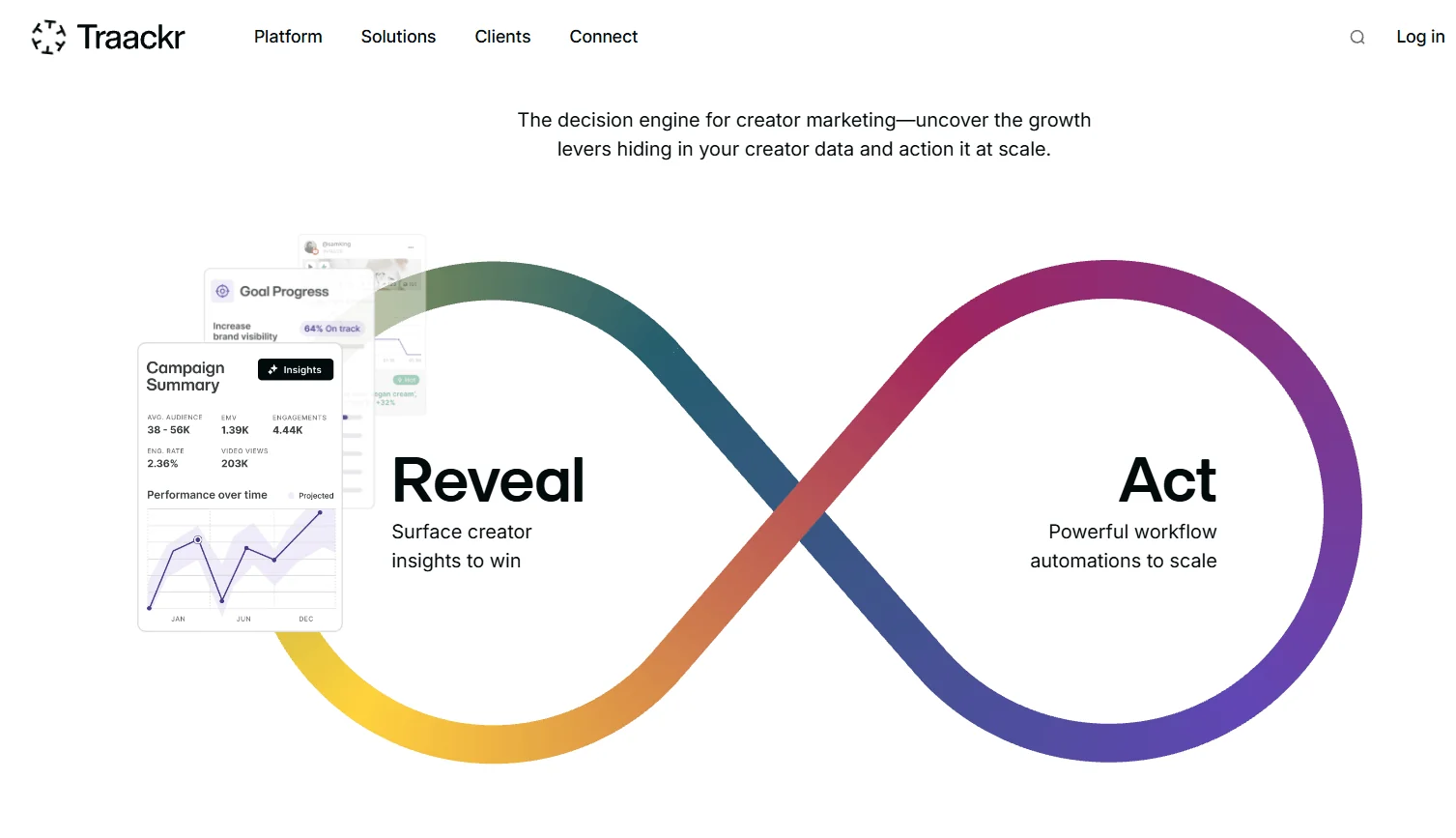
Best for: global brands that need benchmarking and consistent reporting across markets and teams.
What it reports: campaign performance across markets, benchmarks against competitors and past campaigns, and disclosure compliance monitoring. Traackr also offers performance forecasting and market performance benchmarks.
Limitations: enterprise pricing with no free trial, and some reviewers mention limited data export.
Pricing: custom.
Rating: 4.6/5 (Capterra)
Best for: brands that want campaign reports backed by audience-quality data.
What it reports: 35+ metrics, including reach, engagement, audience demographics, content quality, brand safety, CPE, CPM and ROI, with real-time monitoring during campaigns and post-campaign reports across Instagram, TikTok and YouTube. Its Audience Quality Score shows how much of the reach is real.
Limitations: no public pricing, and Story capture isn't described on its reporting page.
Pricing: custom. Free tools and demo versions of some features are available.
Rating: 4.6/5 (G2)
Best for: e-commerce brands that want campaign reporting tied to their store.
What it reports: campaign content and results, brand hashtags and mentions through social listening, and sales through Shopify, WooCommerce and Magento integrations, with affiliate links and codes per creator.
Limitations: no public pricing, modular plans make total cost hard to predict, and contracts run 12 months.
Pricing: custom. Third-party sources report modules from about $478/month.
Best for: large brands that want enterprise creator programs measured from awareness to commerce.
What it reports: Influential is Publicis Groupe's creator marketing solution. It combines Publicis's audience data with the Captiv8 platform (also owned by Publicis) and Influential's creator network, so brands can plan, activate and measure campaigns across the funnel, from awareness to commerce.
Limitations: built for large enterprise and agency-led programs, with no self-serve option or public pricing.
Pricing: custom.
Best for: brands that want reporting plus the option of managed campaign services.
What it reports: near real-time impressions, engagement, likes, comments and engagement rate for each creator post, plus clicks, conversions, sales and EMV at campaign and program level. The Services plan adds leadership-ready reporting.
Limitations: no public pricing and no free trial, and available metrics vary by social network.
Pricing: custom for all three plans (Platform, Platform + Services, Services).
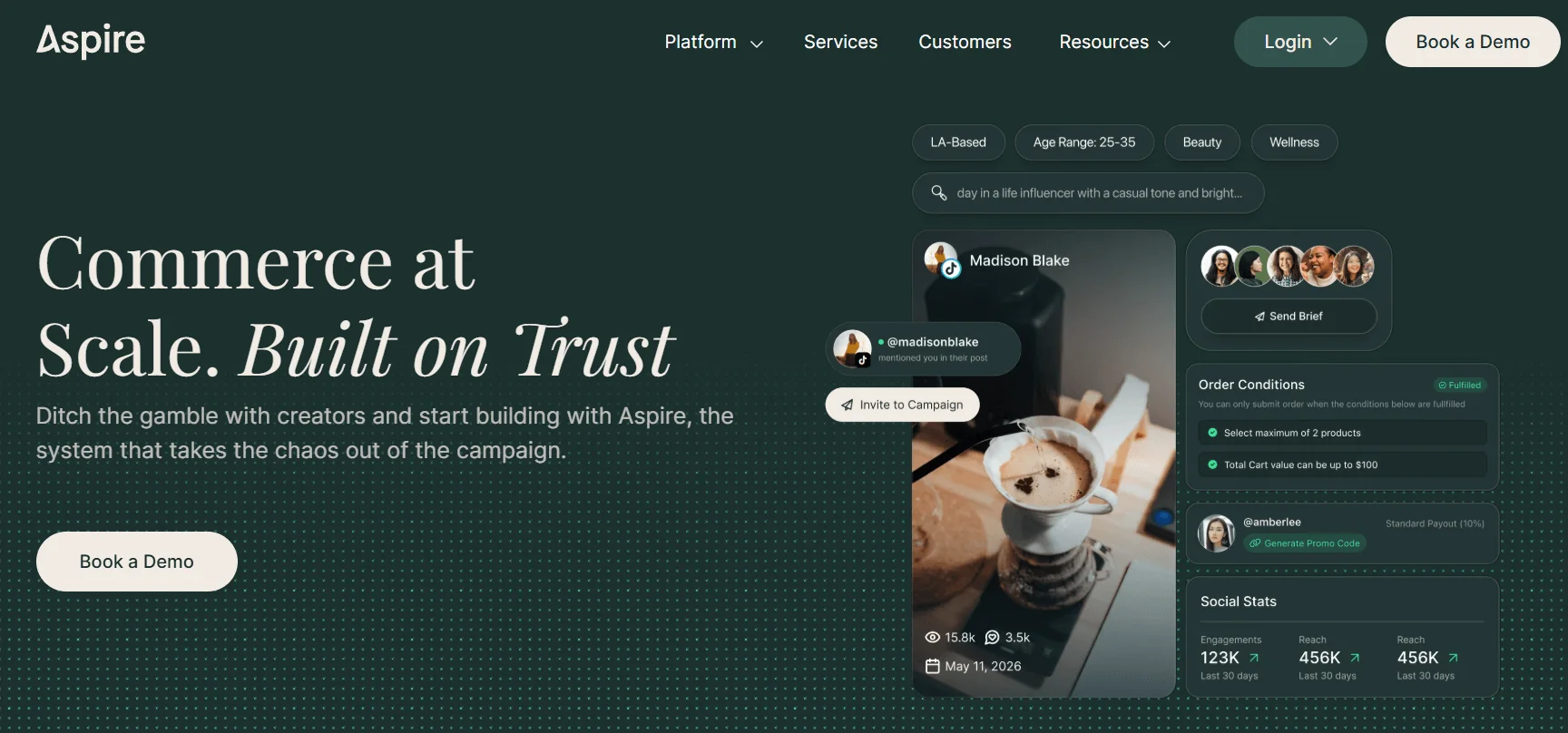
Best for: brands that want platform-verified content metrics to share with leadership.
What it reports: Aspire's Social Dashboard pulls data directly from the Instagram, TikTok, YouTube and Pinterest APIs, including reach, views, likes, comments, shares, saves, watch time and Story engagement.
Limitations: no dedicated ROI calculator or sales tracking described on its reporting page, and no free trial.
Pricing: Capterra lists a starting price of $2,499/month.
Rating: 3.5/5 (Capterra, 6 reviews)
Best for: Shopify brands that want creator results tied to their store on monthly plans.
What it reports: GRIN's 2026 plans connect to Shopify in one click (or by API for custom stores) and combine creator search, a creator marketplace and campaign results. Check reporting depth in a demo, since the pricing page focuses on search and marketplace limits. We also compare it in our guide to GRIN alternatives.
Limitations: social listening is still on the roadmap, and wallet deposits carry a management fee (20% on Free down to 5% on Scale).
Pricing: Free plan, Starter $200/month (30-day free trial), Growth $500/month, Scale $1,500/month, Enterprise custom.
Best for: enterprise brands and large agencies with complex reporting needs.
What it reports: unified reporting for paid campaign content and organic brand mentions, with enterprise data integrations, brand safety monitoring and audience authenticity checks.
Limitations: enterprise pricing, no free trial and longer onboarding.
Pricing: custom.
Rating: 4.7/5 (Capterra)
Whether you use a tool or a template, this structure works for most campaign reports:
Send a short version weekly while the campaign runs and a full report at the end. Most teams share monthly reports with clients and a deeper review every quarter.
A reporting tool shows you the numbers. Someone still has to turn them into decisions: which creators to scale, which content to boost and where to move budget.
That's where NC Media comes in. We're a full-service influencer marketing agency: we plan, run and report on creator campaigns end to end, with clear reporting on reach, content and sales. Book a call to see how we'd report on your program.
The best influencer reporting tool is the one that answers the questions your team or clients actually ask. For benchmarking, Traackr and CreatorIQ are strong enterprise picks; for audience quality, HypeAuditor; and for automatic tracking with Shopify sales on a budget, Modash.
If you want one report that connects outreach, content, gifting costs, sales and payouts, Influencer Hero is the most complete option on this list.
FAQ