Table Of Content
h1, h2
The 7 best AI marketing tools for D2C brands in 2026, from creator automation to AI search, email, attribution and creative, with real pricing for each.


Table Of Content
Every marketing tool now claims to have AI. Only a few use it to take real work off your team's plate.
For D2C brands, the AI that matters handles the repetitive, high-volume jobs: emailing hundreds of creators, writing product content, segmenting customers, and figuring out which channel actually drove the sale.
We picked seven tools that cover the full D2C growth stack: creators, AI search, email, attribution, content and creative. Each one earns its spot with AI features that save hours every week, not just a chatbot bolted onto the dashboard.
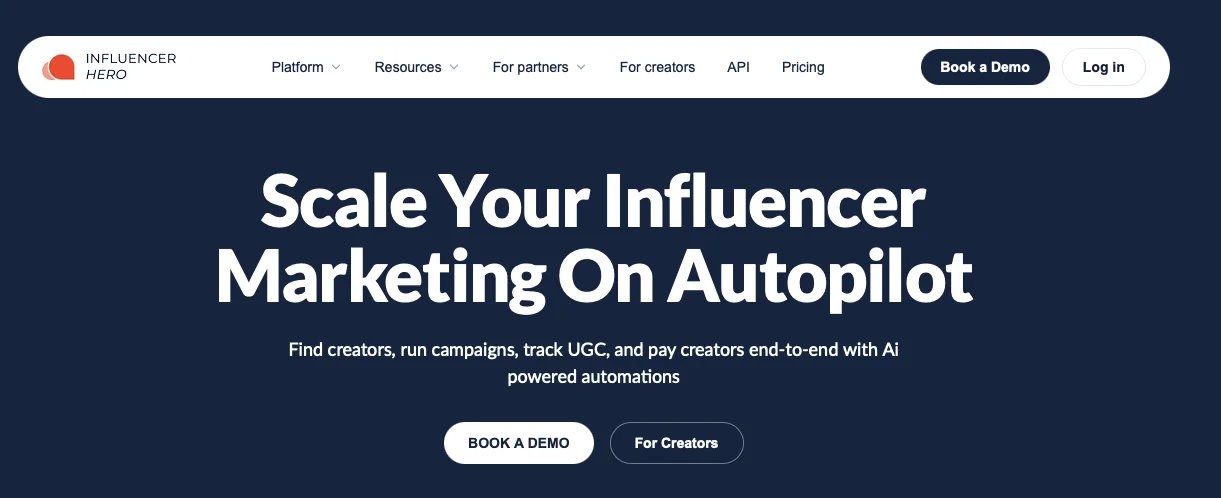
Best for: D2C brands running gifting, affiliate and UGC programs with hundreds or thousands of creators.
Influencer Hero is an all-in-one influencer marketing platform that automates the whole creator workflow, from discovery to payouts. It covers Instagram, TikTok and YouTube, and puts AI into every step where teams usually lose hours.
AI-assisted discovery and lookalike suggestions surface creators who fit your brand. Then AI takes over the conversations: personalized bulk emails, an AI Response Drafter that writes on-brand replies from your campaign rules, and AI Followup Suggestions that keep every thread moving.
Everything after a creator says yes runs on autopilot too:
The numbers: Standard costs $649/month (up to 1,000 reachouts), Pro $1,049/month (5,000) and Business $2,490/month (10,000). Quarterly billing saves 20% and annual billing saves 30%. It holds a 5.0/5.0 (Capterra) rating.
The honest caveat: there's no free trial, and it's expensive for smaller brands. For D2C brands that want to scale creator marketing without growing the team, it's the most complete option on this list.
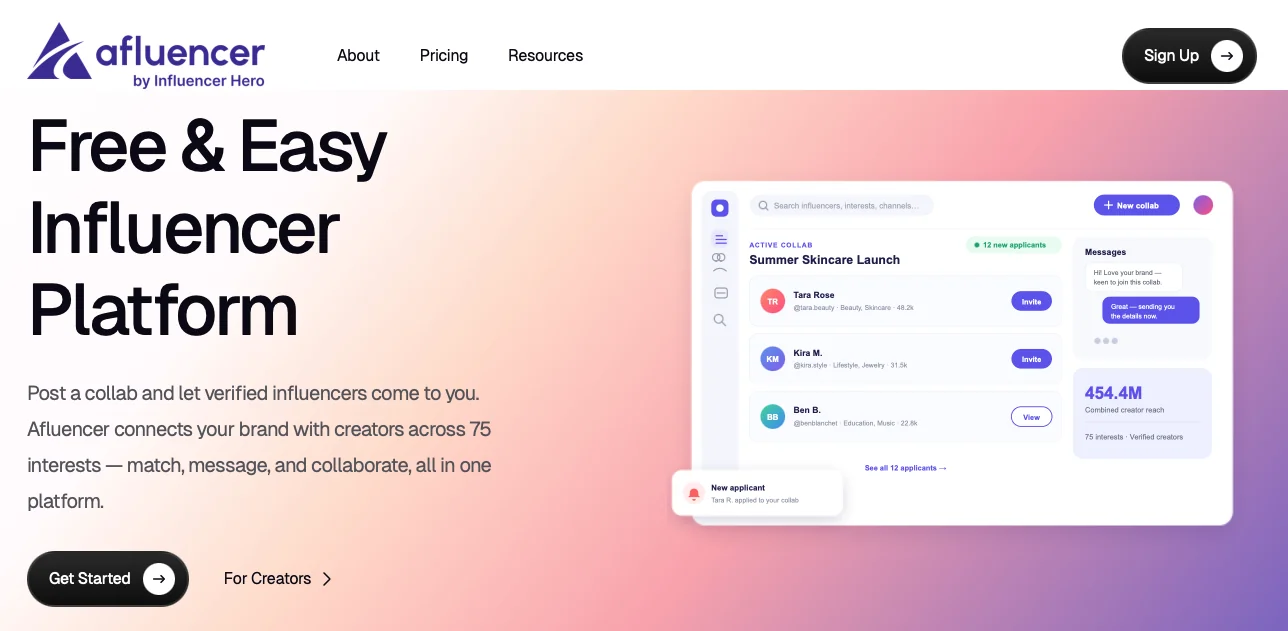
Best for: Brands that want creators to come to them instead of running cold outreach.
Afluencer flips influencer marketing around. Brands post a Collab describing the product and the offer, and verified creators apply. You review applicants and pick the best fits, with no cold emails required.
Its AI layer helps both sides. CreatorGPT gives creator strategy advice, and the Afluencer Collab Finder matches creators to live brand opportunities. The result is a steady flow of relevant applicants for your campaigns.
The numbers: Brands can post a Collab for free. The Marketplace plan costs 649/month) and Pro ($1,049/month) add outreach, product send-outs and influencer payments. See the Afluencer pricing page for details.
The honest caveat: the inbound model works best with an appealing product or offer, since creators choose which Collabs to apply to. For small brands testing influencer marketing on a budget, it's the easiest way to start.
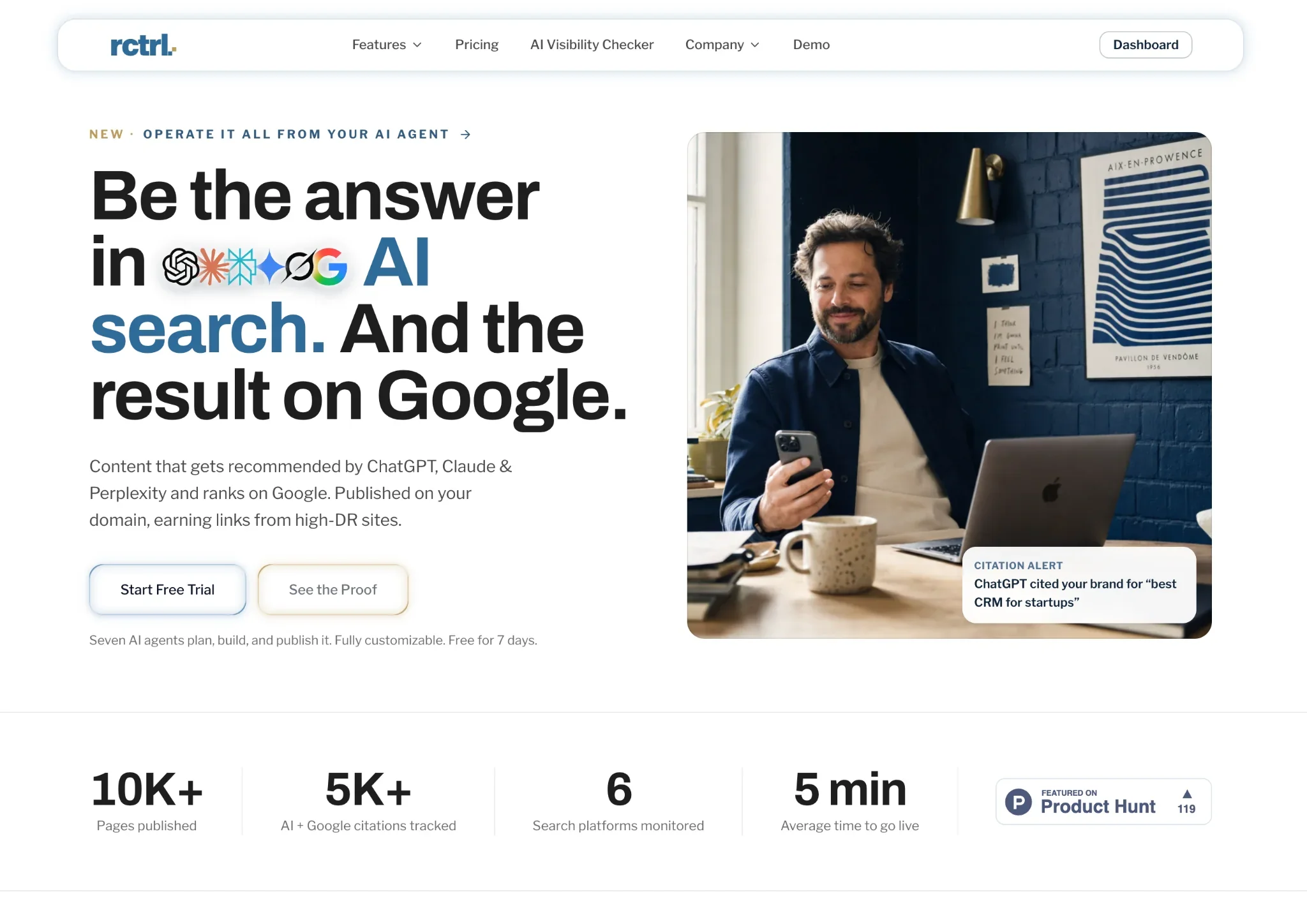
Best for: D2C brands and lean marketing teams that want to grow organic and AI search traffic without hiring an SEO agency.
RankControl is an AI SEO platform that helps brands get cited in AI answers and rank on Google. Shoppers now ask ChatGPT and Google AI Mode what to buy, so showing up in those answers is a new acquisition channel.
RankControl tracks how six AI engines (ChatGPT, Claude, Perplexity, Gemini, Grok and Google AI Mode) answer the questions in your market. It flags when your brand or a competitor gets cited and rates each mention as positive, neutral or negative. Keyword by keyword, it also shows whether Google's AI Overview appears and whether your page is one of its sources.
Its AI content engine then closes the gap. Specialized AI agents research, draft and publish brand-matched articles as native posts on Shopify, WordPress, Webflow, Framer and more. Content Refresh flags pages when rankings or AI citations drop and rewrites them once you approve.
The numbers: One all-inclusive plan starts at $400/month, with a 7-day free trial. Annual billing gets you two months free. Managed backlinks and a dedicated strategist are optional add-ons.
Auto-publish is off by default, so nothing goes live without your sign-off. The honest caveat: there's no cheaper tier for testing, and backlinks cost extra. For brands that would otherwise pay an SEO agency, it's the leaner way to win AI search.
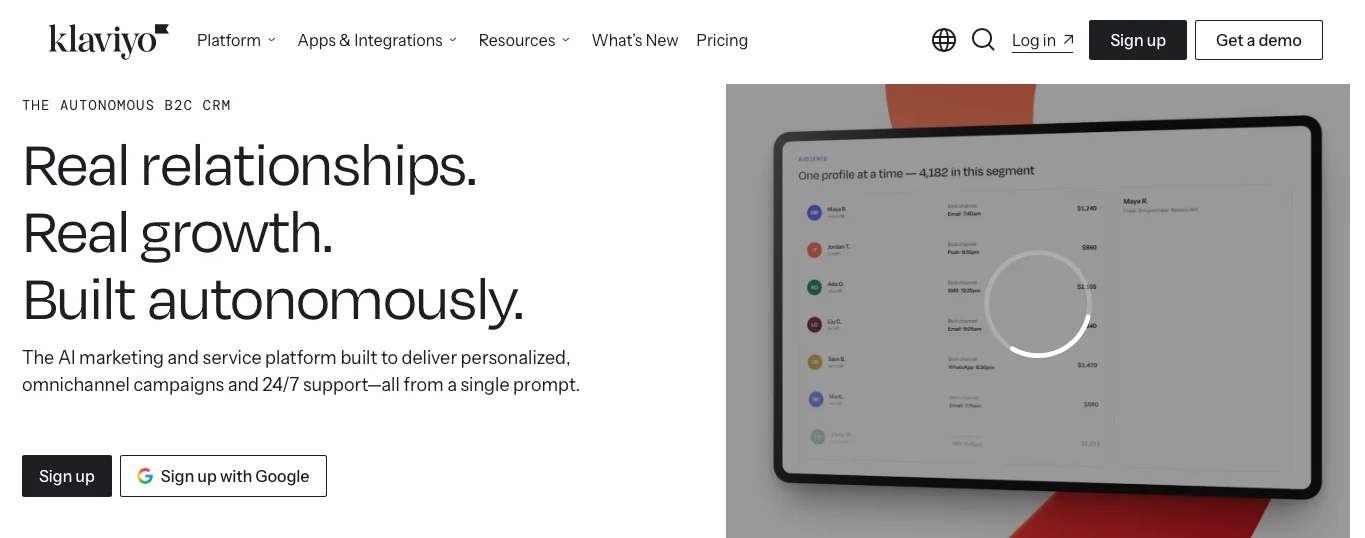
Best for: Shopify and D2C brands that want email and SMS driven by customer data.
Klaviyo is the go-to email and SMS platform for D2C brands, and its AI sits on top of your store data. Predictive analytics estimates each customer's lifetime value, churn risk and next order date. You can build segments and flows around those predictions, like a win-back flow that triggers before a customer lapses.
The numbers: The free plan covers up to 250 active profiles and 500 email sends per month. Paid email plans start at $20/month for up to 500 active profiles, and SMS runs on a separate credit budget. Pricing scales with your active profile count.
The honest caveat: costs climb as your list grows, whether you email those contacts or not. For brands built on repeat purchases, it's still the standard.
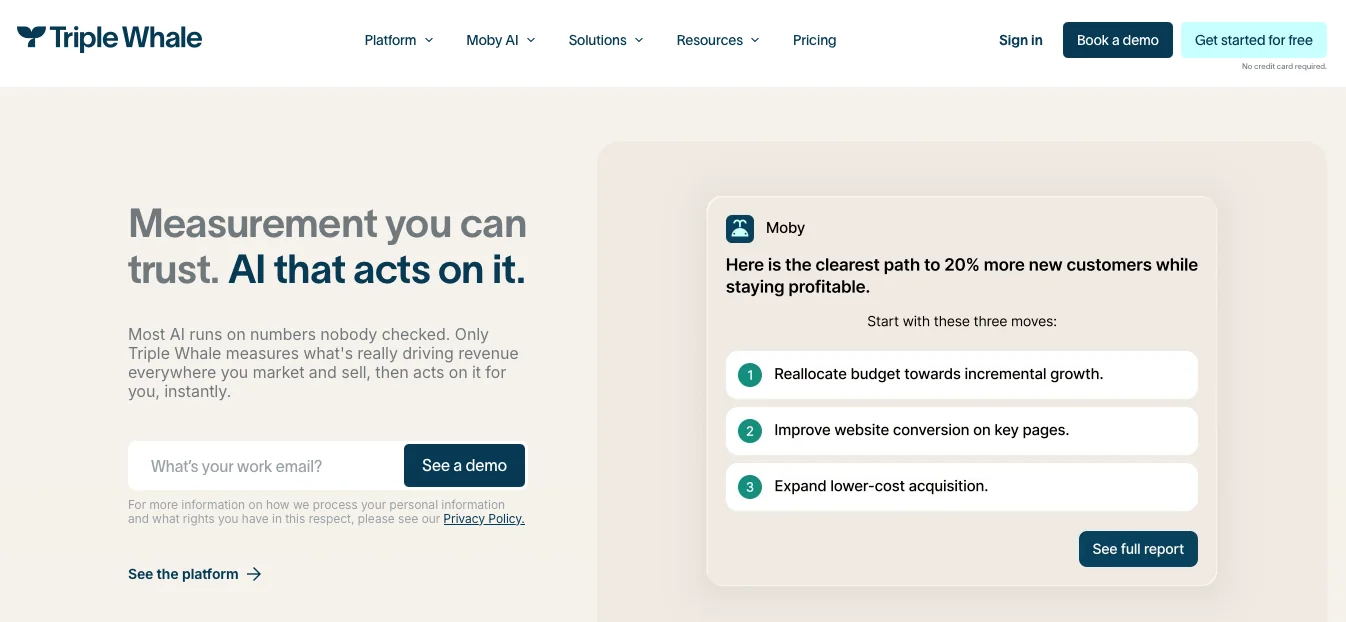
Best for: Shopify brands that need to know which channels actually drive sales.
Triple Whale combines multi-touch attribution with an AI analyst called Moby. Its Triple Pixel tracks the customer journey across Meta, Google, TikTok and more, including influencer and affiliate sales. You can ask Moby questions about your data in plain English and get reports back in seconds.
On the Automate plan, Moby goes further. It runs scheduled automations, takes approved actions on connected ad platforms and powers a Creative Studio for ad assets.
The numbers: Triple Whale offers a free plan. Paid plans (Foundation, Automate and Enterprise) are quote-based and vary with your GMV, with a 12-month minimum commitment. Get a quote before you budget.
The honest caveat: no public pricing and an annual contract make it a bigger commitment than most tools here. For brands spending heavily on paid ads, the attribution clarity usually pays for itself.
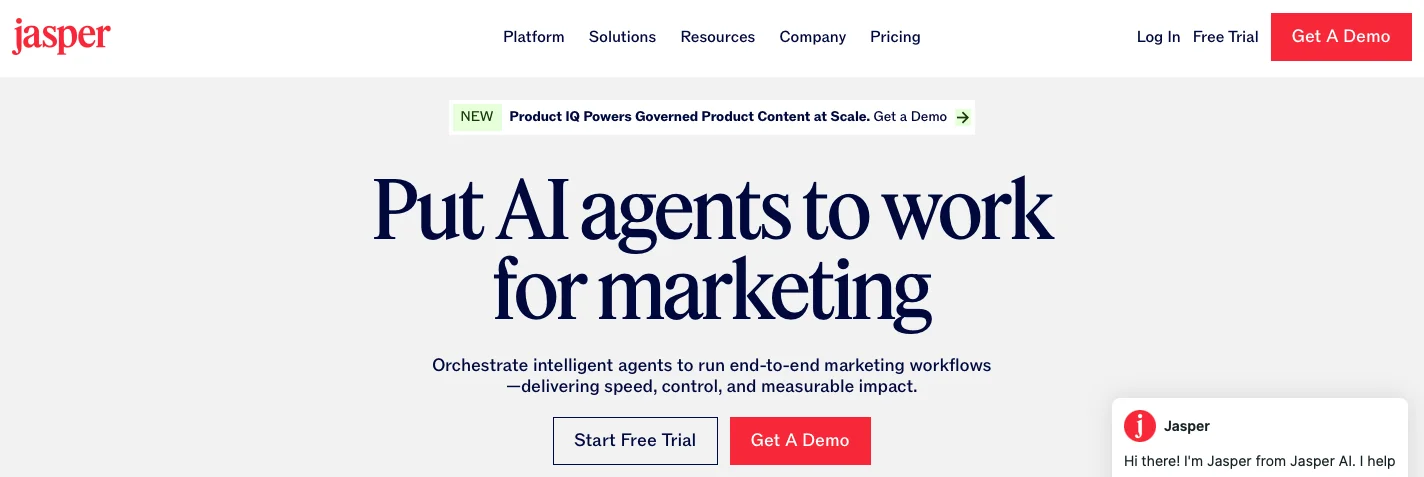
Best for: Marketing teams producing a high volume of on-brand copy.
Jasper is an AI writing platform built for marketing teams, not general chat. Brand Voices and Knowledge assets keep every output in your tone with accurate product details. That works across product pages, ad copy, emails and blog posts.
The numbers: The Pro plan costs $69 per seat/month, or $59 per seat/month billed annually, with a 7-day free trial. It includes 2 Brand Voices and 5 Knowledge assets. Business pricing is custom and adds Jasper Agents, API access and unlimited Brand Voices.
The honest caveat: per-seat pricing adds up for bigger teams, and output still needs a human edit. For brands that publish a lot of copy, it keeps everything consistent.
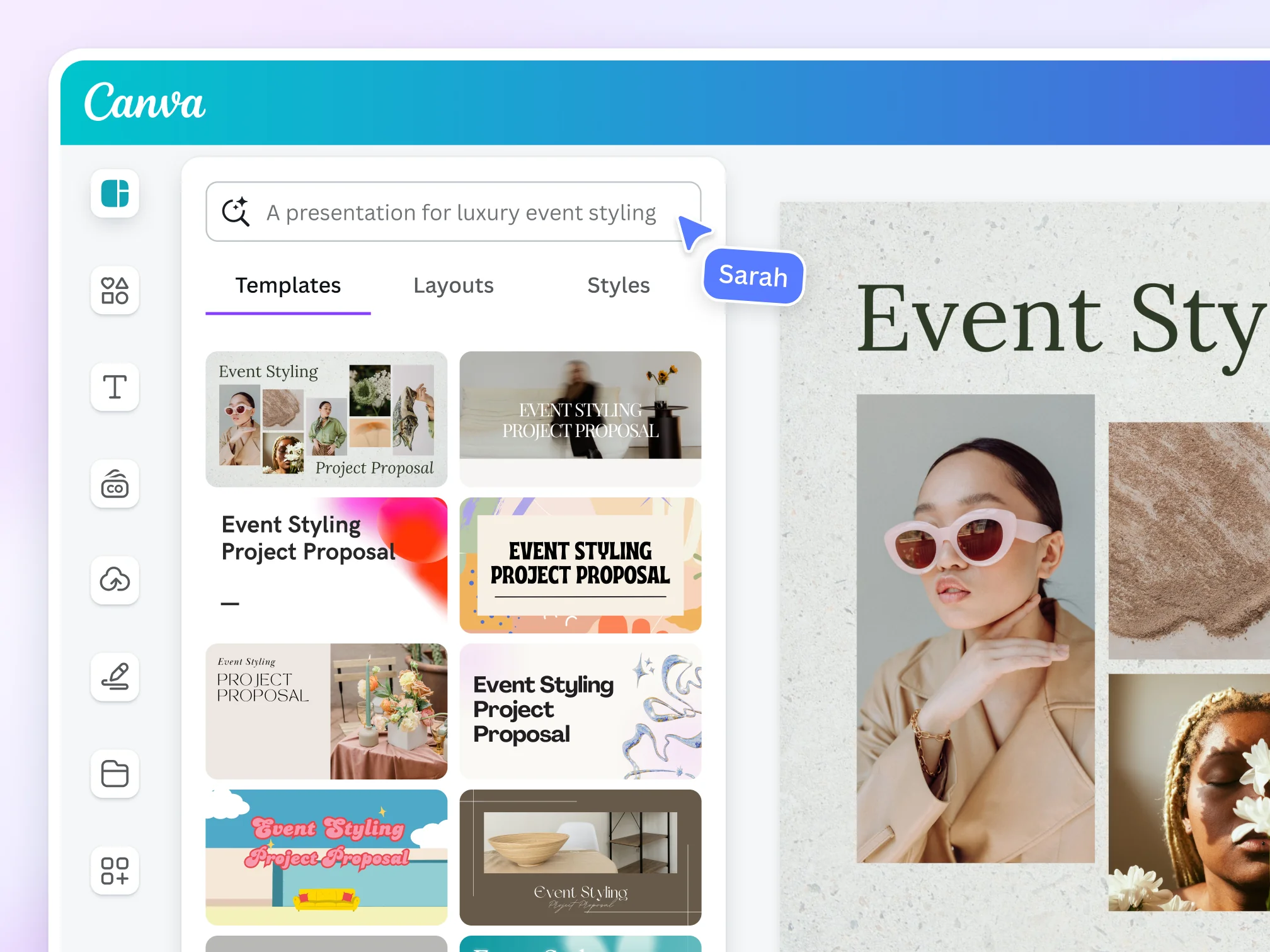
Best for: Small teams that need ad creatives and social content fast, without a designer.
Canva needs no introduction, but its Magic Studio AI makes it a real marketing tool for D2C brands. You can generate images, remove backgrounds, resize one design for every placement, and turn product shots into ad variations in minutes. Brand Kit keeps your fonts, colors and logos consistent.
The numbers: The free plan includes 50 AI credits per month. Pro costs $18/month or $180/year for one person and includes 500 AI credits per month. Business costs $25/month per person and adds shared brand assets and collaboration.
The honest caveat: AI credits are shared across features, so heavy users can run out mid-month. For quick, on-brand creative, it's the best value on this list.
You don't need all seven. Start with the channel that drives most of your revenue, then fill the gaps:
• Creators and UGC. If influencer content drives your sales, start with Influencer Hero for scale or Afluencer for an affordable inbound option.
• Search and AI visibility. If shoppers find you through Google or ChatGPT, RankControl covers both tracking and content.
• Retention. If repeat purchases drive your margins, Klaviyo's predictive segments are the priority.
• Attribution. If you spend heavily on paid ads, Triple Whale shows which channels deserve the budget.
• Content and creative. Jasper and Canva speed up copy and design for teams without in-house writers or designers.
Most D2C brands get the biggest lift from pairing one acquisition tool with one retention tool, then adding the rest as they grow.
AI marketing tools are no longer optional for D2C brands. The right stack lets a small team run creator programs, content and campaigns that used to take a full department.
Start with the one or two tools that match your biggest growth channel, and add more once those are running smoothly.
Rather not manage the tools yourself? NC Media runs influencer campaigns end to end, from finding creators to reporting results.
FAQ






.png)