Table Of Content
h1, h2
Keymailer pricing now lives on a different website under a different brand name — here's every current tier and service fee in one place, plus what a full launch actually costs once the subscription stops being the main expense.


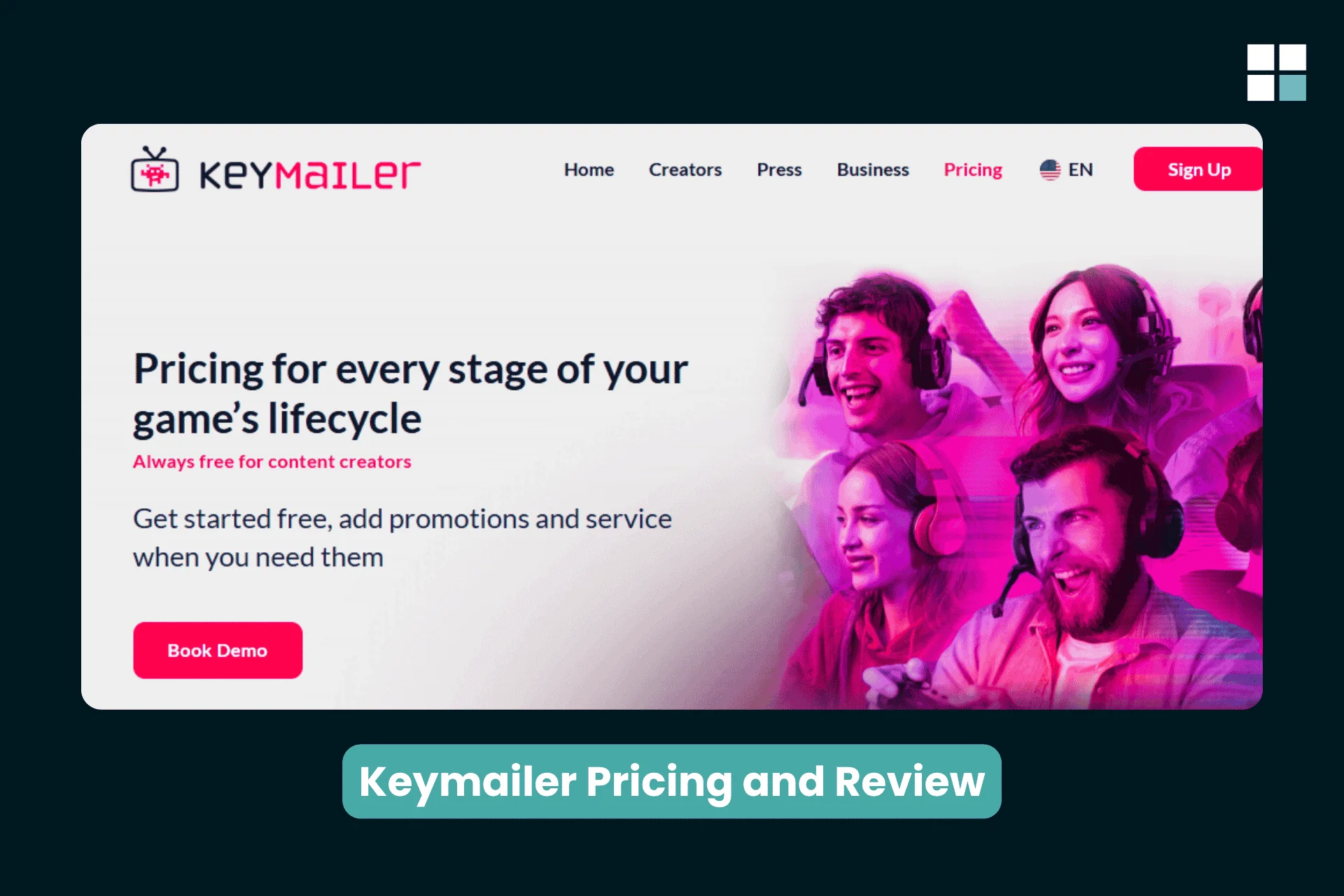
Table Of Content
Keymailer pricing starts free and runs to $299/month, with plans at $24.99, $49 and $99/month for a single game. Promotional Boosts start at $249 and managed campaign services run $749/month on top.
There's a catch worth knowing before you go looking. Keymailer's own pricing page at keymailer.co no longer lists a single price — the publisher side rebranded to Partnier, and all pricing moved to partnier.com. If you searched "Keymailer pricing" and landed on a page with no numbers, that's why.
Below is every current tier and service fee in one place, what a realistic launch actually costs once you add the pieces up, and an honest read on where this platform fits versus a full-service agency.
Keymailer sells four subscription Plans, then layers Boosts, Subscriptions and professional services on top. Plans are priced per game, with a much better rate once you're running five or more titles.
A fair use policy caps the 5+ pricing at 20 active games; beyond that you're into enterprise territory.
The free tier is genuinely usable, not a demo. You get the encrypted code vault, campaign workflow and coverage tracking — the limit is that inbound requests from Keymailer's own creator network are capped at 10 a month. Their pricing table cheekily describes the campaign management app as being like GRIN and Aspire, but free.
This is where the network actually opens up. Your game gets recommended to influencers who cover similar titles, which Keymailer positions as a Steam Discovery Queue equivalent for creators.
The upgrade is about measurement rather than reach. If you're running enough coverage that manually reviewing streams is eating hours, the AI analysis and automatic competitor benchmarking are the reason to move up.
Built for publishers running ongoing creator relationships rather than one launch. At $299/month for a five-plus-game catalog, this is inexpensive relative to almost anything else in influencer software.
Boosts — from $249. Bundled promotion packages: newsletter insertions to the influencer and press lists, Discover page ads, native social ads, outreach blasts and scouting. Keymailer claims up to 50% off versus buying those promotions individually.
Subscriptions — quote only. Plans, Boosts and services stitched into a launch roadmap across a 9+ month, 6-month, 3-month or quick-launch runway. Claimed to save up to 25% versus buying the components separately.
That last line is the most interesting number on the whole page. Most agencies and platforms take a percentage of creator spend; Keymailer charges a flat $99 per contracted influencer with no commission, minimum five. So the service fee on a five-creator sponsored campaign is $495, whatever you pay the creators.
Keymailer also runs a price guarantee: they'll match any comparable service and beat it by 10%.
The subscription is the cheapest part of Keymailer, and it's easy to under-budget as a result. Here's a realistic three-month indie launch at published list prices:
The software is $147 of that — about 4% of the total. Creator payments for the sponsored campaign sit on top of all of it.
You can absolutely run leaner. A solo dev on the Base Plan doing their own outreach spends $75 over three months and nothing else. But the "$24.99/month" figure that circulates in comparison articles describes the least expensive thing on the invoice, not the program.
One pricing note: older comparison posts still list Keymailer tiers as "Indie Special" at $24.99/month and "Studios" at $99/month with annual rates of $149 and $999. Those names are retired. The current structure is Free/Base/Insight/Program with the per-game and 5+ game split above. Several widely-cited roundups also still recommend Woovit as an alternative — it shut down in December 2024.
Keymailer is the largest game key distribution and creator outreach platform in the industry, connecting publishers with 60,000+ vetted influencers and 275,000+ creators, plus 2,500+ accredited press outlets through its sister portal Game.Press. It's used by Warner Bros. Interactive, Xbox Game Studios, Konami, Bandai Namco, Bethesda, Team17 and tinyBuild among roughly 20,000 organizations. The model is inbound: you list your game, creators request keys, you review and approve, and the platform distributes codes and tracks coverage automatically.
This is where the credibility check gets thin. Keymailer holds a 5.0 on G2 — from exactly one review, posted in August 2022. For a platform serving 20,000 organizations, that's effectively no third-party review base at all.
Sentiment has to come from the community instead, and it's split along a consistent line. Publishers value the platform for filtering: developers routinely point streamers to their Keymailer page specifically so they can separate real requests from fraudulent ones.
The recurring criticism is the flip side of the same design. Because the barrier to creating a creator account is low, publishers report wading through requests from channels that haven't streamed in years, and one indie dev noted waiting over a week just for account approval. Volume of requests isn't the same as quality of coverage.
Let's be direct about this one: NC Media is not a Keymailer replacement. If you're a game publisher who needs secure key distribution, press portal access and fraud screening, Keymailer is purpose-built infrastructure and no consumer influencer agency substitutes for it.
The comparison is worth making anyway, because these two things solve adjacent problems. Keymailer gets your game in front of creators who might cover it. NC Media builds paid creator campaigns with revenue accountability attached.
When Keymailer wins. For any game launch, this is the default and it should be. Free key seeding with fraud screening at $0–$99/month is an unbeatable cost-to-value ratio, and no agency is going to reproduce the inbound demand of a 60,000-creator network that already opts in to request games.
When NC Media wins. Two situations. First, gaming-adjacent consumer brands — hardware, displays, peripherals, energy and supplements, apparel — that need paid creator campaigns rather than key seeding. NC Media has run 50K+ influencer partnerships across eight years for brands including TCL, Kaged, Under Armour, Lululemon and Decathlon, delivering an average 8X+ ROAS increase and -52% CAC reduction.
Second, publishers whose organic seeding has plateaued. Coverage volume is a launch-week metric; when you need creators posting on a schedule you control, with content you can license into paid, that's a different discipline — and it's what an agency is accountable for.
The measurement gap. Keymailer's tracking is excellent at telling you what coverage happened. It's not built to tell you what that coverage returned in revenue, because organic key seeding doesn't have a clean attribution path. If the question your leadership is asking is "what did we get back," a channel measured in ROAS and CAC answers it differently than one measured in views.
For game publishers and developers, yes, and it isn't close. The free tier alone solves key fraud, which is a real and expensive problem, and the paid tiers are cheap enough that the decision barely needs a business case. At $299/month for a five-plus-game catalog with AI coverage analysis and creator programs, the software is priced well below what comparable general influencer platforms charge.
Where it falls short is outbound and accountability. The model is inbound by design, so you're largely working with creators who came to you — which skews toward whoever is browsing, not necessarily whoever fits. And once you move past organic seeding into paid campaigns, the costs climb fast: $749/month management plus $249+ Boosts plus creator payments puts you in agency budget territory with a self-serve service layer.
If Keymailer's inbound model or gaming-only focus isn't the right fit, these three cover adjacent ground.
The contrast is direction of travel. Keymailer waits for creators to request your game; Influencer Hero is built to go find them, sequence outreach and track revenue per creator. It's not a games platform, so it won't handle key vaults or press portals — but for gaming hardware, peripherals and lifestyle brands targeting the same audience, it does the job Keymailer isn't designed for.
Lurkit runs a similar creator-network-plus-key-distribution model with a stronger emphasis on paid campaigns and creator programs. Worth a quote if Keymailer's inbound pool isn't surfacing the right channels for your genre, though the lack of published pricing makes it harder to evaluate before a sales call.
This isn't a Keymailer replacement so much as the missing complement — it hands you a channel list and emails, and you send keys from your own inbox. For a solo dev on Keymailer's free tier, pairing inbound listings with a cheap outbound list is a sensible way to run a launch without a subscription.
And if managing any of these yourself sounds like more than you want to take on, that's exactly where a full-service agency comes in — more on that below.
Keymailer is one of the better value propositions in influencer software, and the reason is that its core job — secure key distribution with fraud screening and coverage tracking — is available free and works. The paid tiers add reach and measurement at prices most tools can't touch. What's easy to miss is that the real launch budget sits in Boosts, managed services and creator payments, where a three-month campaign runs into four figures with the software making up about 4% of it.
If your influencer spend is heading toward paid campaigns and you need it measured as a revenue channel rather than a coverage channel, that's a different kind of partner. NC Media has spent eight years running exactly that for brands including TCL, Under Armour and Decathlon — with strategy, sourcing, negotiation and reporting handled, and accountability tied to ROAS and CAC.
If you're evaluating Keymailer and wondering whether a full-service agency might be a better fit, NC Media offers a no-commitment consultation. Book a call here.
FAQ






.png)