Table Of Content
h1,h2
Compare Influencer Hero vs Modash from an agency lens - covering influencer discovery, CRM, pricing, scalability, ROI tracking, and why Influencer Hero is the better alternative for agencies managing multi-client campaigns.



Table Of Content
When you’re managing influencer marketing campaigns at scale, having the right platform is essential. Influencer marketing tools like Modash are often discussed due to their strengths, particularly for eCommerce brands, but agencies working across multiple clients and markets need more flexibility. That’s where Influencer Hero comes in as the better alternative.
In this comparison, we’ll explore how Influencer Hero excels over Modash, focusing on influencer discovery, campaign management, scalability, and ROI tracking—features that make Influencer Hero the go-to choice for agencies running influencer programs at scale.
At NC Media Group, we manage a wide range of influencer marketing campaigns, from brand awareness initiatives to performance-driven strategies that focus on measurable sales and ROI.
For example, we helped TLC expand its influencer marketing efforts across multiple channels, refining their outreach, optimizing creator partnerships, and improving the overall ROI through data-driven campaign strategies.
Because we manage several brands at once—each with different goals, timelines, and collaboration models—we need a platform that can handle everything from product seeding and affiliate sales to paid partnerships and UGC for ads. All of this often happens in parallel.
From an agency perspective, this means prioritizing tools that are flexible, easy to manage at scale, and provide clear visibility across creators, campaigns, and performance. This focus on day-to-day efficiency—not just feature lists—is what shapes our comparison between Influencer Hero and Modash throughout this article.
Here’s a side-by-side comparison of how Influencer Hero and Modash perform on key factors that are critical for agencies managing influencer marketing programs:
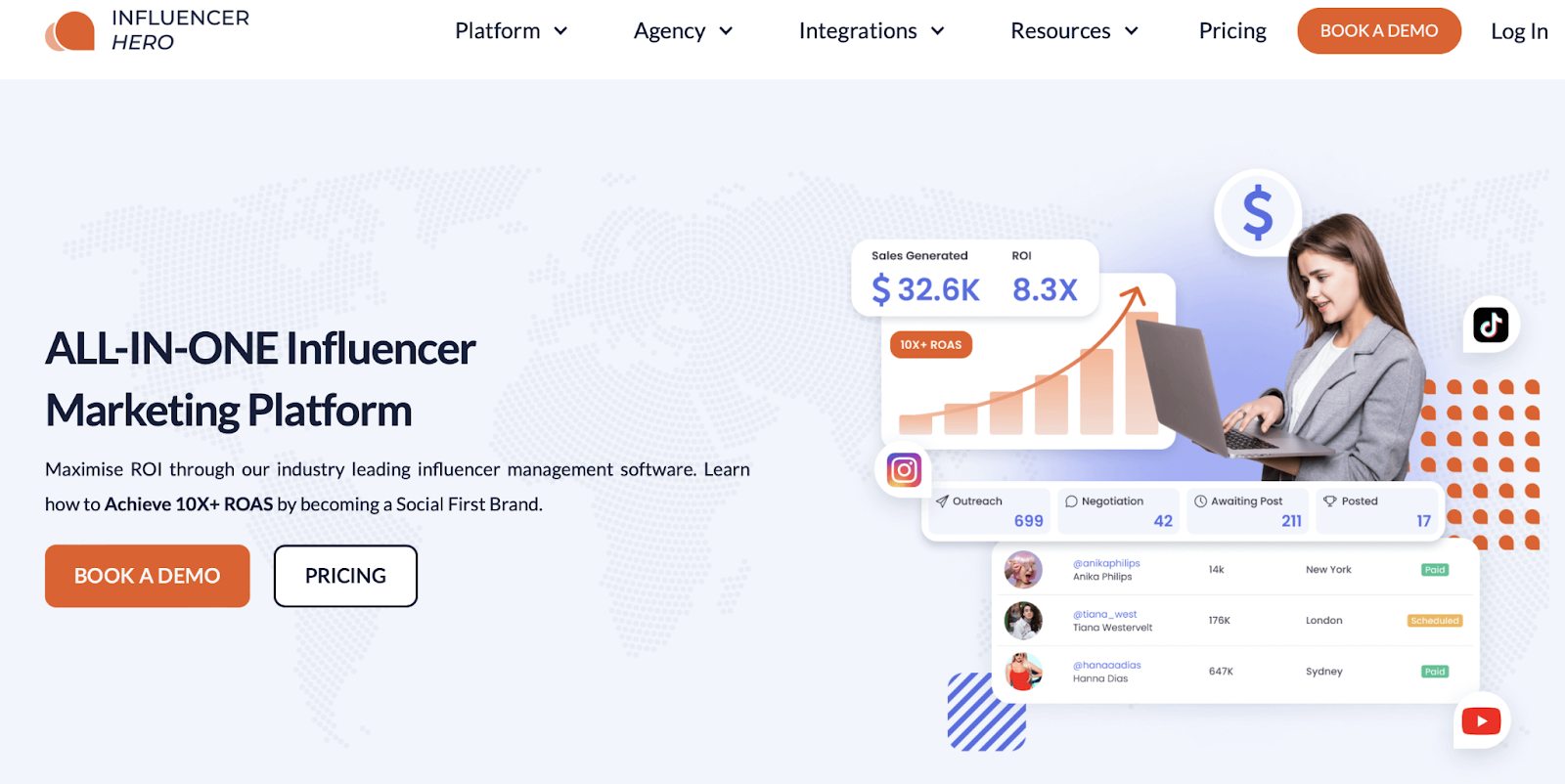
Influencer Hero is the best influencer marketing software designed with agencies in mind. Its CRM-first approach is built to manage high-volume campaigns and maintain relationships across multiple clients simultaneously. With an extensive creator database of 450M+ profiles, Influencer Hero supports not only Instagram and TikTok, but also YouTube, Facebook, Pinterest, and more.
The platform's ability to handle gifting, affiliate links, paid collaborations, and UGC workflows all in one tool is critical for agencies running diverse campaigns. It also features powerful automation capabilities, including smart outreach, AI-driven creator recommendations, and personalized email workflows that save teams hours each week.
For agencies, having influencer data flow smoothly between tools is just as important as tracking performance. Through its integrations, Influencer Hero connects influencer activity with ecommerce, communication, and reporting systems, helping teams manage campaigns without jumping between platforms.
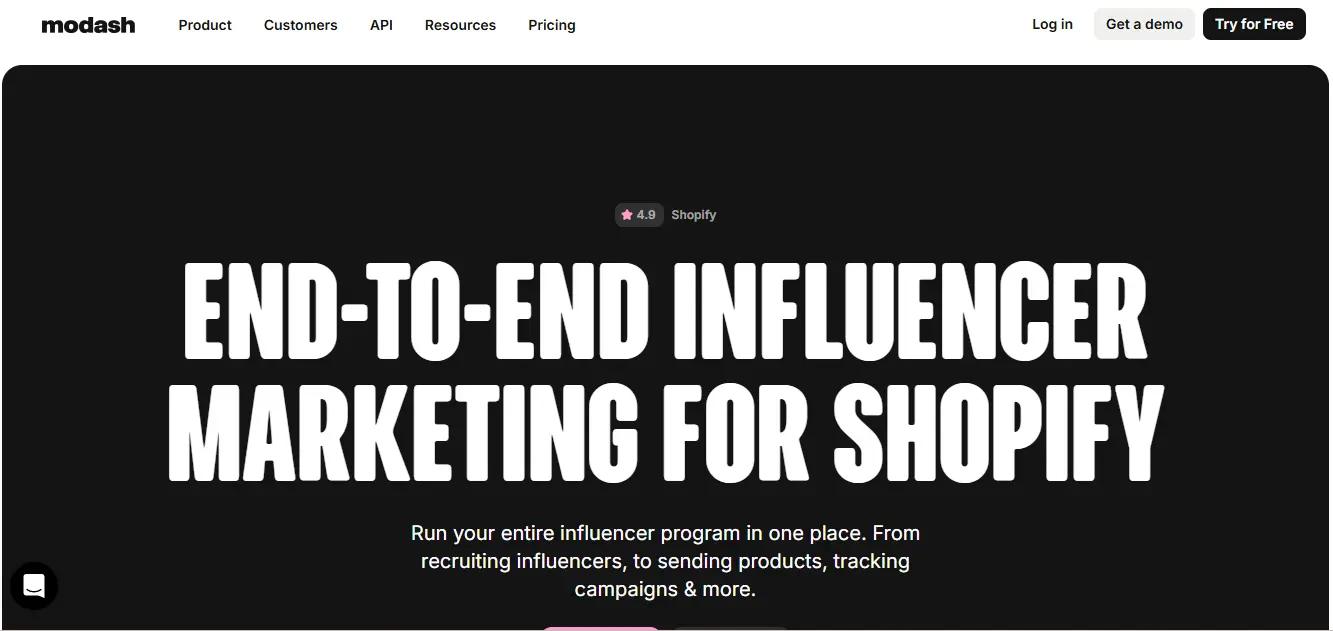
Modash is a solid tool, particularly for Shopify-focused brands. Its strengths lie in influencer discovery, bulk outreach, and its affiliate automation for eCommerce businesses. The platform boasts a large database of 350M+ public profiles, and its AI-powered discovery engine helps brands find creators who match their campaign goals. Modash excels at Shopify integrations, allowing automatic creation of affiliate links, discount codes, and streamlined gifting processes.
However, Modash's rigid structure can be a limitation for agencies managing multiple campaigns across different brands. Its focus on Shopify means that brands using other eCommerce platforms like WooCommerce or Magento are left out.
Additionally, Modash’s lack of built-in content licensing tools for UGC repurposing and its limited integration with platforms beyond Shopify make it less versatile for multi-channel campaigns.
While Modash offers a solid discovery experience, it’s mostly based on pre-existing profiles, limiting flexibility for agencies that need to scale quickly or tap into emerging niches. Modash's creator filters are eCommerce-centric, focusing on Shopify data, which makes it perfect for direct sales but less adaptable for other campaign types.
In contrast, Influencer Hero’s discovery engine is much more dynamic. With 450M+ creators, advanced filtering options, and AI-assisted recommendations, it’s easier for agencies to find the perfect creators for any campaign type—whether it’s for product gifting, affiliate marketing, or UGC campaigns. Influencer Hero’s tools like fake follower detection, lookalike suggestions, and the ability to identify influencers who already follow your brand are essential for ensuring creator authenticity.
Modash provides a basic CRM where campaigns are tracked from start to finish, but its bulk outreach can feel transactional. It lacks the flexibility needed for ongoing relationship management, which is essential for agencies that run multiple campaigns with different brands and strategies.
On the other hand, Influencer Hero's CRM is built for relationship management, not just campaign tracking. It’s designed for scalability, automating outreach, follow-ups, approvals, and reminders across multiple clients. The visual relationship boards make it easy to track the status of each campaign, ensuring that nothing falls through the cracks.
Modash’s performance tracking is Shopify-focused, providing useful insights into sales and engagement. However, its limited reporting outside of Shopify makes it less adaptable for agencies managing diverse clients with different goals.
Influencer Hero shines in this area, offering more comprehensive reporting capabilities across platforms. In addition to sales and engagement tracking, it tracks affiliate links, content performance, and UGC usage—making it the better option for agencies looking for a full view of campaign success.
Modash works well for Shopify-focused campaigns like product seeding and affiliate programs, but becomes more limited when brands want to mix different campaign models.
Influencer Hero is built for hybrid strategies, allowing agencies to run gifting, affiliate, paid, and UGC campaigns side by side in one platform.
This flexibility makes Influencer Hero a better fit for agencies managing clients whose goals shift between awareness, acquisition, and performance throughout the year.
Modash’s pricing starts at $199/month for the Essentials plan, but it requires annual commitment, which can be restrictive for agencies with fluctuating needs. Its higher-tier plans also focus on single-market setups, limiting scalability for agencies running campaigns across multiple markets and client types.
In contrast, Influencer Hero’s pricing is more flexible, with monthly plans starting at $649/month for up to 1,000 creators, scaling up based on the number of creators and features needed. This flexibility makes it a better choice for agencies that need to scale up or down depending on client demand.
Modash is a powerful platform, but it comes with a steeper learning curve. The onboarding process can be time-consuming, especially for new team members. It requires significant setup time for agencies to get the most out of the tool, and there’s a reliance on internal resources to ensure that the platform is used effectively.
Influencer Hero, on the other hand, focuses on simplicity and ease of use. With a clean interface, intuitive dashboards, and drag-and-drop workflows, teams can get up and running quickly, even without extensive training. Its onboarding process is smooth, and new users can start managing campaigns within hours, which is crucial for agencies with a rotating team or multiple client needs.
Modash offers standard support and product-focused assistance, which can be helpful for troubleshooting technical issues. However, its support is mostly reactive and doesn’t go beyond the basics of helping users navigate the platform.
Influencer Hero stands out in this area by offering premium, proactive customer support. Agencies receive a dedicated account manager from day one, ensuring that campaigns are set up for success. With fast-response live chat, email support, and an in-platform help desk, teams can easily access the resources they need. Additionally, Influencer Hero offers strategic sessions for both brands and creators, helping them optimize workflows and maximize campaign impact over time.
The differences between Influencer Hero and Modash are clear. Modash is a reliable platform, especially for Shopify-centric brands running structured campaigns. However, for agencies managing multiple clients, markets, and campaign types simultaneously, its rigid workflows, limited integrations, and reliance on Shopify can create challenges as campaigns scale.
Influencer Hero, on the other hand, is better aligned with how agencies operate day to day. Its CRM-first approach, flexible campaign structures, scalable outreach automation, and transparent pricing make it easier for agencies to manage large volumes of creators while maintaining full control and visibility.
Combined with advanced discovery tools, comprehensive performance reporting, and the ability to scale up or down on a monthly basis, Influencer Hero consistently stands out as the more adaptable and agency-friendly alternative to Modash.
At NC Media, we understand that the right platform is just one part of the equation. Book a demo with our team to walk through real campaign setups, workflows, and performance frameworks designed to help you achieve your goals.
FAQ

Yes, Influencer Hero is better suited for agencies managing multiple clients, markets, and campaign types. Its CRM-first workflows, multi-platform support, and scalable pricing make it ideal for agencies running complex influencer marketing programs at scale.
Modash is a great choice for Shopify-focused eCommerce brands looking for strong affiliate automation and gifting capabilities. However, if you need more flexibility across platforms and campaigns, Influencer Hero provides a broader solution.
Yes, Influencer Hero supports gifting, affiliate programs, paid collaborations, and UGC workflows, making it more adaptable for agencies managing various types of influencer campaigns simultaneously.
Yes, Modash is a solid platform for Shopify-focused brands that prioritize direct sales attribution and affiliate marketing. However, it can be limiting for agencies that need more flexibility and scalability across multiple markets and campaign types.
Agencies typically choose Influencer Hero for its flexibility, scalability, and CRM-first approach. Modash is a great tool for Shopify-centric brands, but Influencer Hero’s broader capabilities make it the better choice for agencies with diverse, multi-market campaigns.





.png)