Table Of Content
h1,h2
Discover the best influencer marketing software for online stores. Compare platforms like Influencer Hero, Upfluence, GRIN, Aspire, CreatorIQ, and Traackr to manage influencer discovery, product gifting, affiliate tracking, discount codes, and revenue attribution for eCommerce and DTC brands.


Table Of Content
Many eCommerce brands choose online stores because it gives them a flexible way to launch and scale direct-to-consumer businesses without building a custom commerce stack.
When we work with brands on online stores, influencer marketing is often one of the fastest channels to test new customer acquisition. But running influencer campaigns at scale quickly introduces operational challenges around finding the right creators, sending products, managing collaborations, and measuring results.
The platforms included in this guide to the best influencer marketing software for online stores are the ones we most often see brands evaluate when they want to systemize influencer campaigns. This article focuses specifically on software that integrates well with online stores workflows and helps marketing teams manage these processes more efficiently.

Influencer Hero is an all-in-one influencer marketing platform built primarily for eCommerce and DTC brands that want to manage creator relationships and track campaign performance in one system.
Unlike many tools that focus mainly on discovery or outreach, the platform emphasizes revenue attribution and store integrations. For teams evaluating the best influencer marketing software for online stores, Influencer Hero is often considered because it connects influencer activity directly to store performance. This makes it particularly relevant for brands treating influencer marketing as a measurable acquisition channel.
When we implement this for brands on Online Stores, it typically becomes the central system for managing the influencer workflow. Teams use it to discover creators, run outreach campaigns, and manage relationships from one dashboard.
Product gifting can be coordinated alongside campaigns, while affiliate links and discount codes are generated for each creator to track conversions. Because the platform connects with store data, influencer-driven orders and revenue can be monitored directly alongside campaign activity, giving teams clearer visibility into ROI.
The platform works best when brands set up their tracking structure carefully so attribution is fully visible. It is typically better suited for companies planning to scale influencer marketing rather than running occasional seeding campaigns. Some teams may also benefit from initial onboarding to organize workflows and reporting effectively.
From our experience working with Online Stores brands, Influencer Hero often becomes the operational hub for influencer programs that require both creator management and revenue tracking. For brands focused on measurable results rather than just content output, it provides a more connected workflow between influencer activity and store performance. In many cases, it stands out as one of the more complete options available.
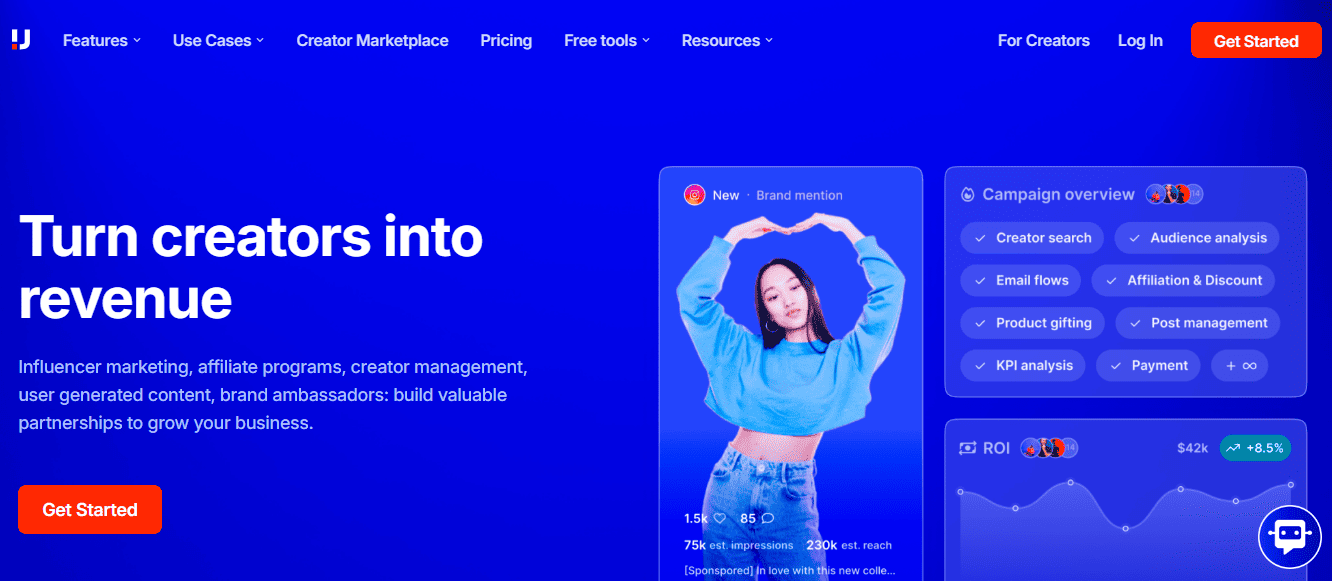
Upfluence is an influencer marketing platform that combines creator discovery, campaign management, and affiliate tracking in one system. It is widely used by eCommerce and DTC brands looking to connect influencer campaigns directly to online sales. Because of its strong focus on commerce integrations, it is often evaluated by online stores brands that want influencer marketing tied closely to revenue performance.
For brands running on online stores, this platform typically becomes the system used to discover creators, manage outreach, and track campaign activity. Teams can identify influencers from a large creator database, send structured outreach, and coordinate product gifting as part of campaign management.
Affiliate links and discount codes can be generated so sales from influencers are tied back to the store. Reporting dashboards then provide visibility into campaign performance, helping teams understand which creators are driving engagement, conversions, and revenue.
Upfluence tends to work best for brands prepared to invest time in setting up their campaigns and workflows properly. Pricing is typically positioned toward mid-to-higher budget teams, which can make it less accessible for smaller brands just starting with influencer marketing. Some users also mention that the platform has a learning curve, particularly when configuring campaigns and reporting dashboards for the first time.
This can be a strong option for eCommerce brands that want influencer discovery and affiliate tracking managed within one platform. The system works well when teams plan to run consistent creator campaigns tied to store revenue. For brands focused primarily on simple product seeding or occasional collaborations, it may feel more complex than necessary.

GRIN is an influencer marketing platform designed primarily for eCommerce and direct-to-consumer brands. It focuses on helping companies manage creator relationships, product seeding, and influencer campaigns while connecting those activities to online sales. The platform is commonly used by online stores brands that want a centralized system for managing influencer partnerships at scale.
For brands running on online stores, this platform typically becomes the system used to manage influencer campaigns from discovery through reporting. Teams can search for creators, run outreach, and organize partnerships within one campaign workspace.
Product gifting can be coordinated directly through the platform, while affiliate links and discount codes allow brands to track influencer-driven sales. Reporting dashboards then provide visibility into campaign results, helping marketing teams understand which creators are generating engagement, traffic, and conversions.
GRIN tends to be positioned toward mid-to-larger brands with dedicated influencer marketing teams. Pricing can be higher than some alternatives, which may make it less practical for smaller brands early in their influencer marketing journey. Some teams also report that the platform requires time to fully configure campaigns, workflows, and reporting before it becomes operationally efficient.
This can be a strong option for brands running mature influencer programs that involve ongoing creator relationships and regular product seeding. The platform is particularly useful when teams want to organize large creator networks in one place. For brands primarily focused on performance tracking or affiliate-heavy influencer campaigns, additional attribution structure may be needed.

Aspire is an influencer marketing platform focused on helping brands discover creators, manage partnerships, and run structured influencer campaigns. The platform combines creator discovery with campaign management tools and a creator marketplace, making it accessible for both mid-sized and growing brands. Many online stores brands evaluate Aspire when they want a system to organize influencer collaborations without relying on manual outreach.
For brands running on online stores, this platform typically supports the process of finding creators, launching campaigns, and managing collaborations in one place. Teams can discover influencers through Aspire’s database or marketplace, send outreach, and coordinate product gifting for campaigns.
Affiliate links and discount codes can then be assigned to creators to track conversions generated through influencer content. Reporting dashboards provide visibility into campaign performance, helping marketing teams monitor engagement, creator output, and influencer-driven revenue.
Aspire tends to work best for brands that have a defined campaign structure and a team responsible for managing creator partnerships. Some users mention that navigating both the discovery tools and marketplace features can take time to learn.
Pricing is typically positioned toward mid-market brands, and smaller companies may find the platform more robust than necessary for early-stage influencer programs.
This can be a strong option for brands that want a mix of creator discovery and marketplace-style influencer recruitment. The platform works well when teams plan to run ongoing campaigns with multiple creators. For brands heavily focused on detailed revenue attribution or affiliate-driven influencer programs, additional structure may be needed to track performance clearly.

CreatorIQ is an enterprise influencer marketing platform designed for large brands and global marketing teams. It focuses heavily on data infrastructure, creator analytics, and large-scale campaign management.
While it is often used by major consumer brands, some online stores brands evaluating influencer marketing at scale also consider CreatorIQ for its advanced reporting and creator database capabilities.
For brands running on online stores, this platform typically supports the discovery of creators and the management of large influencer campaigns across multiple markets. Teams can identify influencers using the platform’s discovery tools, organize campaigns, and coordinate creator collaborations within structured workflows.
Product gifting and partnerships can be tracked through campaign management features, while affiliate links or promotional codes allow brands to monitor conversions generated by influencers. Reporting dashboards provide detailed visibility into campaign performance, helping marketing teams evaluate engagement and overall creator impact.
CreatorIQ is typically positioned toward enterprise-level organizations, and pricing reflects that positioning. For many mid-sized eCommerce brands, the platform can feel complex and resource-intensive to implement. Some users also note that the onboarding process and platform configuration require internal teams who are comfortable working with more advanced marketing software.
This can be a strong option for enterprise organizations running large-scale influencer campaigns across regions or product lines. The platform is particularly useful when advanced reporting and creator analytics are a priority. For many online stores brands focused on direct revenue attribution and operational efficiency, it may offer more infrastructure than necessary.

Traackr is an influencer marketing platform focused on data-driven creator discovery, relationship management, and campaign reporting. It is widely used by larger consumer brands that want deeper analytics and performance insights across influencer campaigns. Some online stores brands evaluate Traackr when influencer marketing becomes a strategic channel requiring structured reporting and creator performance analysis.
For brands running on online stores, this platform typically supports influencer discovery and campaign organization across multiple creators and markets. Teams can identify creators using detailed audience and performance data, manage collaborations, and coordinate product gifting as part of campaign execution.
Affiliate links or discount codes can be used to connect influencer activity with store sales, while reporting dashboards help marketing teams monitor engagement metrics and overall campaign performance. The platform is often used to track long-term creator partnerships rather than short-term collaborations.
Traackr is generally positioned toward mid-to-enterprise organizations, and pricing reflects that level of sophistication. Smaller teams may find the platform more analytics-heavy than necessary for basic influencer campaign management. Some users also mention that while the reporting capabilities are strong, setting up campaigns and performance tracking can take time to configure properly.
This can be a strong option for brands that want deeper data insights into creator performance and campaign benchmarking. The platform works best when influencer marketing is managed as a long-term program with structured reporting. For online stores brands focused primarily on affiliate-style influencer programs or direct sales attribution, additional systems may still be needed to complete the workflow.
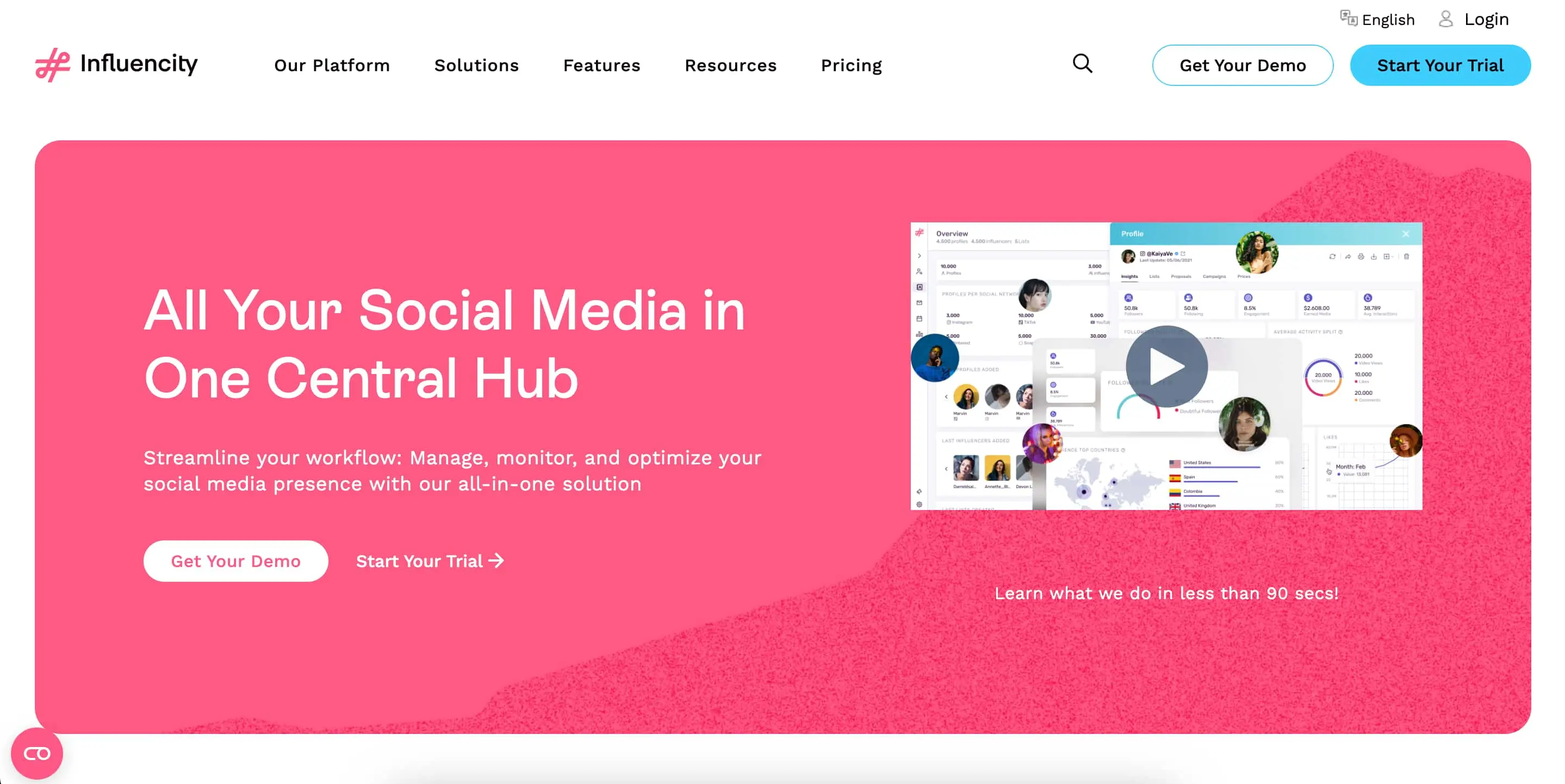
Influencity is an influencer marketing platform focused on creator discovery, campaign management, and influencer analytics. It is commonly used by brands and agencies that want access to a large creator database combined with campaign tracking tools. Many online stores brands consider Influencity when they want a structured way to identify creators and manage collaborations without relying entirely on manual influencer outreach.
For brands running on online stores, this platform typically supports the process of discovering influencers and organizing collaborations within one campaign dashboard. Marketing teams can search for creators using audience demographics and performance filters, then manage outreach and partnership details through campaign tools.
Product gifting and collaborations can be tracked through the platform, while affiliate links or discount codes can be used to connect influencer activity to store sales. Reporting dashboards provide visibility into campaign performance, helping teams understand which creators are generating engagement and conversions.
Influencity is generally accessible for mid-sized brands, but teams still need time to learn the discovery filters and reporting tools to use the platform effectively. Some users mention that while the influencer database and analytics are strong, the campaign management features are not always as comprehensive as more workflow-focused platforms. Brands focused heavily on direct sales attribution may also need additional tracking systems to connect influencer performance fully to store revenue.
This can be a strong option for brands that prioritize influencer discovery and audience analysis before launching campaigns. The platform works well when teams want deeper insight into creator performance and audience demographics. For online stores brands focused heavily on revenue attribution and affiliate-driven campaigns, additional workflow structure may still be required.

Modash is an influencer marketing platform focused on creator discovery, campaign management, and influencer analytics. It is commonly used by eCommerce and direct-to-consumer brands that want access to a large global creator database and tools to manage influencer collaborations more efficiently.
Many online stores brands evaluate Modash when they want strong influencer discovery capabilities combined with campaign tracking and performance insights.
For brands running on online stores, this platform typically supports the process of discovering influencers and organizing collaborations from one central dashboard. Marketing teams can search for creators using detailed filters such as audience demographics, engagement metrics, and location.
Once creators are identified, teams can manage outreach, coordinate partnerships, and monitor campaign performance within the platform. Affiliate links or discount codes can be used to connect influencer activity with store sales, while reporting dashboards provide visibility into engagement, creator output, and campaign results.
Modash is particularly strong for influencer discovery and audience analytics, but some teams may find that campaign workflow features are more streamlined compared to more CRM-style influencer platforms. Brands that need advanced relationship management or highly structured creator workflows may need additional processes to organize partnerships.
Pricing is typically positioned for mid-sized brands and agencies, and teams may need time to learn the discovery filters and analytics tools to fully leverage the platform’s capabilities.
This can be a strong option for brands that prioritize influencer discovery and data-driven creator selection. The platform works well when marketing teams want detailed insights into influencer audiences before launching campaigns.
For online stores brands focused heavily on operational workflow management and revenue attribution, additional structure may still be helpful to connect influencer performance directly to store sales.
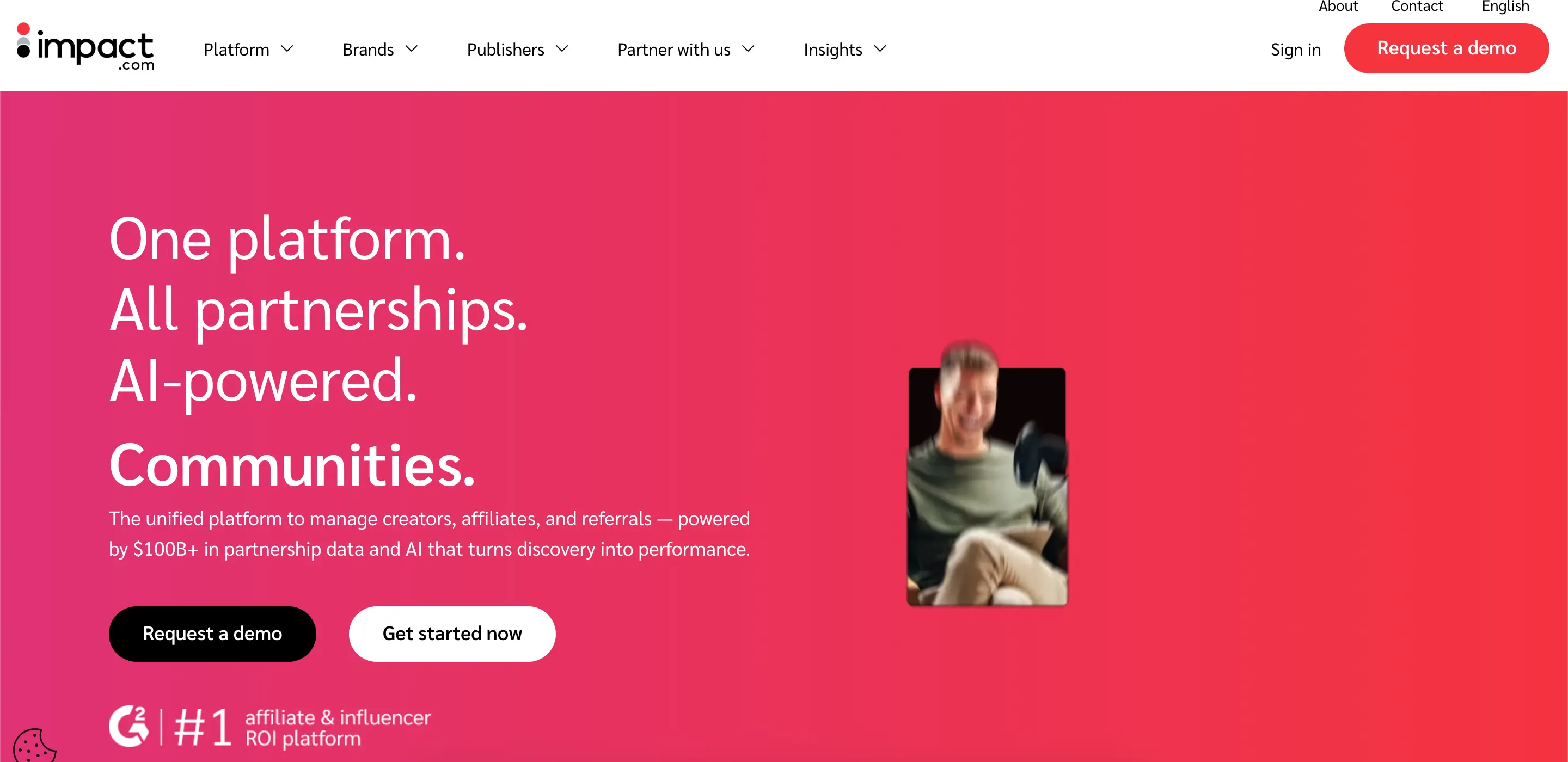
Impact.com is a partnership management platform that supports affiliate marketing, influencer partnerships, and other performance-based collaborations. It is commonly used by larger brands that want to manage influencers alongside other partner channels in one system. Some online stores brands consider Impact.com when influencer marketing is part of a broader affiliate or partnership strategy.
For brands running on online stores, this platform typically supports the management of influencer partnerships through affiliate-style tracking. Marketing teams can onboard creators as partners, generate tracking links or discount codes, and monitor performance through conversion reporting. Discovery and outreach are often handled outside the platform, while Impact.com focuses on tracking sales, commissions, and campaign results. Reporting dashboards provide visibility into influencer-driven revenue alongside other partnership channels.
Impact.com is typically positioned toward mid-to-enterprise organizations, and pricing can reflect that level of capability. The platform can also require a structured setup process, particularly when onboarding partners and configuring tracking. Some users note that while the reporting and tracking infrastructure is strong, discovery and campaign management tools are more limited compared to influencer-focused platforms.
This can be a strong option for brands managing influencer partnerships within a broader affiliate or partnership program. The platform works well when the primary goal is tracking revenue and commissions across many partners. For online stores brands that need built-in influencer discovery and campaign management, additional tools are often required.
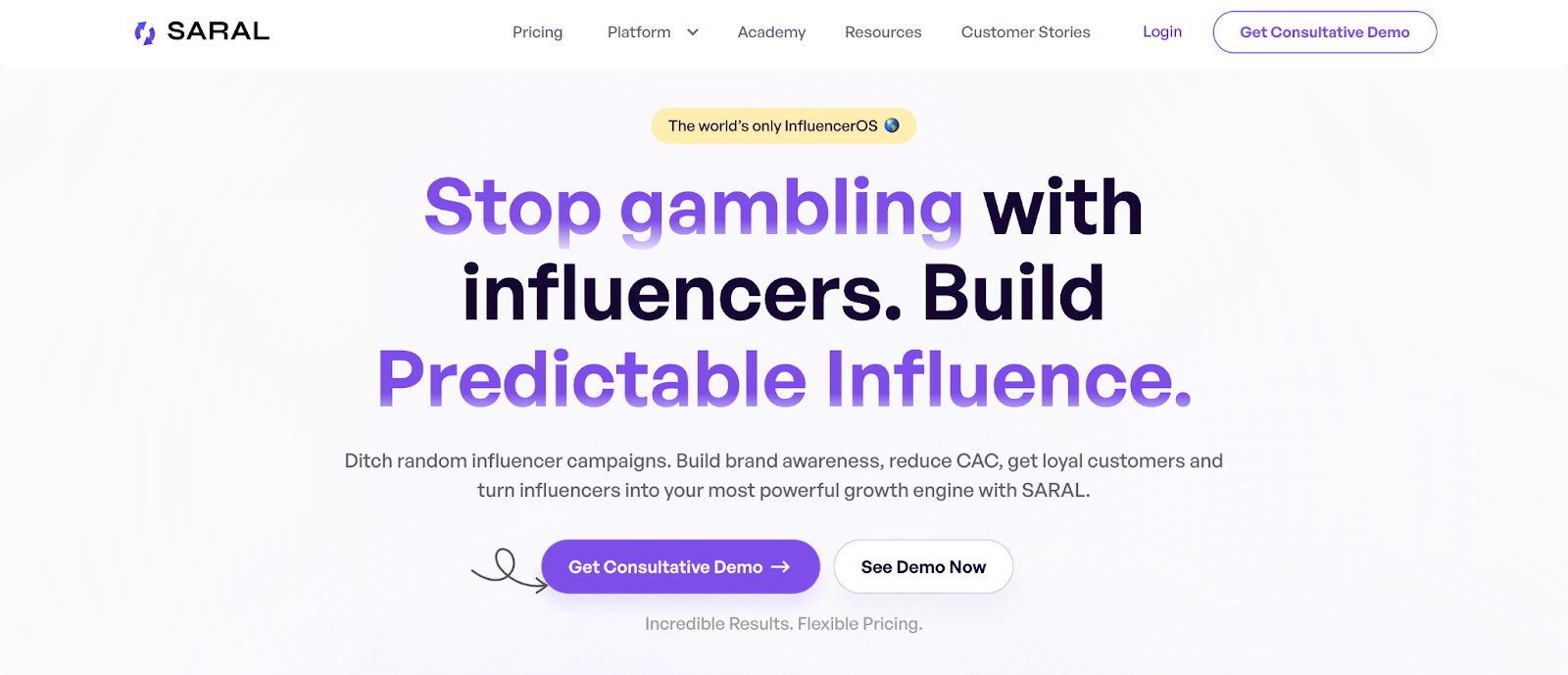
SARAL is an influencer marketing platform designed primarily for eCommerce brands that want to manage creator relationships, gifting, and influencer-driven sales in a structured workflow. The platform focuses on helping brands build long-term creator partnerships rather than running one-off campaigns. Many online stores brands consider SARAL when they want a simpler system for organizing influencer outreach and affiliate-style collaborations.
For brands running on online stores, this platform typically helps manage the operational side of influencer campaigns. Marketing teams can identify creators, send outreach, and track ongoing relationships through the platform’s CRM-style interface.
Product gifting can be coordinated as part of campaigns, while affiliate links and discount codes allow brands to track conversions generated by influencers. Reporting tools provide visibility into creator performance, helping teams understand which partnerships are driving engagement and sales.
SARAL tends to work best for brands that already have a process for finding creators and want a tool to organize outreach and partnerships. While the platform simplifies influencer relationship management, some teams may find the discovery database smaller than those of larger enterprise platforms. Brands running highly complex campaigns may also need additional reporting or analytics tools.
This can be a strong option for brands that want a focused system for managing influencer relationships and affiliate-style collaborations. The platform works well for teams building structured creator programs over time. For online stores brands that require large-scale discovery databases or advanced campaign analytics, additional tools may still be needed.
The best influencer marketing software for online stores depends on how your brand plans to run campaigns. Some platforms focus more on influencer discovery and campaign management, while others prioritize affiliate tracking, discount codes, and revenue attribution. For most eCommerce teams, the key is choosing a platform that connects influencer activity directly to store performance so you can clearly see which creators are driving results.
If you’re planning to scale influencer marketing for your store and want support with strategy, creator selection, and campaign execution, you can also book a demo with NC Media to see how our team helps brands run structured influencer campaigns using the right tools and workflows.
FAQ

The best influencer marketing software for online stores depends on your workflow and campaign goals. Platforms like Influencer Hero, Upfluence, GRIN, and Aspire are commonly used by eCommerce brands because they combine influencer discovery, campaign management, gifting, and affiliate tracking. Many online stores brands choose tools that connect influencer activity directly to revenue and store performance.
Yes. Most influencer marketing platforms allow brands to generate affiliate links, referral links, or discount codes that track sales generated by creators. Tools like Influencer Hero and Upfluence can connect influencer campaigns with store data so brands can see which creators are driving conversions and revenue.
Not necessarily, but software becomes important as campaigns scale. Many brands start by manually managing influencer outreach and gifting, but platforms like Influencer Hero, Aspire, and GRIN help organize creator relationships, automate workflows, and track campaign performance more efficiently.
Most online stores brands look for features like influencer discovery, campaign management, product gifting coordination, affiliate link generation, and performance reporting. Platforms such as Influencer Hero, Upfluence, and Influencity are often considered because they help connect influencer campaigns to store revenue.
Influencer marketing platforms manage the full workflow, including creator discovery, outreach, campaign management, and reporting. Affiliate platforms mainly track referral sales and commissions. Some brands combine both approaches, while platforms like Influencer Hero or Upfluence provide both influencer management and affiliate-style tracking in one system.








.png)