Table Of Content
h1, h2
Influency.me pricing isn't published anywhere — not for the platform, not for the agency, not for the casting arm. Here's what we could actually verify, what the one disclosed pricing model tells you, and when a full-service agency is the better call.

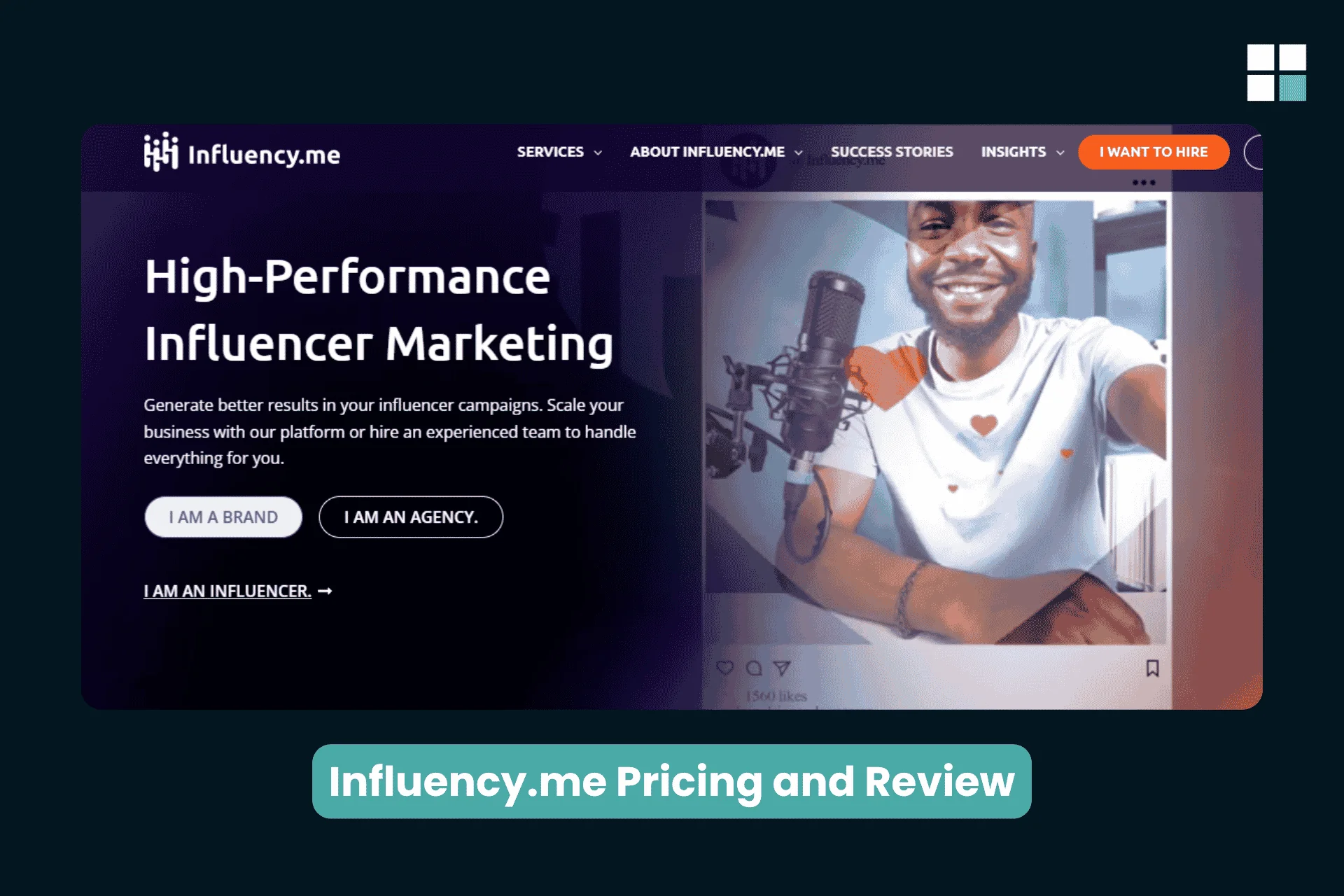
Table Of Content
Influency.me pricing is not published. Not on the platform page, not on the agency page, not on the casting page — all three products route you to a demo request form.
That's common enough in this category. What's unusual is that Influency.me's own FAQ asks the question directly — "how much does an influencer marketing platform cost?" — and answers it by saying it depends on features, users and company needs, then recommends booking a demo.
There is one exception, and it's the most useful thing on the site. Their casting product does disclose a pricing model: creator fees tied to views against an average market CPM, with a minimum view delivery guaranteed in the contract. Below is everything we could verify, what that guarantee actually promises, and where it stops.
Influency.me sells three products rather than a tiered SaaS ladder. None carry a published price.
This is the closest thing to conventional influencer marketing SaaS. You define budget and strategy, their system generates a campaign goal funnel, and you recruit creators and track delivery against it.
The done-for-you tier, running on the same technology as the platform. The results-guaranteed-in-contract line is a real commitment, though what's guaranteed isn't specified publicly.
This is the only product where the pricing mechanism is spelled out. Your investment is pegged to a CPM, and the contract commits to a floor on views.
The CPM-plus-guaranteed-views model is genuinely better than a flat creator fee with no delivery commitment. But it's worth understanding what it does and doesn't promise.
Take an illustrative $5 CPM with one million guaranteed views. That's $5,000 in creator spend, and the contract says you'll get the million views or they make it right.
Here's what it doesn't say. At a $60 average order value, breaking even on that $5,000 needs roughly 0.008% of viewers to convert. Hitting an 8X return needs about 0.067%.
The difference between a campaign that loses money and one that returns eight times its spend is six hundredths of a percentage point — and a views report cannot see it. The guarantee covers media delivery, not business outcome.
Several third-party roundups cite an annual contract of roughly USD $20,000, with three-month activations described as negotiable and three months given as the recommended minimum campaign length.
We could not verify that figure against anything Influency.me publishes. It appears to originate from a single third-party alternatives article and has been repeated since. Treat it as a directional signal for budget planning, not a quote.
One more correction worth making: software directories still list Influency.me's database at 8 million creators. Their own platform page and FAQ now state 10 million-plus. If you're comparing database size across vendors, use the current number.
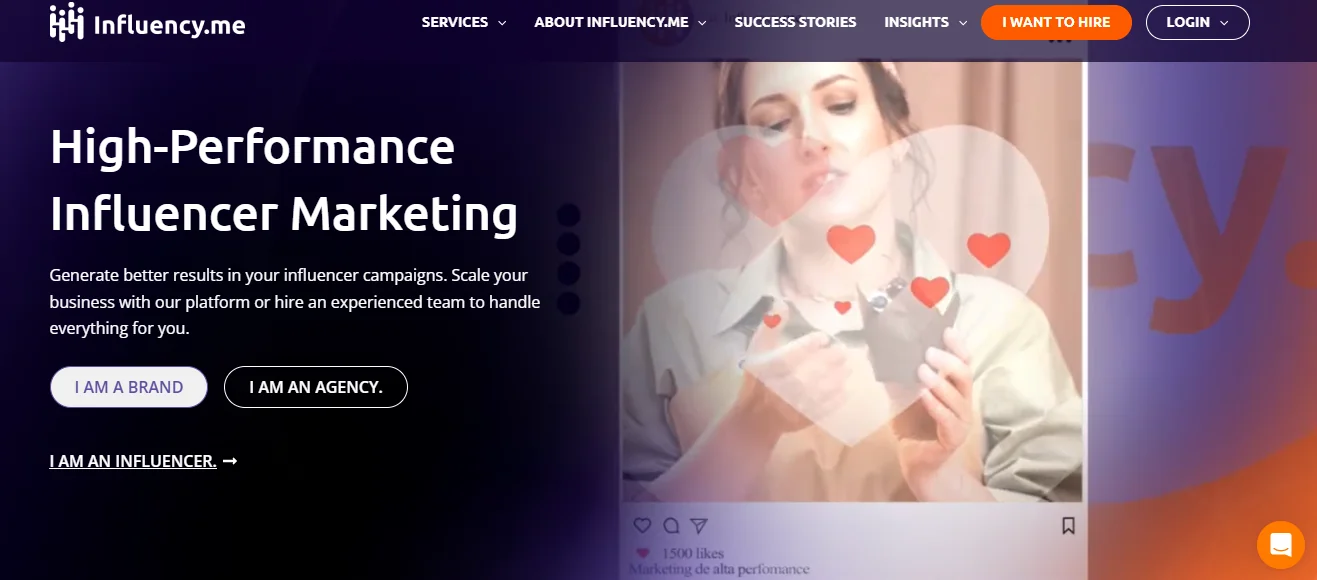
Influency.me is a São Paulo-based influencer marketing company approaching its tenth year, positioning itself as the LATAM category leader with clients in five Latin American countries. The site is Portuguese-first with a Spanish LATAM version, and the client roster is heavily Brazilian and regional — Carrefour, Shein, Xbox, Casio, McCain, Polishop, Mondial and Beyoung among them. What makes it unusual is that it runs software, a full-service agency and a talent casting operation under one roof, which is a less common structure among English-first competitors.
There is effectively no independent review base for Influency.me, and that's worth stating plainly rather than dressing up.
G2 lists the company with zero reviews. Capterra has one, and that reviewer describes organizing collaborations and communicating with brands and agencies — language that suggests a creator, not a brand buyer. Their one criticism was that the interface, while functional, could use a more modern design.
Aggregator data is also internally inconsistent here: GetApp shows a 5.0 overall rating alongside a likelihood-to-recommend score of 1.00 out of 10, from that same single review. Those numbers can't both be meaningful.
What does exist is a set of named client testimonials on Influency.me's own site — marketing leads at Oceane, GioLaser, Dux Nutrition and Vizzela, one noting a three-year relationship. They're vendor-published and should be read as such, but they're specific and attributed, which is more than most.
One operational note reported elsewhere: day-to-day creator communication tends to happen on WhatsApp rather than in the platform, meaning conversations have to be centralized manually for record-keeping. That's normal for the Brazilian market, where WhatsApp is the default business channel — but it does mean the CRM record isn't automatically complete.
Influency.me House and Stars are agency products, so this isn't software versus done-for-you. Both options here will run your campaigns.
The meaningful difference is geography and what gets guaranteed. Influency.me commits to view delivery against a CPM. NC Media commits to what those views return.
When Influency.me wins. If your market is Brazil or Spanish-speaking LATAM, this is a genuine advantage NC Media doesn't replicate. Regional creator relationships, local rate knowledge, Portuguese-language contracting and a casting roster built for that audience are hard to buy from outside — and the near-decade of operating history there is real.
When NC Media wins. For brands selling into Western markets that want influencer marketing measured as a revenue channel, NC Media has spent eight years building exactly that — 50K+ influencer partnerships and 120K+ UGC assets for brands including Lululemon, Arsenal, Decathlon, TCL, Nespresso and Under Armour, delivering an average 8X+ ROAS increase and -52% CAC reduction.
The guarantee gap. A view-delivery guarantee removes one risk: paying for reach you don't get. It leaves the bigger one untouched. Whether those views moved product is a separate question, and as the CPM math above shows, the answer can swing eightfold without the delivery report changing at all. If your CFO is asking about return rather than reach, that's a different contract.
For Brazilian and LATAM brands, this is a strong option and the regional depth is the reason. Ten million creators indexed with local audience data, in-platform contracting in Portuguese, a curated casting roster and an agency arm running on the same technology is a complete stack for that market — and the goal funnel approach forces target-setting before spend, which is more discipline than most platforms impose.
Where it falls short is transparency and reach. Quote-only pricing across all three products with reported annual commitments makes it hard to evaluate before a sales call, and the absence of any credible third-party review base means you're buying largely on the vendor's own materials. If your market is primarily North America or Europe, the regional advantage that justifies the opacity doesn't apply to you.
If Influency.me's quote-only model or LATAM focus isn't the right fit, these three cover similar ground with different trade-offs.
The clearest contrast is that you can budget for it before speaking to anyone. Both platforms cover the full workflow, but Influencer Hero publishes its tiers and doesn't require an annual commitment to get a number. Its database is global rather than LATAM-weighted, which cuts both ways depending on where you sell.
If discovery and audience vetting are the jobs you actually need done, Modash is the cheaper and more transparent route. The constraint is usage caps — 300 profile analyses and 150 email unlocks on Essentials — which heavy discovery teams exhaust quickly. Its Shopify integration is strong; other e-commerce platforms get less.
Squid works with Ambev, Unilever, Natura, Samsung, iFood and L'Oréal, and relaunched its Squid OS platform in 2026 after being acquired by UNLK. It's the credible head-to-head if you're choosing a Brazilian partner and want a second quote — though you'll face the same lack of published pricing.
And if managing any of these yourself sounds like more than you want to take on, that's exactly where a full-service agency comes in — more on that below.
Influency.me is a substantive company with real regional depth, and the CPM-linked casting model is a more honest pricing structure than most agencies offer. What you don't get is a number before a sales call — across the platform, the agency and the casting arm — and with no meaningful independent reviews, the evaluation rests almost entirely on materials the company published itself.
If you're selling into Western markets and want influencer marketing accountable to revenue rather than reach, that's a different kind of partnership. NC Media has spent eight years running it for brands including Lululemon, Decathlon and Under Armour, with strategy, sourcing, negotiation and reporting handled — and performance measured in ROAS and CAC.
If you're evaluating Influency.me and wondering whether a full-service agency might be a better fit, NC Media offers a no-commitment consultation. Book a call here.
FAQ





.png)