Table Of Content
h1,h2
Discover the best influencer marketing software for creator commerce. Compare platforms like Influencer Hero, GRIN, Aspire, Modash, and CreatorIQ that help eCommerce and DTC brands manage influencer discovery, product gifting, affiliate tracking, discount codes, and revenue attribution from creator campaigns. Learn how to choose the right platform to scale creator partnerships and track influencer-driven sales.



Table Of Content
Many eCommerce brands are starting to build structured creator commerce programs as part of their growth strategy. Instead of relying only on one-off influencer collaborations, teams are increasingly running affiliate-style partnerships where creators promote products through trackable links, discount codes, and curated product selections.
When we work with brands running creator commerce programs, the most common operational needs tend to look similar: discovering new creators, managing product gifting, generating affiliate links or discount codes, and accurately tracking revenue attribution tied to influencer activity. Without the right infrastructure, these workflows quickly become difficult to manage at scale.
This guide breaks down the best influencer marketing software for creator commerce, focusing on platforms that help brands run structured creator-driven sales programs. The tools below support key capabilities like influencer discovery, product seeding, affiliate tracking, and ROI reporting—features that are essential for brands turning creator partnerships into measurable revenue channels.

Influencer Hero is an all-in-one influencer marketing platform built to help eCommerce and DTC brands manage creator partnerships with a strong focus on performance and revenue attribution. The platform combines influencer discovery, outreach management, product gifting workflows, affiliate tracking, and campaign reporting within one system.
For brands evaluating the best influencer marketing software for creator commerce, Influencer Hero is often considered because it connects influencer activity directly to measurable sales outcomes. Its structure is designed to support teams running influencer programs tied closely to store performance rather than purely awareness campaigns.
Through Influencer Hero, brands running creator commerce programs can manage the entire influencer lifecycle from one centralized system. Teams use the platform to discover creators, manage outreach and negotiations, coordinate product gifting, and generate creator-specific affiliate links or discount codes connected to their store.
Campaign activity, creator communication, and deliverables are organized within structured creator profiles, while clicks, conversions, and revenue attribution flow back into campaign dashboards. This allows marketing teams to clearly understand which creators are driving actual sales rather than just engagement.
To get full value from the platform, teams typically need to configure attribution logic and campaign workflows during the initial setup phase. Influencer Hero tends to work best for brands that plan to run ongoing influencer programs rather than occasional one-off collaborations. Like many full-suite platforms, teams may benefit from onboarding guidance to structure campaigns and reporting in a way that supports long-term scaling.
From an agency standpoint, Influencer Hero stands out when brands want influencer marketing to operate as a measurable performance channel rather than a loose collection of collaborations. For creator commerce programs where affiliate tracking, discount codes, and revenue attribution are central, it tends to be one of the more complete systems available for managing the workflow end to end.

GRIN is an influencer marketing platform built primarily for eCommerce and DTC brands that run product-driven creator programs. The platform combines influencer discovery, CRM-style relationship management, product gifting, affiliate tracking, and content management within one system.
For brands evaluating the best influencer marketing software for creator commerce, GRIN is often considered because it connects influencer campaigns closely with online store workflows, particularly for product seeding and affiliate-based collaborations.
For brands running creator commerce programs, GRIN typically acts as a centralized system for managing product-driven influencer collaborations. Teams use the platform to discover creators, manage outreach conversations, and coordinate product gifting directly from their store catalog. Affiliate links and discount codes can be generated for each creator, allowing brands to track conversions and revenue tied to influencer campaigns.
Campaign dashboards combine creator communication, product shipments, content delivery, and performance reporting so teams can monitor how influencer partnerships contribute to store performance.
GRIN typically operates on an annual contract with a relatively high entry price compared to many mid-market influencer tools. While the platform centralizes multiple workflows, some teams report system slowdowns or occasional glitches during day-to-day campaign management.
Discovery accuracy and database filtering can also require manual review when building large creator lists, meaning teams often need internal resources to manage creator vetting and campaign operations effectively.
From an agency perspective, GRIN can be a strong option for product-heavy DTC brands running structured gifting and affiliate programs tied closely to store operations. Its workflow is particularly useful when product fulfillment and influencer campaigns need to stay tightly connected. However, for brands focused heavily on scalable creator discovery or lean campaign execution, teams may need to evaluate whether the platform’s pricing and operational complexity fit their stage of growth.
Aspire is an influencer marketing platform designed to help brands manage creator discovery, campaign workflows, product gifting, and affiliate sales tracking. The platform is particularly well known for combining outbound influencer management with an inbound creator marketplace where influencers can apply to campaigns.
For brands evaluating the best influencer marketing software for creator commerce, Aspire often appears on the shortlist because it connects Shopify-based gifting, affiliate links, and revenue tracking within structured campaign workflows.
For brands running creator commerce programs, Aspire typically functions as a centralized campaign hub that manages both creator recruitment and collaboration workflows. Teams can invite creators directly or receive applications through campaign landing pages, then coordinate product gifting, content approvals, and affiliate links within a structured campaign pipeline.
Discount codes and affiliate links are tied to creator profiles, allowing brands to track conversions and revenue alongside campaign activity. This gives marketing teams visibility into both campaign execution and the commercial impact of creator partnerships.
Aspire can require onboarding time because its workflow system includes multiple campaign stages, automation features, and reporting layers. Pricing may also be a consideration for early-stage brands, as the platform tends to be most efficient when used for ongoing campaigns rather than occasional collaborations.
Some teams also note that the system is strongest within Shopify ecosystems, which may limit flexibility for brands operating across multiple commerce platforms.
From our perspective, Aspire is a strong option for brands that want to combine influencer discovery, campaign management, and creator applications within one structured environment. It tends to work particularly well for teams managing consistent influencer programs tied to Shopify revenue.
For brands focused heavily on advanced attribution or complex multi-platform commerce integrations, additional setup or complementary tools may sometimes be required.
CreatorIQ is an enterprise influencer marketing platform built to support large brands running global creator programs across multiple markets. The platform focuses heavily on governance, analytics, and enterprise reporting while also supporting creator discovery, campaign management, and payment processing.
For companies evaluating the best influencer marketing software for creator commerce, CreatorIQ often enters the conversation when enterprise-level reporting, compliance, and large-scale campaign coordination are priorities.
For brands running creator commerce programs, CreatorIQ typically acts as the centralized reporting and campaign management layer for large influencer ecosystems. Teams can discover creators, manage campaigns, coordinate gifting workflows, and assign affiliate links or discount codes to track performance.
Conversion and campaign data are aggregated into customizable dashboards that allow marketing and leadership teams to monitor influencer-driven revenue alongside broader campaign metrics. The system is particularly structured around coordinating large creator programs across regions and internal teams.
CreatorIQ’s enterprise orientation means implementation can require more internal resources and structured processes compared to mid-market platforms. Pricing is also typically based on annual contracts with higher entry costs.
Additionally, while the platform provides strong reporting infrastructure, brands focused heavily on automated affiliate programs may need to configure external tracking systems to achieve full revenue visibility.
CreatorIQ is often a strong fit for enterprise organizations that prioritize governance, reporting, and cross-market campaign management. For brands running complex global influencer programs, the platform’s infrastructure can provide strong oversight. For smaller or growth-stage DTC brands focused primarily on creator commerce performance, the operational complexity may be more than what’s needed.
Modash is an influencer marketing platform built around large-scale creator discovery combined with affiliate performance tracking. The platform provides access to hundreds of millions of public creator profiles and integrates with Shopify to support gifting, discount codes, and affiliate revenue tracking.
For brands evaluating the best influencer marketing software for creator commerce, Modash is often considered because of its strong discovery capabilities tied directly to revenue attribution.
For brands running creator commerce programs, Modash typically acts as a discovery-driven platform that connects creator recruitment with affiliate performance tracking. Teams can search for creators using detailed filters, manage outreach campaigns, and distribute product gifting through structured workflows.
Affiliate links and discount codes are generated within the platform, allowing brands to monitor conversions and revenue tied to influencer activity. Campaign dashboards combine creator performance metrics with sales attribution to help marketing teams evaluate which partnerships drive measurable outcomes.
Modash integrates most deeply with Shopify for commerce attribution, which may limit flexibility for brands operating on other eCommerce platforms. While the discovery engine is widely regarded as one of the platform’s strengths, teams focused heavily on contract management or content rights workflows may need additional processes outside the platform.
Brands should also consider whether discovery or campaign infrastructure is the primary need when evaluating the tool.
From our experience, Modash tends to perform well when creator discovery and recruitment are a central part of a brand’s influencer strategy.
The platform is particularly useful for scaling affiliate-driven creator partnerships within Shopify environments. For brands that prioritize full lifecycle campaign management or complex workflow automation, additional operational structure may sometimes be required.

HypeAuditor is an influencer marketing platform known for its deep influencer analytics and audience quality analysis. The platform combines creator discovery, campaign management, gifting workflows, and revenue tracking tied to eCommerce platforms like Shopify.
For brands researching the best influencer marketing software for creator commerce, HypeAuditor is often evaluated because of its focus on influencer authenticity, audience analysis, and performance analytics.
For brands running creator commerce programs, HypeAuditor typically becomes the analytics layer for evaluating creator partnerships alongside campaign execution. Teams use the platform to vet influencers based on audience quality, manage campaign collaborations, and distribute promo codes or affiliate links connected to store revenue.
Campaign dashboards combine engagement metrics with order data, allowing marketing teams to evaluate both brand visibility and sales performance from influencer partnerships.
HypeAuditor offers a wide range of analytics tools, which can create a learning curve for teams unfamiliar with influencer performance metrics. While the platform supports revenue tracking through eCommerce integrations, campaign setup may require structured configuration to ensure attribution accuracy.
For smaller teams focused on simple affiliate workflows, the platform’s analytics depth may feel more complex than necessary.
HypeAuditor can be particularly valuable when influencer vetting and audience analysis are critical to campaign success. For brands focused on brand safety and data-driven influencer selection, the platform offers strong analytics capabilities.
However, teams primarily focused on scaling creator commerce programs may need to consider how much operational workflow infrastructure they require alongside analytics.
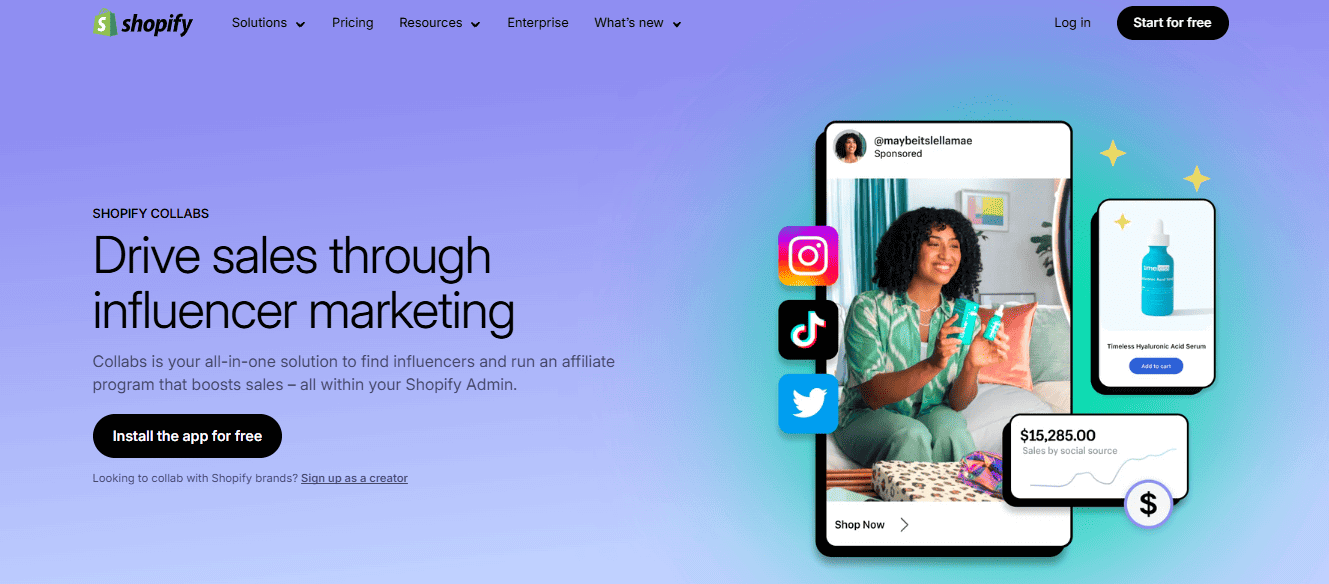
Shopify Collabs is Shopify’s native influencer and affiliate marketing tool designed to help merchants connect creators with their products. The platform operates directly within the Shopify admin interface and supports affiliate link generation, product gifting, and commission payouts.
For brands researching the best influencer marketing software for creator commerce, Shopify Collabs often appears as a lightweight option for Shopify-native teams launching affiliate-driven creator programs.
For brands running creator commerce programs within Shopify, Collabs typically functions as a built-in affiliate management tool rather than a full influencer campaign system. Merchants can invite creators, assign affiliate links or discount codes, and track conversions directly through their Shopify store. Product gifting can also be coordinated through the platform, with orders tied to creator partnerships and commission payouts processed automatically through PayPal.
Shopify Collabs focuses primarily on affiliate tracking and gifting rather than full influencer campaign management. The platform does not include robust creator CRM capabilities, outreach tools, or detailed campaign workflow features. Brands running complex influencer programs may find that additional systems are required to manage creator relationships and campaign operations at scale.
Shopify Collabs can be a practical starting point for Shopify brands launching basic creator affiliate programs. The native integration makes setup straightforward and removes the need for additional tools early on. As influencer programs scale, however, many brands eventually look for platforms that provide more advanced campaign management and attribution infrastructure.
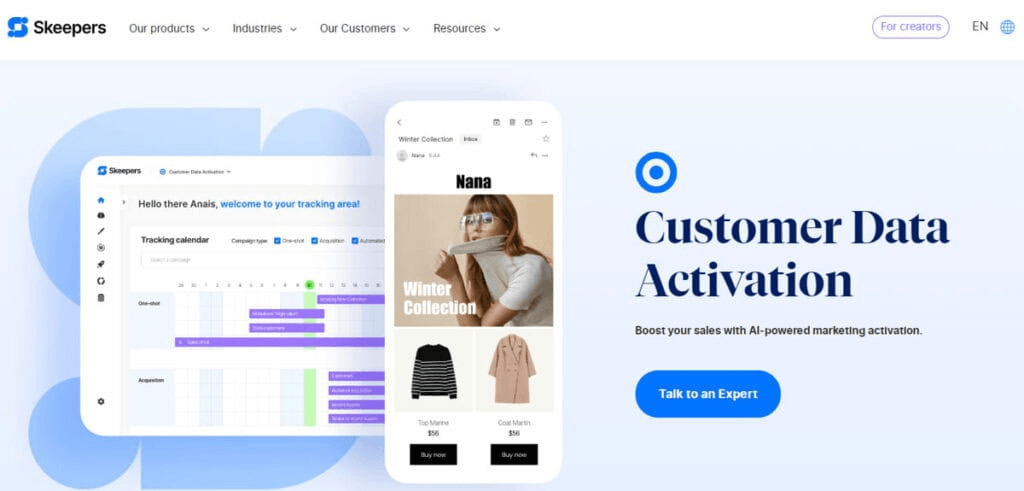
Skeepers is an influencer marketing platform focused on micro- and nano-influencer gifting campaigns designed to generate large volumes of user-generated content. The platform connects brands with a curated community of creators who produce content tied to product experiences and reviews.
For brands researching the best influencer marketing software for creator commerce, Skeepers often stands out for campaigns focused on high-volume UGC generation rather than traditional influencer partnerships.
For brands running creator commerce programs, Skeepers typically functions as a platform for scaling product seeding campaigns. Brands launch campaigns that distribute products to selected creators, who then publish content about their experience.
That content is stored in a central library and can be reused across product pages, ads, or marketing channels to support conversion. While affiliate tracking features exist, the primary commerce value often comes from leveraging UGC to influence purchasing decisions.
Skeepers is heavily oriented around gifting-based campaigns rather than complex affiliate infrastructure. Brands focused on revenue attribution through discount codes or affiliate links may find the automation depth more limited compared to performance-focused platforms. Additionally, teams running long-term influencer partnerships may require additional tools for relationship management.
Skeepers can be particularly useful for brands prioritizing authentic UGC generation tied to product discovery and social proof. The platform works well for high-volume micro-influencer campaigns. For brands building influencer programs centered around performance attribution and affiliate revenue, additional campaign infrastructure may sometimes be required.
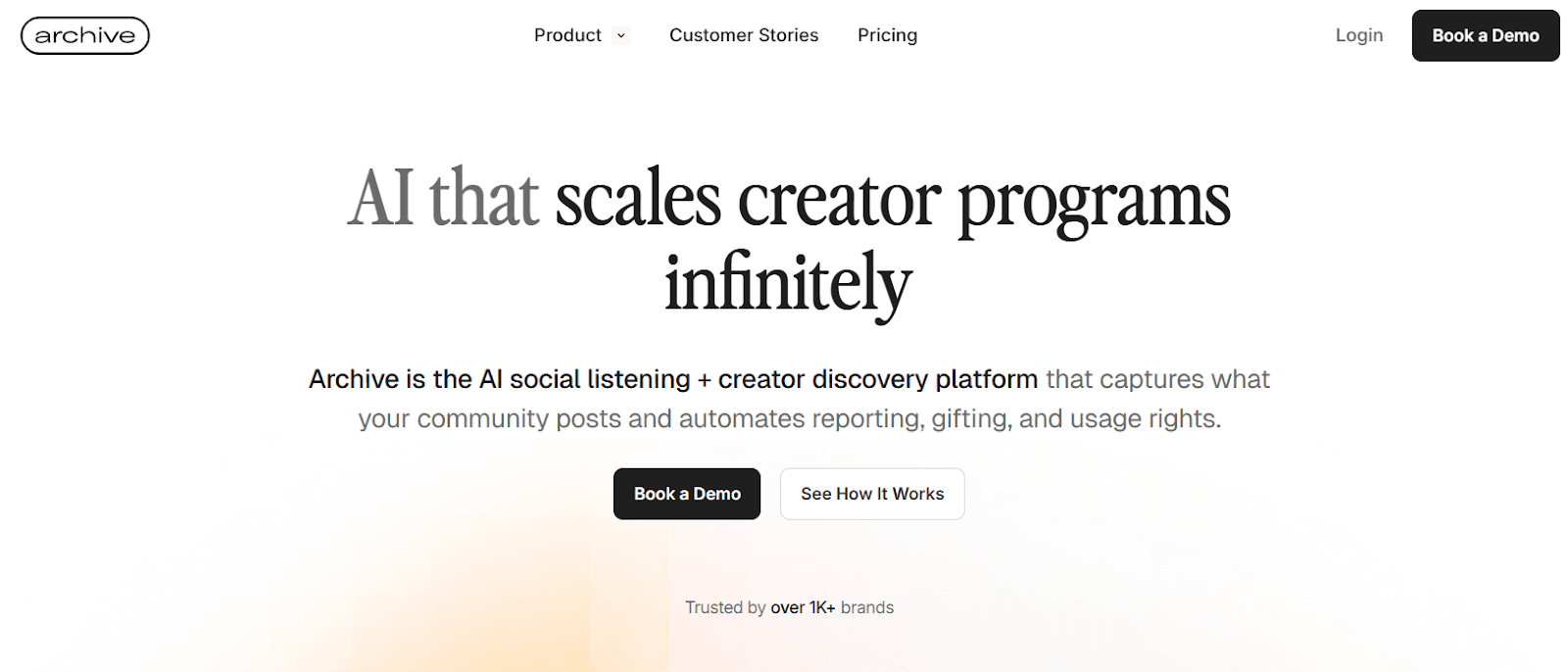
Archive is a social listening and UGC intelligence platform designed to identify creator content mentioning a brand across social media platforms. The system uses AI to detect brand mentions, including untagged posts, and organizes them into searchable content libraries.
For brands exploring the best influencer marketing software for creator commerce, Archive often enters the conversation when identifying organic creator content and repurposing it for marketing campaigns.
For brands running creator commerce programs, Archive typically functions as a content intelligence layer that surfaces organic creator mentions. Teams can identify creators already posting about their products, analyze which content performs best, and then activate those creators through gifting campaigns or paid partnerships. The captured content can also be reused for ads, landing pages, and product marketing efforts tied to conversion.
Archive is not a full influencer marketing platform with discovery pipelines, outreach CRM systems, or affiliate infrastructure. Its primary strength lies in identifying and analyzing existing creator content rather than managing full influencer campaigns. Brands focused on structured creator commerce programs may require additional systems to manage outreach, partnerships, and performance tracking.
Archive can be a useful addition for brands that want to identify organic creator content and convert those creators into partnerships. The platform is particularly valuable for teams focused on UGC-driven advertising and social listening. For brands building full creator commerce programs, however, it typically works best alongside a more comprehensive influencer management system.
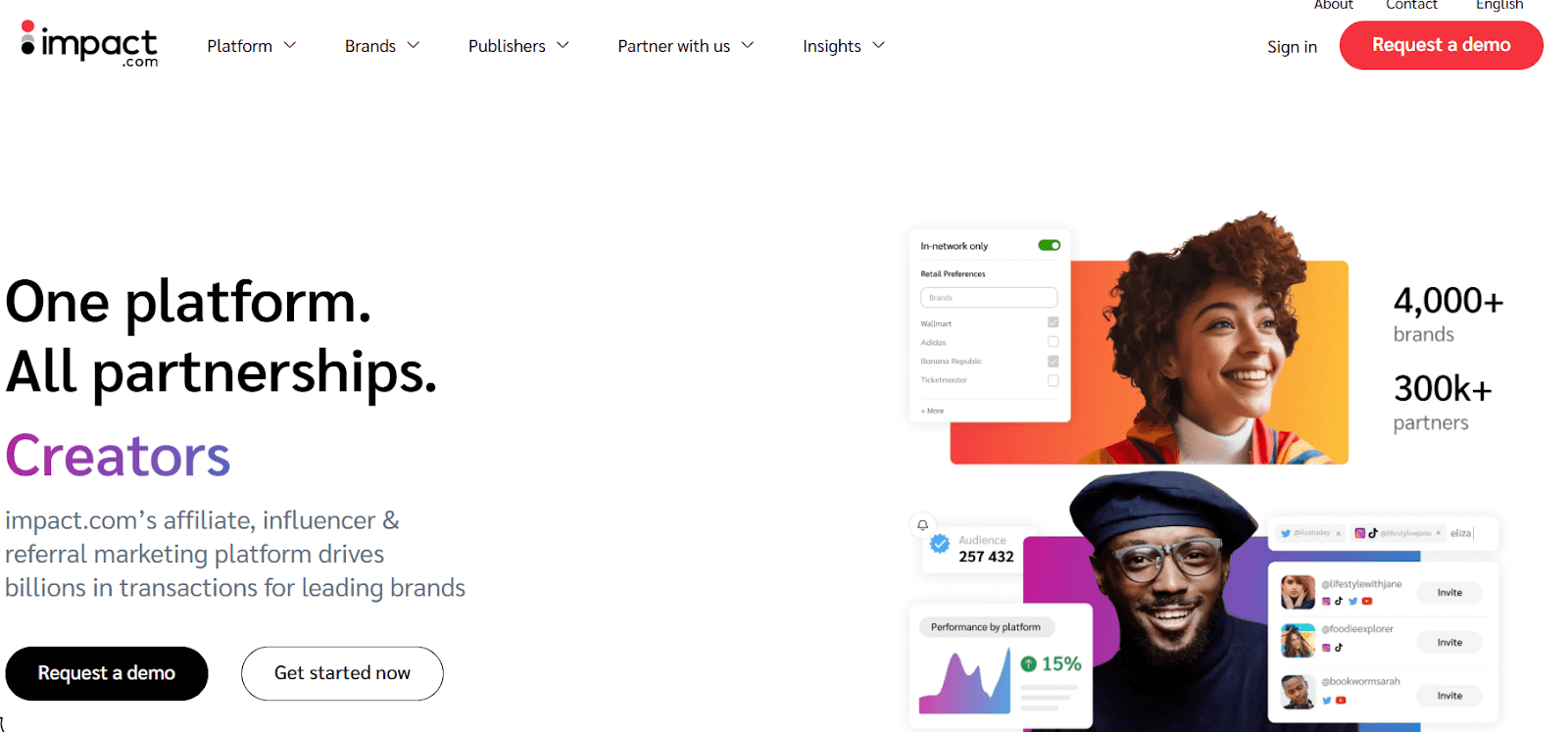
Impact.com is a partnership and affiliate marketing platform built to track and manage revenue-driven collaborations across multiple partner channels. While not exclusively designed for influencer marketing, the platform is widely used to manage affiliate programs that include creators, publishers, and other partners.
For brands evaluating the best influencer marketing software for creator commerce, Impact.com is often considered when affiliate infrastructure and payout management are central priorities.
For brands running creator commerce programs, Impact.com typically acts as the revenue attribution and commission infrastructure layer. Teams generate affiliate links, configure commission rules, and track conversions tied to influencer partnerships within the platform. Campaign dashboards provide reporting visibility across clicks, orders, and payouts, allowing brands to monitor the financial performance of creator-driven partnerships.
Impact.com focuses heavily on affiliate infrastructure rather than influencer relationship management. The platform does not include built-in discovery tools, influencer CRM pipelines, or gifting workflows. Brands running influencer campaigns often pair Impact with other tools that manage creator outreach and collaboration processes.
Impact.com can be a strong option when the primary requirement is affiliate tracking and partnership payout infrastructure. The platform is particularly useful for brands running complex commission structures across multiple partner types. For teams focused specifically on influencer campaign management, however, additional tools are often needed to handle creator relationships and campaign execution.
Choosing the best influencer marketing software for creator commerce depends on your brand’s operational needs, growth stage, and how closely influencer campaigns are tied to measurable revenue. Platforms like Influencer Hero provide a comprehensive, performance-focused solution that helps brands manage creator discovery, outreach, product gifting, affiliate tracking, and revenue attribution within one system.
Other tools such as Aspire, Modash, or GRIN offer strong capabilities in areas like creator recruitment through campaign applications, large creator discovery databases, or structured creator relationship management. Each platform brings different strengths, so it’s important to evaluate which one best supports your team’s workflows, reporting requirements, and long-term influencer strategy.
At NC Media, we work closely with eCommerce and DTC brands running creator commerce campaigns that connect influencers directly to product promotion and sales. Book a demo with NC Media to learn how our team helps brands plan, execute, and scale influencer marketing programs that drive measurable revenue and creator commerce performance..
FAQ

The best influencer marketing software for creator commerce depends on how your brand manages creator partnerships and tracks revenue generated by influencer campaigns. Platforms like Influencer Hero are commonly used because they combine influencer discovery, outreach management, product gifting, affiliate tracking, and revenue attribution in one system. Other tools such as Aspire, Modash, and GRIN may also work well depending on whether your priority is creator recruitment, affiliate campaigns, or structured creator relationship management.
Brands running creator commerce programs typically need tools that support influencer discovery, product gifting workflows, affiliate link tracking, discount code generation, and revenue attribution tied to individual creators. Platforms that combine these capabilities into one dashboard make it easier for marketing teams to track campaign performance. Solutions like Influencer Hero are often used by eCommerce brands because they connect creator activity directly to measurable sales outcomes.
Yes, many influencer marketing platforms include features that allow brands to track revenue generated from creator campaigns. This usually happens through affiliate links, creator storefronts, or unique discount codes assigned to each influencer. Platforms such as Influencer Hero, Modash, and GRIN provide dashboards where brands can monitor conversions, orders, and revenue tied to specific creators.
This often depends on the scale of the influencer program. Early-stage brands sometimes start with discovery tools to identify and contact creators. As campaigns grow, many teams move to full influencer marketing platforms like Influencer Hero, Aspire, or CreatorIQ that combine discovery, outreach, campaign management, and performance reporting. This helps reduce manual work and improves visibility across influencer collaborations.
Selecting the right platform typically depends on workflow complexity, team resources, and reporting requirements. Brands focused on scaling creator recruitment may prioritize large influencer databases and discovery filters, while teams running affiliate-heavy programs often look for strong revenue attribution and commission tracking. Platforms like Influencer Hero are frequently chosen by creator commerce brands that want an all-in-one system to manage creator relationships, campaigns, and performance reporting in a single environment.








.png)