Table Of Content
h1, h2
Later Influence pricing 2026 uses three quote-based tiers (Platform / +Services / Full-service). See the full breakdown — and the agency alternative.

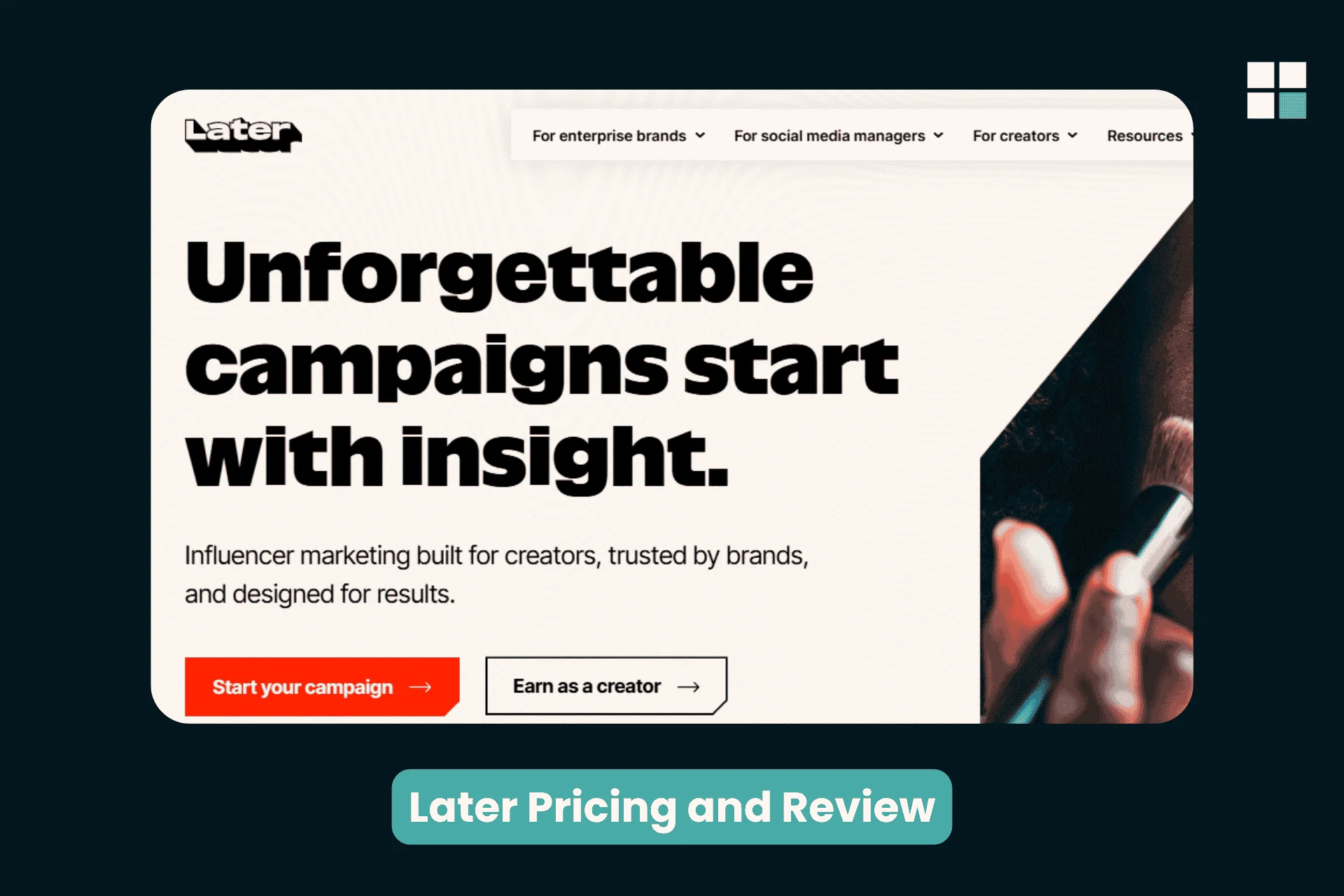
Table Of Content
Later Influence pricing isn't published — it's quote-based across three tiers: Platform-only, Platform + Services, and Full-service. There's no free trial for the influencer marketing product (Later Social, the company's separate scheduling tool, has its own pricing starting at $25/month, but that's a different product). Industry estimates put Later Influence in the mid-to-high enterprise range, with annual contracts scaling significantly depending on managed-service depth and campaign volume.
This guide breaks down what Later Influence actually costs in 2026, what each tier includes, where the platform genuinely delivers, and where it falls short. If you're evaluating it, it's also worth knowing there's a done-for-you alternative worth considering — more on that below.
Later Influence (formerly Mavrck) uses a custom enterprise pricing model with three explicit service tiers. Pricing isn't published anywhere, and every quote comes through a sales conversation tailored to campaign volume, creator partnerships, and how much managed-service support you want. Here's what's known about the structure:
All three tiers include unlimited user seats, unlimited campaigns, and unlimited influencers. The difference is how much of the work Later's team does for you.
This is the cheapest entry point, where you get the software but run the program yourself. It works for brands with a dedicated in-house influencer team that already knows what they're doing — but the lack of public pricing means you can't size it up before a sales call.
This is where most brands actually land. The hybrid model gives you the platform plus expert support without paying for full-service execution. The reps are consistently praised in reviews — this is one of Later Influence's strengths.
The full-service tier is functionally a managed agency offering bundled with software access. Notably, this exists at all because — like Aspire — Later acknowledges that running campaigns on the platform alone is a heavy lift for most brands. When the software vendor sells you the agency tier, that tells you something about who's actually doing the work.
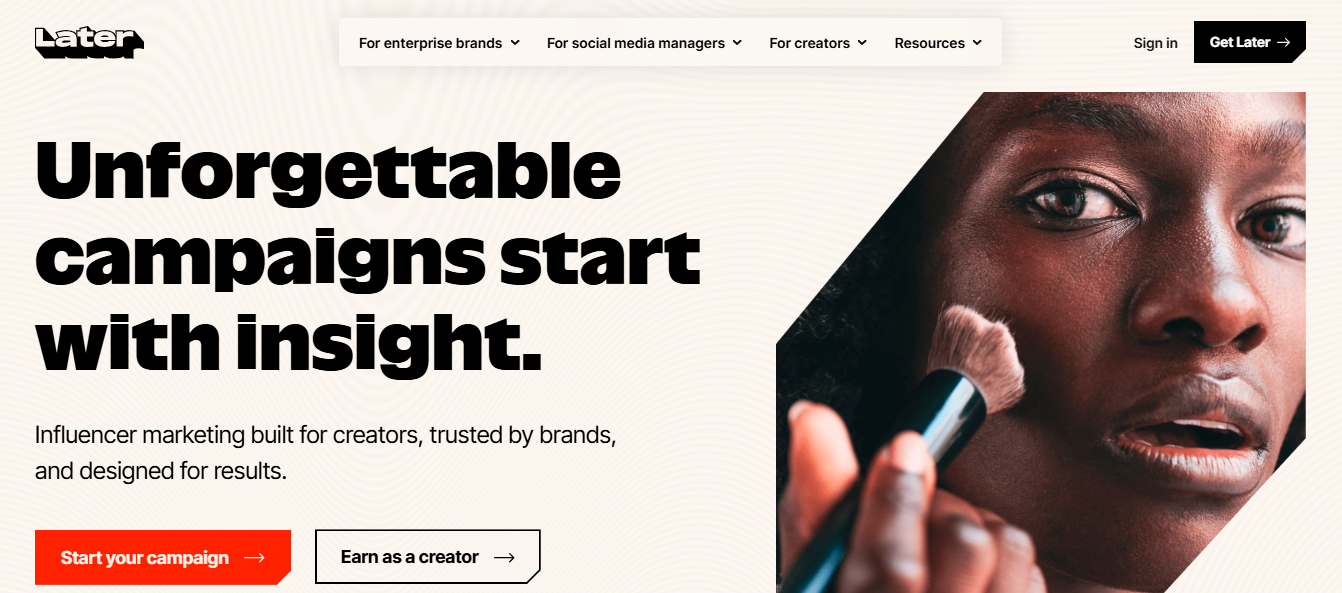
Later Influence is the influencer marketing arm of Later — a company that has consolidated three distinct products into one offering over the past two years. The platform began as Mavrck (founded 2014) and rebranded to Later Influence in January 2024 after Later (the social media scheduling platform) brought it under the same umbrella.
In January 2025, Later also acquired Mavely, the creator monetization app, for $250 million. The company now operates Later Social (scheduling), Later Influence (influencer marketing), and Mavely (creator monetization) under a unified business with around 375 employees. Later Influence has direct partnerships and integrations with Meta, TikTok, X, LinkedIn, YouTube, Snapchat, and Pinterest, and is particularly strong in CPG and retail marketing.
Later Influence (still listed as Mavrck on many review sites) has a generally positive profile on G2 and Capterra. Users consistently praise the platform's account representatives, the opted-in creator database, the ease of finding creators through specific interests and demographics, and the workflow automation for ambassador programs.
The recurring complaints cluster around platform usability and tracking. Reviewers note "the navigation is clunky" with multiple content tabs leading to different areas, and that "you can't keep influencers in an ongoing campaign — they must apply each time." Click and sales tracking has been flagged as unreliable, with one Capterra reviewer reporting "the click and sales tracking data aren't being captured, running into issues with Clickmeter." Reporting in the UI is described as functional but often requiring Excel exports for deeper analysis. Outdated location data and limited demographic options are also noted.
There's also a sharper critique from the creator side. Capterra includes a pointed review from an influencer noting that "the terms of service and contract terms are exploitative," with pre-agreed terms before seeing products or payment, no negotiation allowed, PayPal-only payouts, and no direct brand-creator communication. That's worth flagging because creator dissatisfaction translates directly into application rates, response quality, and ongoing relationship strength — which brands feel downstream.
Later Influence sells software with an optional full-service add-on. NC Media is a dedicated full-service agency. Both can deliver managed campaigns — but the cost structure, accountability, and focus are different.
When the software wins. If you have a dedicated in-house influencer team and want a strong platform with an opted-in creator database, Later Influence's Platform-only or Platform + Services tier is a legitimate choice. The opted-in database is a real differentiator, the AI discovery and similar-influencers tools save time, and the integration with Later Social (scheduling) and Mavely (affiliate) is useful if you're committed to the whole ecosystem.
When NC Media wins. Brands that don't have a dedicated influencer team — or brands that find themselves looking at Later Influence's full-service tier and wondering why they're paying for software underneath managed services — usually get more from a dedicated agency. NC Media has driven an 8X average ROAS increase and -52% CAC reduction across 50K+ influencer partnerships, working with brands like Lululemon, Arsenal, Decathlon, Under Armour, and Nespresso. We handle discovery, outreach, contracts, content production, payments, and reporting end-to-end — and we're accountable for the results, not the platform.
The full-service tier is a tell. Later Influence selling a full-service tier alongside the platform is significant — it's the same pattern as Aspire's Agency Services. When the software vendor sells you the managed offering, they're acknowledging that running campaigns on the platform alone is more work than most teams can handle. The question becomes: if you're paying for managed services anyway, why pay for the software layer underneath, especially when the creator-side complaints (rigid contracts, PayPal-only, no direct communication) translate into friction with the influencers you're actually trying to work with? A dedicated agency runs the entire relationship without forcing creators into a restrictive platform workflow — which often improves response rates and campaign quality.
Later Influence is genuinely worth it for brands with a dedicated influencer marketing team that values the opted-in creator database, wants AI-powered discovery, and is already using Later Social for scheduling or Mavely for creator commissions. The integrated ecosystem is real, the account reps are praised, and the platform handles ambassador and recurring campaigns well at scale.
Where it falls short is for brands that need execution more than tools. The tracking and reporting limitations, the clunky navigation, the rigid creator contracts, and the fact that Later itself sells a full-service tier all suggest the platform alone isn't enough for many brands. For teams that want measurable results without managing a software stack and an in-house team simultaneously, the agency model often delivers more with less overhead.
Later Influence is a capable platform built around a genuinely valuable opted-in creator database, now integrated with Later Social and Mavely under one roof. But pricing is opaque, the platform-only experience requires significant in-house lift, and the creator-side friction with rigid contracts can quietly undermine your campaigns. The fact that Later sells a full-service tier underscores what most brands eventually realize: software alone usually isn't enough.
For brands that want influencer marketing to function as a measurable growth channel — with managed services, flexible creator relationships, and documented results — without locking into a SaaS subscription on top of agency work, an independent agency model is usually the better fit. NC Media has 8 years of experience, 50K+ influencer partnerships, and documented results across D2C, retail, and lifestyle brands.
If you're evaluating Later Influence and wondering whether a full-service agency might be a better fit, NC Media offers a no-commitment consultation. Book a call here.
FAQ





.png)