Table Of Content
h1,h2
Explore the best influencer marketing software for Thinkific, including Influencer Hero, Refersion, impact.com, Influitive, and Post Affiliate Pro. Compare tools for affiliate tracking, creator management, and course revenue attribution to scale your Thinkific influencer campaigns.



Table Of Content
Thinkific has become a go-to platform for creators and brands selling digital products, from online courses to memberships and coaching programs. Its flexibility and ownership of customer data make it especially appealing for DTC businesses looking to scale beyond physical products.
When we work with brands on Thinkific, the influencer marketing needs are fairly consistent. Teams are looking for reliable ways to discover relevant creators, manage product or course access for partnerships, track affiliate performance, generate discount codes, and—most importantly—understand which creators are actually driving enrollments and revenue.
In this guide to the best influencer marketing software for Thinkific, we’re focusing specifically on platforms that help you manage creator relationships, track performance, and tie influencer activity directly to course sales—so you can make better decisions as you grow.
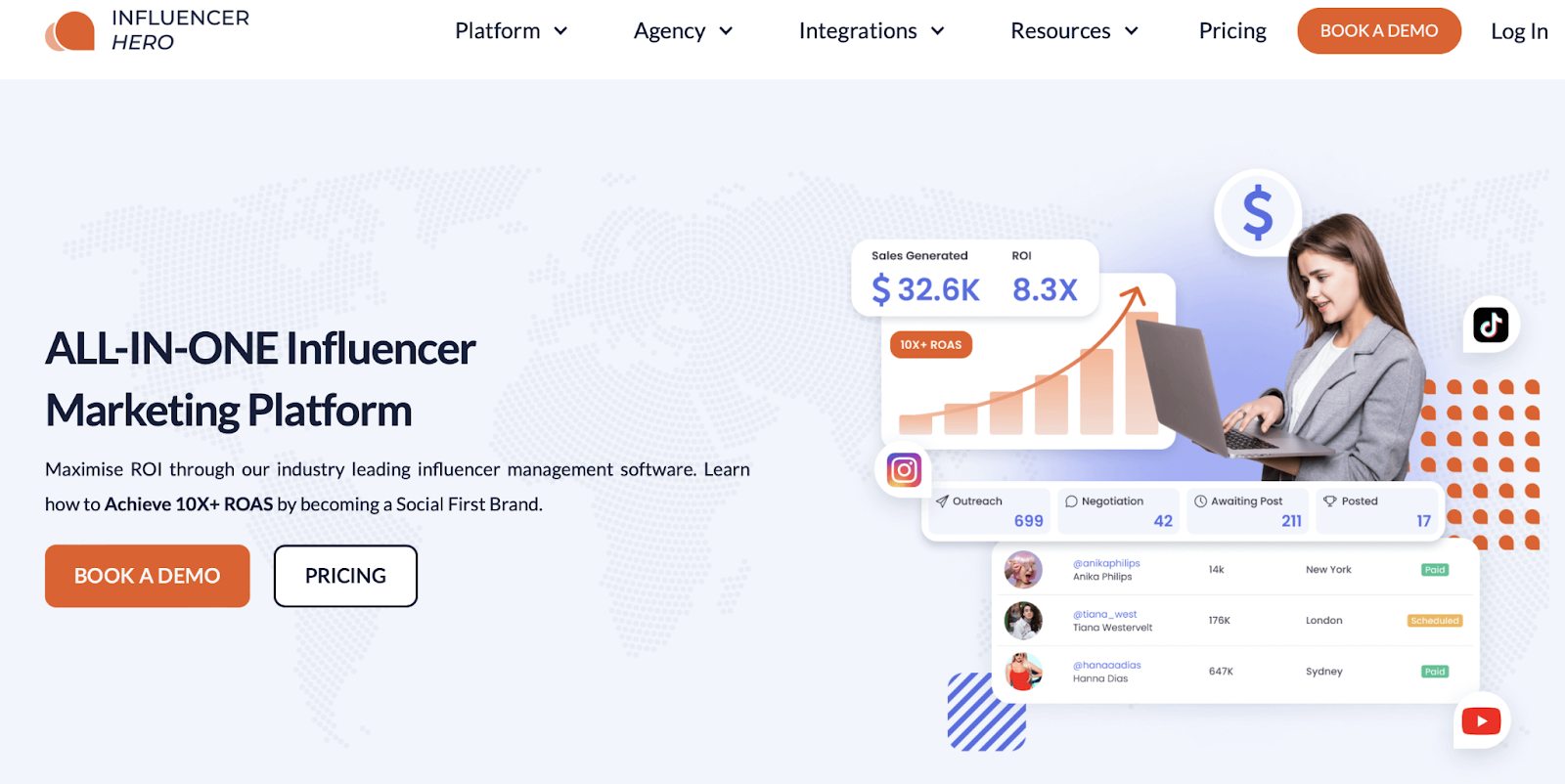
Influencer Hero is an all-in-one influencer marketing platform designed to help brands manage creator campaigns from discovery through to revenue tracking. It’s built with a strong focus on performance, making it particularly relevant for eCommerce and DTC teams that need clear visibility into results.
Within the context of the best influencer marketing software for Thinkific, it stands out for connecting influencer activity directly to course enrollments and sales data, rather than just surface-level engagement metrics.
For brands using Influencer Hero alongside Thinkific, it often becomes the central system for managing the entire influencer workflow—from identifying creators and handling outreach, to generating trackable course links and monitoring performance. Instead of managing creators, links, and reporting across separate tools, everything sits in one place.
Influencers receive unique links tied to specific courses or landing pages, clicks are tracked, and enrollments are automatically attributed back to individual creators and campaigns. This allows teams to move beyond manual reporting and clearly understand which partnerships are driving actual revenue, making it easier to optimize campaigns and scale what’s working.
To get the most out of Influencer Hero, brands need to approach influencer marketing with a structured setup, especially around tracking links and campaign organization. It’s best suited for teams planning to scale influencer as a consistent acquisition channel, rather than those running occasional one-off collaborations.
There can also be an initial onboarding phase to ensure attribution and reporting are set up correctly.
For brands on Thinkific that want to tie influencer activity directly to course revenue, Influencer Hero offers a more complete setup than most tools we’ve tested. It’s particularly strong when influencer marketing is treated as a performance channel, not just a brand awareness play.
Refersion is an affiliate marketing and tracking platform designed to help brands manage, grow, and optimize their affiliate and ambassador programs. It’s widely used by eCommerce and DTC brands that want a straightforward way to handle commissions, partner relationships, and performance tracking in one place.
For businesses that use Thinkific, it’s primarily relevant as a tool to manage affiliate-driven course sales and track referral performance.
For brands running on Thinkific, Refersion typically sits at the center of the affiliate layer of your marketing stack. It allows teams to onboard affiliates or creators, generate referral links and discount codes, and track when those links lead to course purchases.
Campaign management is relatively simple, with dashboards showing clicks, conversions, and commissions, while payouts can be automated once sales are confirmed. While it doesn’t focus heavily on influencer discovery or gifting workflows, it provides a solid structure for managing affiliate relationships and tying referrals back to revenue.
Refersion is strong on affiliate tracking, but more limited when it comes to broader influencer marketing workflows like discovery, outreach, or relationship management. Some teams find they need additional tools to handle creator sourcing or campaign coordination.
As programs scale, pricing and feature depth can also become a consideration, particularly for brands managing large volumes of creators or looking for more advanced reporting and communication features.
This can be a solid option for brands that use Thinkific that are primarily focused on affiliate tracking and commission management. It works well when your influencer strategy is structured around performance partnerships, but for teams looking to run more integrated influencer campaigns, it may require additional tools or a more layered setup.
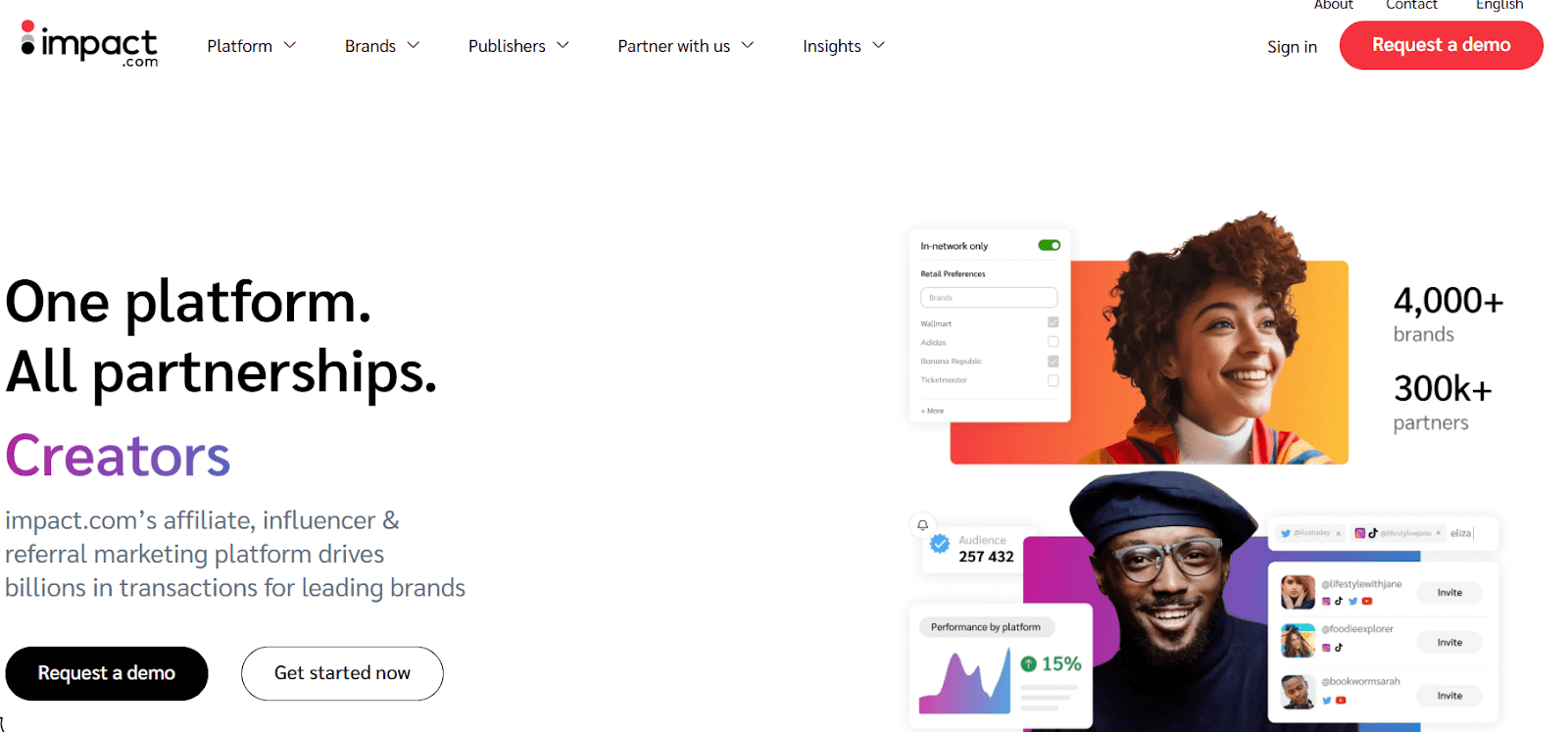
impact.com is a partnership management platform designed to help brands manage affiliates, influencers, and other partner types within a single system. It’s typically used by more mature DTC and eCommerce brands that need structured tracking, reporting, and partner management at scale. For Thinkific-based businesses, it’s relevant for connecting influencer activity directly to course enrollments and revenue, giving teams clearer visibility into performance.
For brands running on Thinkific, this platform typically sits on the performance and reporting side of the workflow. Teams use it to manage influencer or affiliate partnerships, generate trackable links, and connect those links to actual enrollments and revenue from course sales.
This removes the need for manual reporting and allows marketing teams to see which creators are driving sign-ups, not just traffic. It’s less focused on discovery or gifting workflows, and more on tracking, automation, and performance measurement across campaigns.
impact.com is a more advanced platform, which comes with a steeper learning curve and typically requires more internal resources to manage effectively. It’s often better suited to teams with established processes rather than those just getting started. For smaller brands, it may feel heavier than necessary if the primary goal is simple affiliate tracking or lightweight campaign management.
This can be a strong option for brands operating at scale and needing robust reporting and partner management. For teams heavily focused on attribution and performance tracking, it fits well, but for more agile or early-stage setups, it may require a more structured internal approach to get full value.
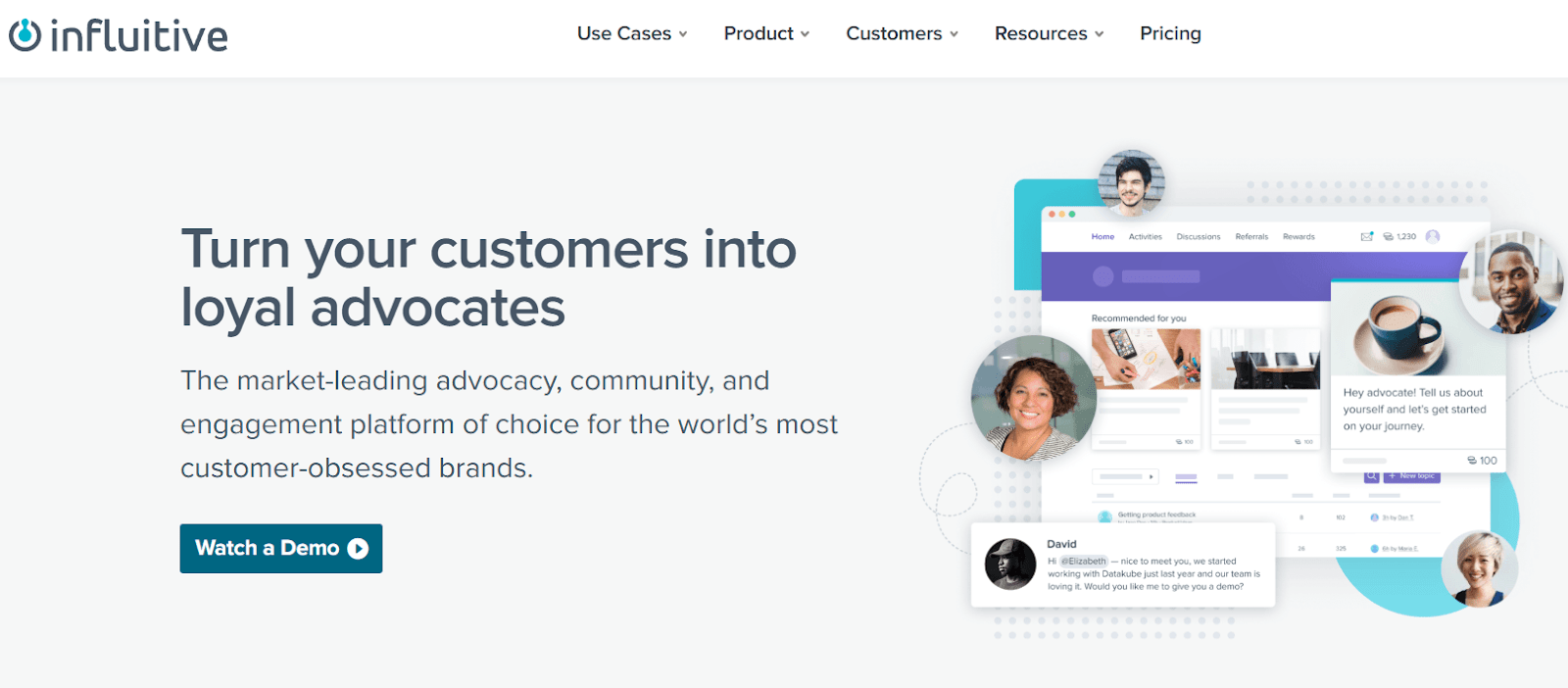
Influitive is a platform focused on building and managing customer advocacy and community-driven programs. Rather than traditional influencer marketing, it centers around engaging existing customers, advocates, and brand supporters to drive referrals and participation. For brands using Thinkific, it’s most relevant when combining community engagement with course enrollment and learning journeys.
For brands running on Thinkific, this platform typically connects community engagement with course participation. Teams can use it to activate advocates through challenges, content, or discussions, and then guide those users toward course enrollments or learning paths.
While it doesn’t function as a traditional influencer discovery or affiliate platform, it can support referral-style programs and engagement-driven growth. It’s less about managing external creators and more about leveraging your existing audience as promoters.
Influitive is not a traditional influencer marketing platform, so it lacks features like influencer discovery, outreach management, or structured affiliate tracking. Teams looking to run large-scale creator acquisition campaigns may find it limiting.
It also requires an existing engaged audience to deliver real value, which makes it less suitable for early-stage brands without a strong community.
This can be a good fit for brands prioritizing community-led growth and advocacy programs. However, for brands focused on acquiring new creators and scaling influencer campaigns, it typically needs to be paired with other tools to cover the full workflow.
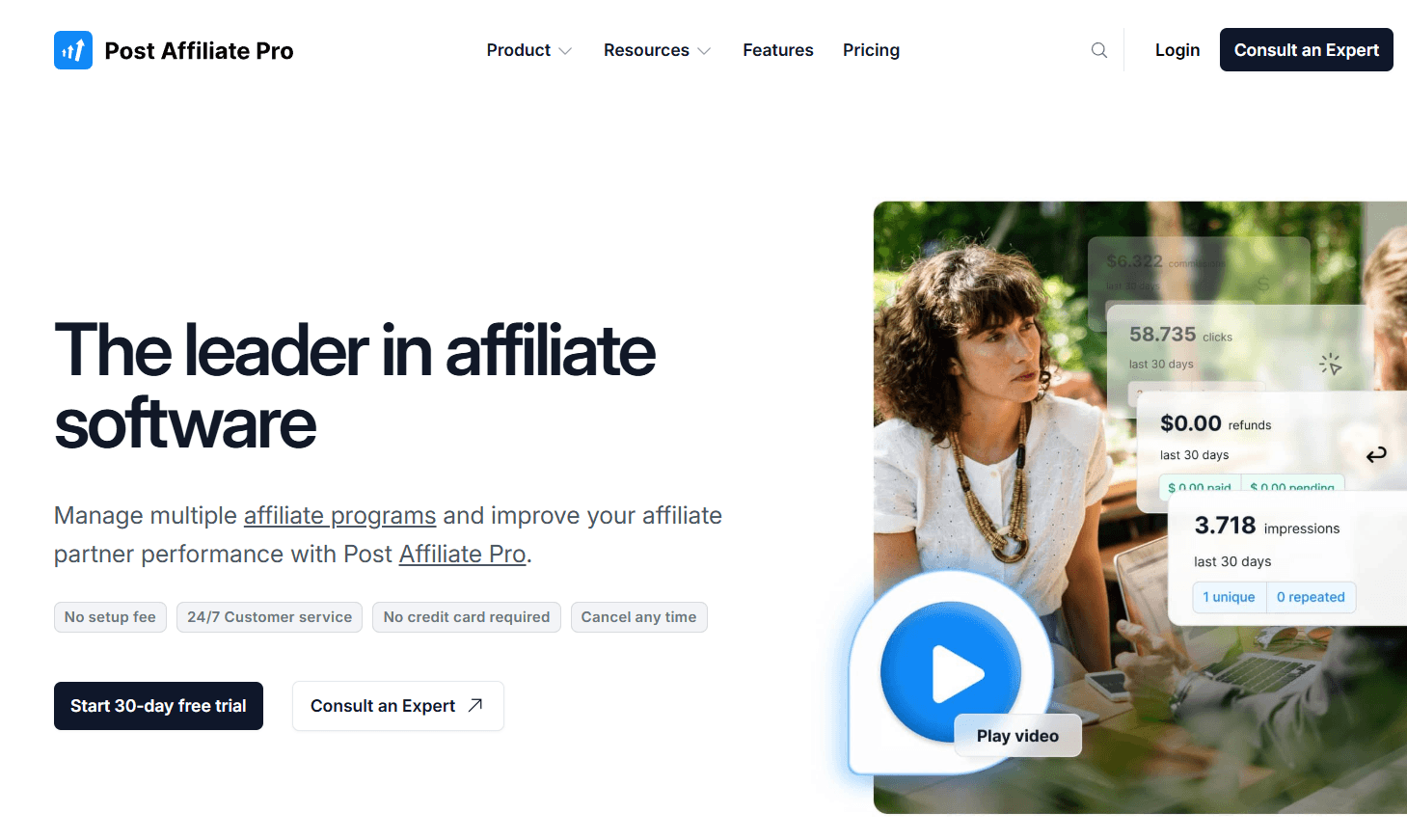
Post Affiliate Pro is an affiliate management platform designed to help brands track referrals, manage commissions, and automate payouts. It’s commonly used by businesses that want more control over affiliate tracking than basic built-in systems. For brands using Thinkific, it’s relevant for tracking course sales driven by affiliates and managing commission-based partnerships.
For brands running on Thinkific, this platform typically handles the affiliate tracking layer of the workflow. It tracks when a user purchases a course through an affiliate link and attributes that sale to the correct partner, allowing teams to manage commissions and payouts automatically.
It can extend beyond Thinkific’s native affiliate capabilities, giving brands more flexibility in tracking and reporting. However, it focuses primarily on affiliate performance rather than influencer discovery, outreach, or gifting workflows.
Post Affiliate Pro is strong on tracking and payouts but doesn’t cover the broader influencer marketing workflow. Teams often need additional tools for creator discovery, outreach, and campaign management. Implementation can also require a more hands-on setup compared to simpler tools, especially if you want more advanced tracking configurations.
This can be a practical option for brands focused on affiliate-driven growth and commission tracking. It works well when the priority is accurate attribution and payouts, but for more complete influencer marketing programs, it typically sits as one part of a larger stack rather than a standalone solution.
Choosing the best influencer marketing software for Thinkific ultimately comes down to how you plan to use influencer marketing within your business. What we consistently see, though, is that as brands grow, the need for clearer revenue attribution and more structured workflows becomes critical.
For brands looking to scale influencer marketing as a reliable acquisition channel—not just run one-off collaborations—having a centralized system that connects creators, campaigns, and course revenue makes a measurable difference. This is where more complete platforms tend to stand out, especially when managing multiple creators and campaigns over time.
At NC Media, we work closely with eCommerce and DTC brands using platforms like Thinkific to turn influencer marketing into a measurable acquisition channel tied directly to course sales. Book a demo with NC Media to learn how our team helps brands plan, execute, and scale influencer marketing programs that drive measurable revenue and creator commerce performance..
FAQ

The best influencer marketing software for Thinkific depends on how you manage creator partnerships and track course enrollments driven by influencers. Platforms like Influencer Hero are commonly used because they connect influencer activity directly to course sales, combining discovery, outreach, tracking links, and revenue attribution in one system. Other tools like Refersion or Post Affiliate Pro can also work well if your focus is primarily on affiliate tracking and commission management.
Brands using Thinkific typically need tools that support influencer discovery, outreach management, affiliate link tracking, discount codes, and—most importantly—revenue attribution tied to course enrollments. Having these features in one platform makes it easier to understand which creators are driving actual sign-ups, rather than just clicks or engagement.
Yes, most influencer marketing platforms can track course sales through affiliate links or unique tracking URLs assigned to each creator. Tools like Influencer Hero and impact.com allow brands to connect influencer-driven traffic to actual enrollments and revenue, giving teams clear visibility into which partnerships are generating results.
This depends on the stage of your program. Early-stage brands may start with basic affiliate tools to track referrals and payouts. As campaigns grow, many teams move to full influencer marketing platforms that combine discovery, outreach, campaign management, and performance tracking. This reduces manual work and provides a clearer view of how influencer efforts impact course sales.
Choosing the right platform typically comes down to how complex your workflows are and how much visibility you need into performance. Brands focused on affiliate-driven growth may prioritize strong tracking and commission features, while those scaling broader influencer programs often look for platforms that centralize outreach, tracking, and reporting. Tools like Influencer Hero are often selected by brands that want a more structured, end-to-end approach to managing creator campaigns and attributing revenue.









.png)