Table Of Content
h1,h2
Discover the best influencer marketing software for Ecwid, including Influencer Hero, Aspire, impact.com, Post Affiliate Pro, and LeadDyno. Learn how to track influencer sales, manage affiliate programs, use discount codes, and optimize revenue attribution for your Ecwid store.



Table Of Content
Ecwid has become a strong choice for eCommerce brands that want flexibility without rebuilding their entire tech stack. Its “sell anywhere” approach—across websites, social platforms, and marketplaces—makes it especially attractive for DTC teams that care about owning their data while scaling across channels.
When we work with brands using Ecwid, the influencer marketing needs are fairly consistent. Teams are typically looking for reliable ways to discover relevant creators, manage product gifting, track affiliate performance, generate discount codes, and—most importantly—understand which creators are actually driving revenue.
In this guide to the best influencer marketing software for Ecwid, we’re focusing specifically on platforms that integrate with Ecwid and help connect influencer activity directly to store performance. The goal is simple: give you a clearer view of what’s working, so you can scale influencer marketing as a measurable acquisition channel—not just a brand play.

Influencer Hero is an all-in-one influencer marketing platform built to help eCommerce and DTC brands manage creator campaigns from discovery through to revenue tracking. It combines influencer sourcing, outreach, campaign management, and performance analytics into a single system, with a strong focus on attribution and ROI.
Within the context of the best influencer marketing software for Ecwid, it stands out for its ability to connect influencer activity directly to store-level sales data, rather than relying only on engagement metrics.
When we implement this for brands on Ecwid, it typically becomes the central system for managing the entire influencer workflow—from identifying creators and running outreach, to coordinating gifting, generating trackable links and discount codes, and monitoring performance. Instead of managing creators, links, and reporting across multiple tools, everything is handled in one place.
Influencers are assigned unique links tied to specific Ecwid product pages or landing pages, clicks are tracked, and order data is automatically attributed back to individual creators and campaigns. This allows teams to clearly see which creators are driving actual purchases, not just traffic, and use that data to optimize campaigns, manage payouts, and scale what’s working without relying on manual reporting.
To get the most out of Influencer Hero, brands need a structured setup—especially around tracking links, campaign organization, and attribution logic. It’s best suited for teams treating influencer marketing as an ongoing acquisition channel rather than running occasional one-off collaborations.
There can also be an onboarding phase to ensure store data and campaign tracking are properly aligned.
For brands using Ecwid that want clear visibility into which creators are actually driving revenue, Influencer Hero tends to be one of the more complete options available. It works particularly well when influencer marketing is treated as a performance channel with structured workflows, rather than a purely awareness-driven effort.
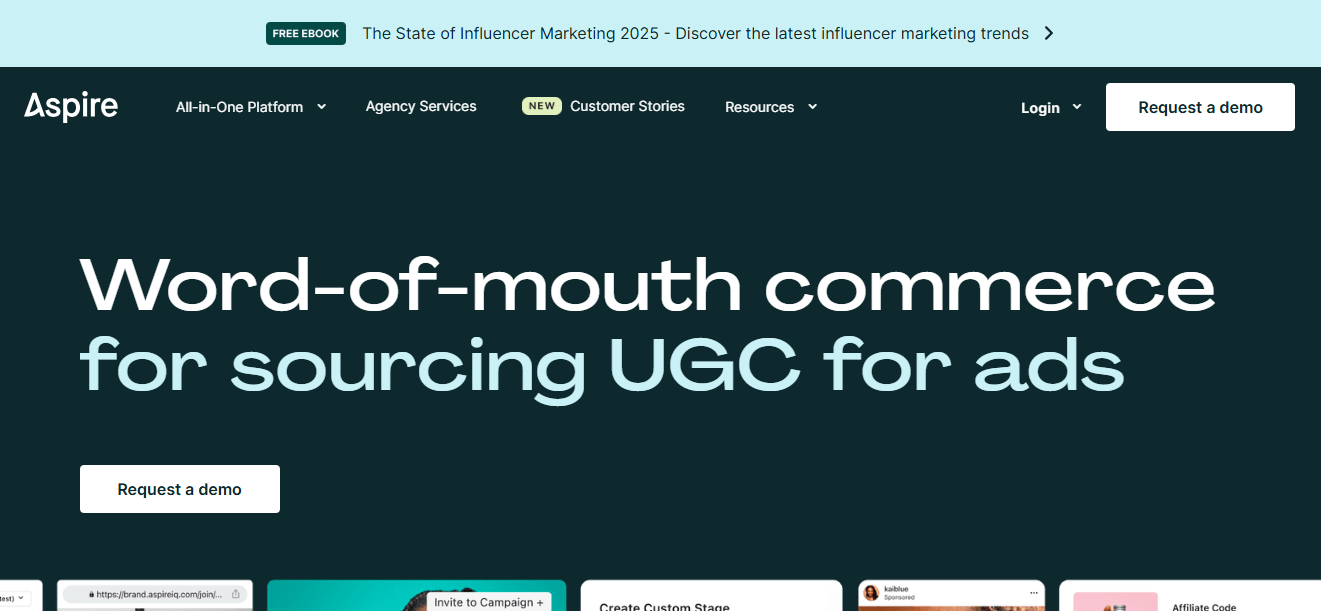
Aspire is an influencer marketing platform focused on helping brands manage creator relationships, product seeding, and campaign execution at scale. It’s widely used by DTC and eCommerce brands that prioritize influencer discovery and community-building alongside performance tracking.
For brands using Ecwid, Aspire is relevant as a platform that can connect creator campaigns with store data, enabling teams to track conversions and manage influencer-driven sales within a broader campaign workflow.
For brands running on Ecwid, this platform typically supports the campaign and relationship management side of influencer marketing. Teams use it to discover creators, manage outreach, coordinate product gifting, and run structured campaigns, while tracking links and discount codes connect creator activity back to store purchases.
It works well for organizing creator collaborations and maintaining ongoing relationships, with reporting dashboards that help teams understand which influencers are driving traffic and conversions, even if attribution may require a more structured setup.
Aspire is a more robust platform, which often comes with higher pricing and a steeper learning curve compared to simpler tools. It typically requires internal resources to manage campaigns effectively, especially when coordinating large volumes of creators.
Some teams also find that while it covers discovery and campaign management well, attribution and performance tracking may require a more structured setup to get full visibility into revenue.
This can be a strong option for brands using Ecwid that are focused on scaling structured influencer campaigns and managing creator relationships over time. For teams that prioritize content and community alongside performance, it fits well, but for brands heavily focused on pure revenue attribution, it may require additional structure to get full clarity.
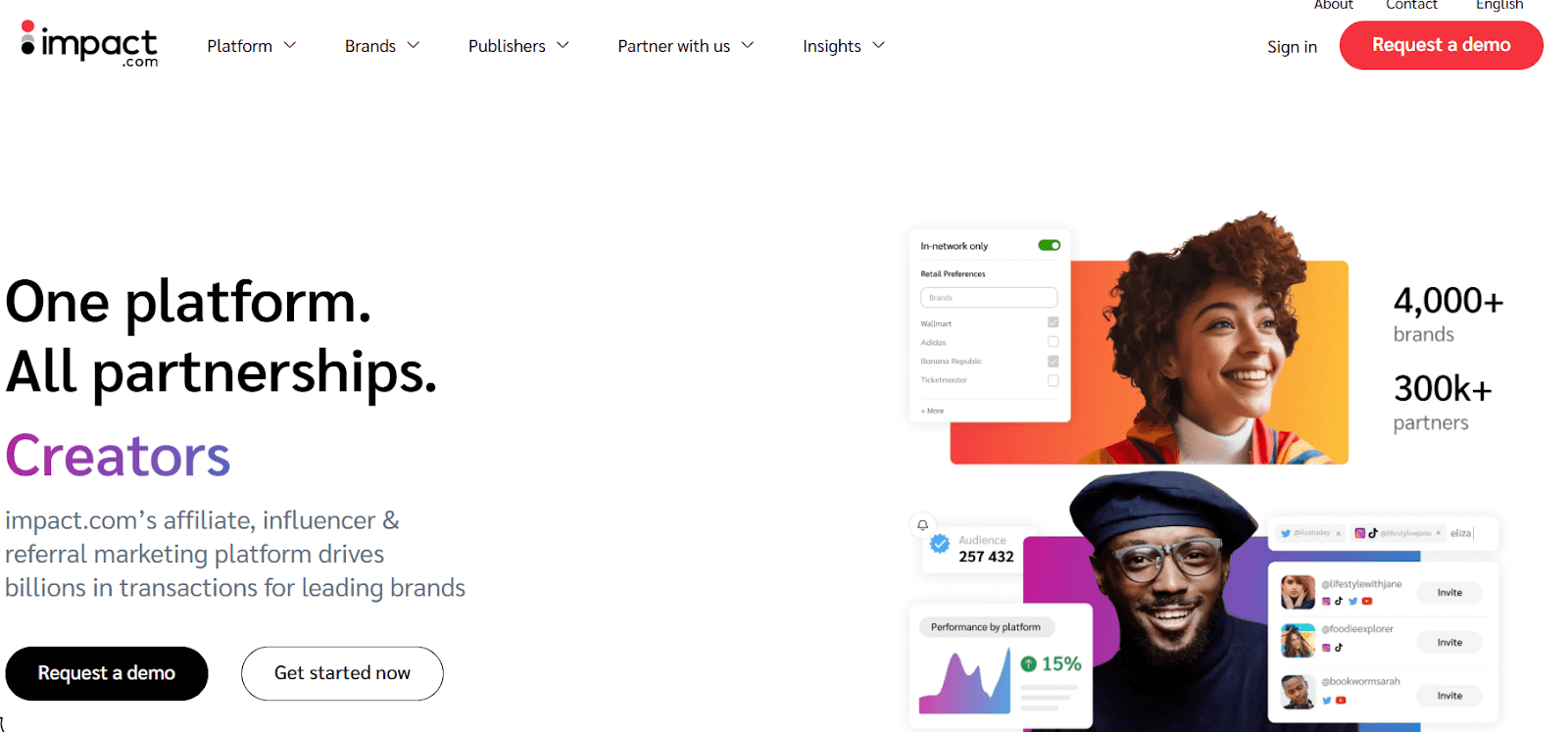
impact.com is a partnership management platform designed to help brands manage affiliates, influencers, and other partners within a single system. It’s typically used by more mature eCommerce and DTC brands that need structured tracking, automation, and reporting at scale.
For brands using Ecwid, it’s particularly relevant for connecting influencer and affiliate activity directly to store sales through its native plugin, although the integration is still evolving.
For brands running on Ecwid, this platform typically sits on the performance and attribution side of the workflow. Teams use it to manage influencer or affiliate partnerships, generate trackable links, and connect those links to actual purchases in the store.
It’s less focused on discovery or gifting workflows, and more on tracking conversions, managing commissions, and reporting on which partners are driving revenue. This makes it useful for brands that already have creators and want clearer visibility into performance.
impact.com is a more advanced platform, which often comes with a steeper learning curve and higher cost compared to lighter tools. It typically requires internal resources to manage effectively, especially when setting up tracking and reporting workflows.
The Ecwid integration is still in beta, which means some limitations around tracking setup and configuration may apply, particularly for teams expecting a plug-and-play experience.
This can be a strong option for brands using Ecwid that are operating at scale and need robust reporting and partner management. For teams focused heavily on attribution and performance tracking, it fits well, but for more agile setups, it may feel heavier than necessary.
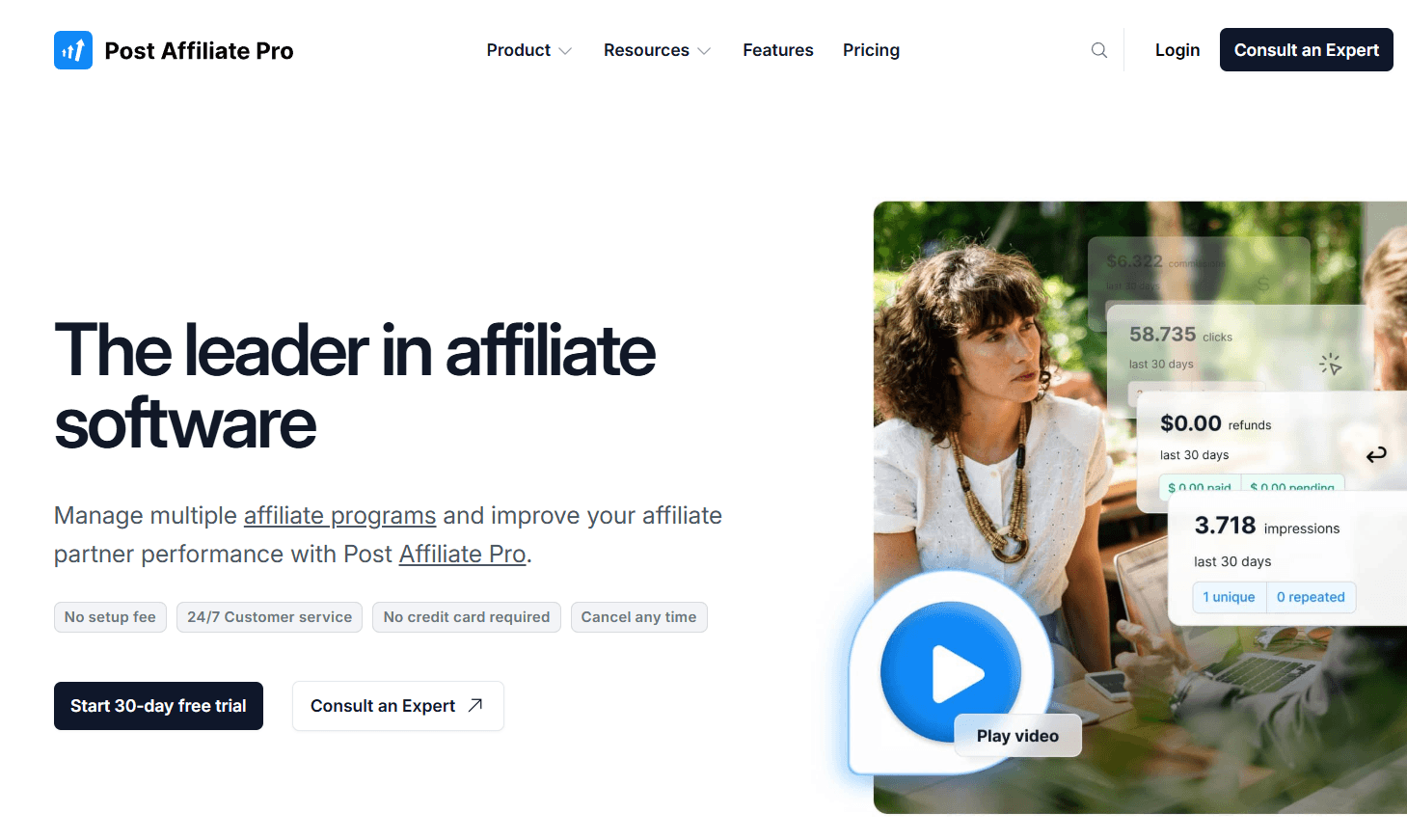
Post Affiliate Pro is an affiliate marketing platform focused on tracking referrals, managing commissions, and automating payouts. It’s commonly used by eCommerce brands that want more control over affiliate tracking than basic built-in systems.
For brands using Ecwid, it integrates directly through tracking scripts or plugins, making it a practical option for managing affiliate-driven sales.
For brands running on Ecwid, this platform typically handles the affiliate tracking layer of the workflow. Teams can assign referral links and coupon codes to creators, track when those lead to purchases, and automatically attribute commissions based on sales.
It supports per-product commission structures and coupon-based tracking, which gives brands flexibility when working with different types of creators. However, it focuses primarily on tracking and payouts rather than discovery or campaign management.
Post Affiliate Pro is strong on tracking and commission management, but it doesn’t cover the full influencer marketing workflow. Teams typically need additional tools for creator discovery, outreach, and campaign coordination.
Implementation can also require some initial setup effort, particularly when configuring tracking logic and commission rules.
This can be a solid option for brands using Ecwid that are primarily focused on affiliate tracking and payouts. For teams looking to run more complete influencer programs, it usually works best as part of a broader stack rather than a standalone solution.
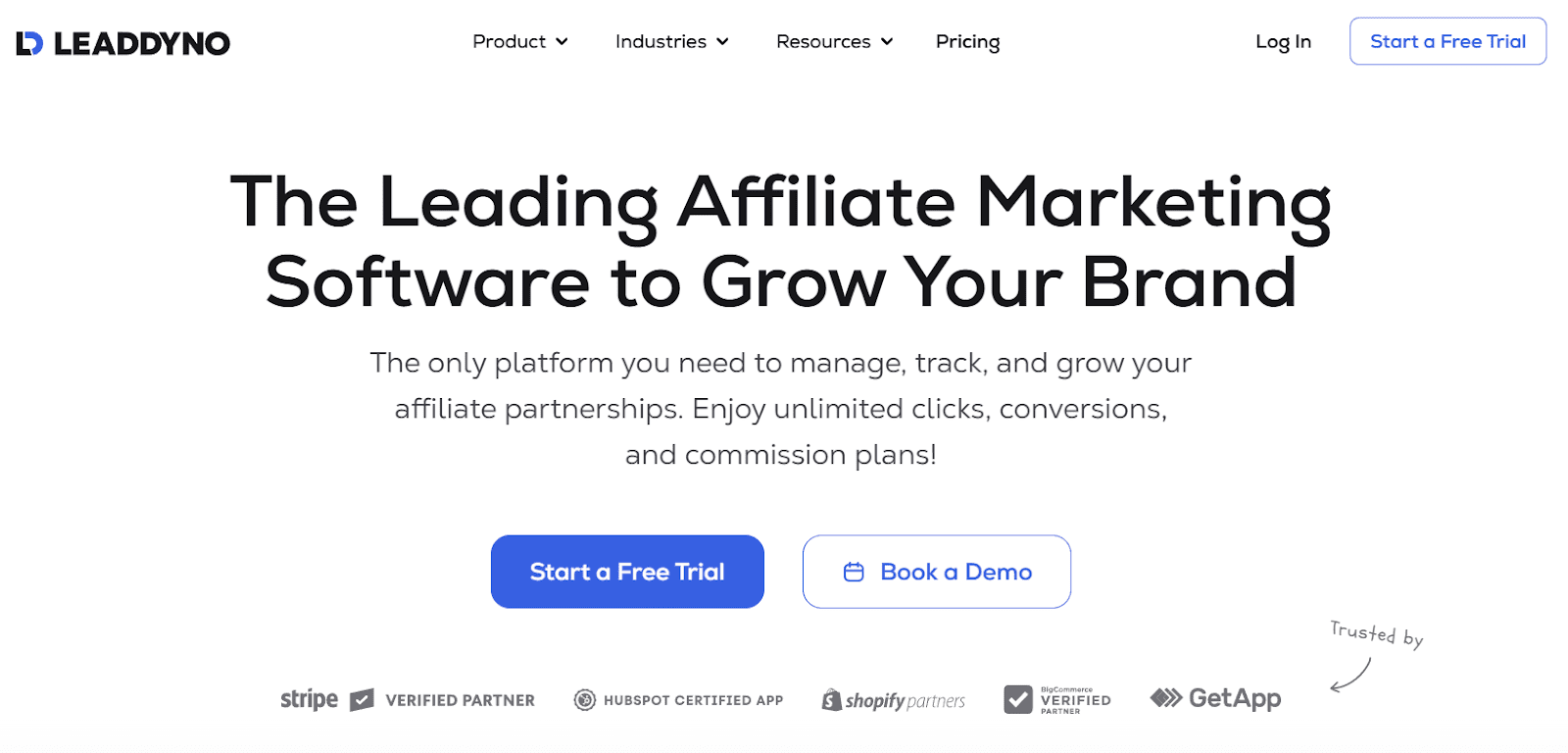
LeadDyno is an affiliate marketing platform designed to help brands launch and manage affiliate programs quickly, with a focus on ease of use and automation. It’s commonly used by small to mid-sized eCommerce brands that want a straightforward way to track referrals and manage commissions.
For brands using Ecwid, it offers a direct integration that simplifies setting up and running an affiliate program.
For brands running on Ecwid, this platform typically handles affiliate onboarding, tracking, and basic campaign automation. Teams can generate referral links and coupon codes, track clicks and sales in real time, and automatically invite customers to become affiliates after purchase.
It provides a simple dashboard for monitoring performance, making it easy to see which creators or customers are driving revenue, although it’s less focused on broader influencer campaign management.
LeadDyno is designed for simplicity, which means it may lack depth for brands running more complex influencer programs. Reporting and customization options are more limited compared to enterprise platforms, and it doesn’t include advanced discovery or relationship management features.
As programs scale, some teams find they need more robust tools to manage larger creator networks and more detailed attribution.
This can be a good option for brands using Ecwid that want to launch an affiliate program quickly with minimal setup. For brands planning to scale more structured influencer campaigns, it may serve as a starting point but often needs to be complemented with more advanced tools over time.
Choosing the best influencer marketing software for Ecwid ultimately comes down to how you plan to run and scale your creator program. What we consistently see is that as brands grow, the need for clearer revenue attribution and more structured workflows becomes critical—especially when managing multiple creators and campaigns across different channels.
For brands using Ecwid that want to move beyond one-off collaborations and treat influencer marketing as a measurable acquisition channel, having a system that connects creator activity directly to store performance makes a real difference. The right platform can simplify operations, improve reporting visibility, and help you double down on what’s actually driving sales.
If you’re evaluating how to structure or scale your influencer program, you can book a demo with NC Media to see how we help brands plan, execute, and optimize campaigns that deliver measurable revenue.
FAQ

The best influencer marketing software for Ecwid depends on how you plan to run your campaigns. If you need an all-in-one solution that covers discovery, outreach, and revenue tracking, platforms like Influencer Hero are often preferred. If your focus is mainly on affiliate tracking and commissions, tools like Post Affiliate Pro or LeadDyno can also work well.
Yes, most influencer marketing platforms can track sales from Ecwid through tracking links or discount codes. Tools like Influencer Hero and impact.com connect influencer activity directly to store orders, allowing you to see which creators are driving actual revenue rather than just traffic.
This depends on your stage. If you’re just starting, affiliate tools may be enough to track referrals and payouts. As your program grows, many brands move to full influencer marketing platforms like Influencer Hero or Aspire to manage discovery, outreach, gifting, and performance tracking in one place.
Key features include influencer discovery, outreach management, product gifting coordination, affiliate link tracking, discount codes, and revenue attribution. The most important factor is being able to connect influencer activity to actual Ecwid sales so you can measure ROI clearly.
Start by defining your workflow and goals. If you prioritize simplicity and quick setup, tools like LeadDyno may be a good fit. If you need advanced reporting and partner management, impact.com is worth considering. For brands looking for a structured, end-to-end system that connects campaigns directly to revenue, Influencer Hero is often one of the more complete options.









.png)