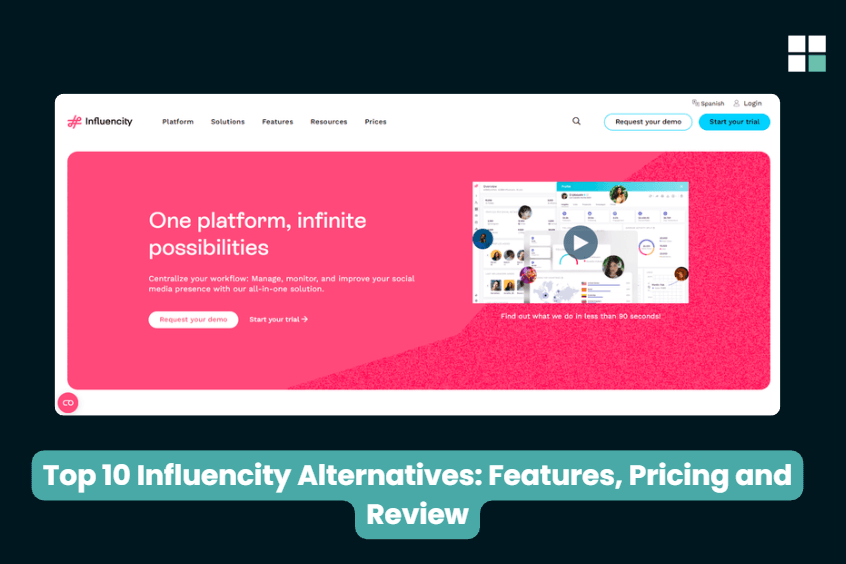
Top 10 Influencity Alternatives: Features, Pricing and Review
Looking for the best Influencity alternatives in 2026? Explore top platforms like Influencer Hero, InBeat, Traackr, CreatorIQ, Captiv8, and more. Compare features, pricing, and reviews to find the right solution for creator discovery, outreach automation, campaign management, and analytics.
Looking for the best Influencity alternatives in 2026? Explore top platforms like Influencer Hero, InBeat, Traackr, CreatorIQ, Captiv8, and more.
Looking for the best Influencity alternatives in 2026? Explore top platforms like Influencer Hero, InBeat, Traackr, CreatorIQ, Captiv8, and more. Compare features, pricing, and reviews to find the right solution for creator discovery, outreach automation, campaign management, and analytics.
Top 10 Influencity Alternatives: Features, Pricing and Review
If you’re searching for the best alternatives to Influencity in 2026, you’re in good company. Many agencies appreciate Influencity’s blend of social media scheduling and influencer marketing features — but its higher pricing, limited outreach automation, and SMM-first design often leave gaps for teams running full-scale creator programs. As influencer marketing becomes more operationally complex, agencies increasingly need deeper discovery tools, stronger CRM workflows, smarter automation, and better attribution than what Influencity provides out of the box.
The good news? From Influencer Hero to Traackr, InBeat, Meltwater, and Wednesday.app, there are several powerful Influencity competitors that offer richer influencer workflows, faster onboarding, more flexible pricing, and tools built for agencies managing multiple clients.
In this guide, we break down the best influencer marketing softwares and Influencity alternatives so your agency can choose the right platform to streamline discovery, automate outreach, manage creators at scale, and deliver stronger ROI for every client you support.
Top 10 Influencity alternatives:
Influencer Hero
Captiv8
Traackr
CreatorIQ
Meltwater
InBeat
Heepsy
Social Cat
Wednesday.App
HypeAuditor
Influencity
Influencity is a modular, data-driven influencer marketing platform that covers discovery, analytics, CRM, and campaign management. Its flexible structure makes it especially appealing for agencies that need to scale features up or down depending on each client’s scope and budget.
Pricing
Based on the demo data, Influencity’s pricing is structured annually:
Basic Plan: $3,816/year – limited users and discovery tools
Professional Plan: $9,588/year – adds AI search filters, campaign management, and more CRM functionality
Business Plan: $16,428/year – full access to analytics, automation, and reporting
Enterprise Plan: Custom pricing for large teams and multi-market campaigns
Contract Type: Annual only – No monthly plans available. Add-ons: Post tracking and reporting are optional paid modules.
Influencity Best Features
Modular Platform Structure: Influencity’s modular setup allows agencies to activate only the features they need, ensuring budgets are aligned with actual client requirements. This flexible structure makes it easier for teams to scale functionality up or down without paying for unnecessary tools.
Detailed Audience Demographics: The platform provides deep audience insights such as interests, authenticity indicators, location breakdowns, and age groups. These detailed metrics help marketers select creators whose audience genuinely matches the brand’s target consumer.
Influencer Relationship Management: Influencity’s CRM includes conversation history, collaboration timelines, content status tracking, and deadline management. This centralized workflow helps agencies streamline communication across multiple creators and campaigns.
Campaign Reporting: The system includes performance dashboards tracking reach, impressions, engagement rates, and content-level analytics. Brands and agencies can easily evaluate which creators drive meaningful results and how performance varies across platforms.
Bulk List Importing: Teams can upload large creator rosters and automatically enrich them with Influencity’s analytics and audience data. This is especially useful for agencies migrating from spreadsheets or other tools, allowing them to evaluate and segment creators at scale without manual work.
Influencity Limitations
Pricing increases quickly when multiple modules are added, making the platform more expensive for agencies needing a full suite of features.
There is no built-in gifting or affiliate automation, requiring external tools for product seeding or revenue attribution.
Campaign analytics are less advanced than enterprise solutions like CreatorIQ, which may limit teams requiring deeper reporting layers.
The modular structure introduces a learning curve, especially for teams using several add-ons simultaneously, which can lead to longer onboarding and training times.
Best Influencity Alternatives at Glance
Tool
Best For
Price Starts At
Key Differentiator
Influencity
Agencies wanting modular influencer tools they can scale as clients grow
The Most Common Frustrations Teams Have with Influencity
Influencity is widely appreciated for its modular structure, flexible pricing, and large publicly sourced creator database, but many agencies and mid-size brands say the platform can feel more complex in practice than it appears on paper. While its public-data model gives access to millions of creators without requiring opt-ins, teams often report that Influencity demands more onboarding time and manual refinement compared to automation-first platforms. The most common complaints include:
Limited outreach and messaging capabilities: Many users note that Influencity lacks a built-in messaging inbox for negotiation. Because all follow-ups must be handled through external email accounts, agencies running high-volume outreach cycles often feel the workflow is fragmented and not as seamless as tools with native DMs or centralized communication hubs.
Shopify-only integration limits: While the Shopify integration works well for gifting and affiliate workflows, Influencity does not support WooCommerce, BigCommerce, Magento, or custom eCommerce systems. Agencies working across varied client tech stacks often end up relying on manual tracking or external tools to cover the gaps.
Additional cost for auto-tracking features: The automated post-tracking tool comes as an extra paid add-on rather than being included in the core plan. Many users say costs add up quickly when tracking multiple influencers, making Influencity more expensive than initially expected.
Occasional data accuracy issues due to public-data sourcing: Since Influencity relies fully on publicly available data rather than API access, some users report small discrepancies in audience demographics or reach estimates. While not dramatic, teams running precise forecasting models say this can affect planning and performance expectations.
Lack of UGC licensing and paid social features: Influencity does not offer native UGC licensing workflows, paid usage rights management, or creator content boosting. Teams who rely heavily on whitelisting or paid amplification still need a second tool, which adds operational overhead.
These friction points lead many agencies and growing brands to consider alternatives that offer faster onboarding, deeper automation, built-in messaging, and broader eCommerce integrations. While Influencity remains strong in discovery, CRM structure, and public-data scale, its limitations often push high-volume teams toward tools designed for speed, automation, and all-in-one execution.
10 Best Influencity Alternatives
1. Influencer Hero
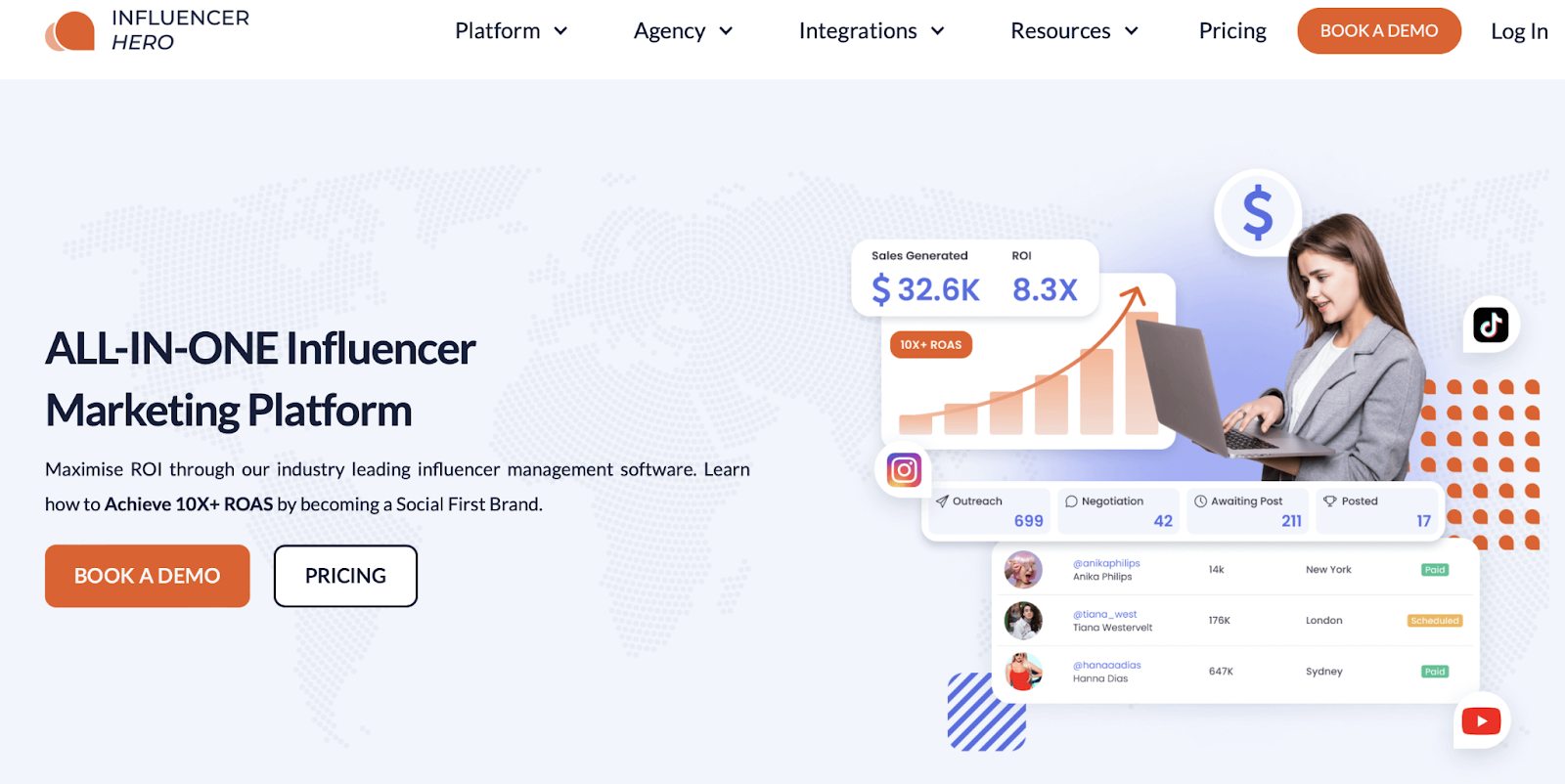
Influencer Hero is a full end-to-end influencer marketing platform built for brands and agencies that want to manage every part of the creator workflow inside a single operating system. It unifies influencer discovery, automated outreach, CRM pipelines, gifting workflows, UGC and content tracking, sales attribution, affiliate programs, and creator storefronts — allowing teams to replace multiple disconnected tools with one streamlined platform.
Pricing
There are several plan options depending on how many creators your team needs to contact each month.
Standard Plan: Starts at $649/month. Allows you to contact up to 1,000 creators per month.
Pro Plan: Starts at $1,049/month. Allows you to contact up to 5,000 creators per month.
Business Plan: Starts at $2,490/month. Allows you to contact up to 10,000 creators per month.
Custom & Agency Plans: Tailored pricing depending on brand or agency requirements.
Influencer Hero Best Features
Advanced Multi-Platform Discovery: Agencies can search across Instagram, TikTok, YouTube, Facebook, Pinterest, Snapchat, X, and Twitch using robust filters like audience demographics, interests, engagement rate, follower quality, and brand affinity. This multi-platform coverage gives teams flexibility to support diverse clients without juggling multiple tools.
Brand Follower & Lookalike Discovery: Influencer Hero can identify creators who already follow a brand, improving authenticity and boosting outreach conversion rates. Lookalike profiles allow agencies to scale successful campaigns by quickly finding creators similar to proven top performers.
AI-Powered CRM for Large-Scale Seeding: The CRM is built specifically for high-volume workflows, letting agencies run campaigns with hundreds or thousands of influencers simultaneously. AI assists with next-step suggestions, follow-up timing, automated reminders, and status updates — reducing manual labor and keeping large client pipelines organized.
Automated Email Workflows With AI Personalization: Agencies can run personalized bulk outreach with smart templates, drip sequences, and automated reply tracking. These automation tools dramatically reduce manual outreach time and allow account managers to scale campaigns without sacrificing personalization.
Integrated Gifting & Seeding Across Shopify and WooCommerce: Influencer Hero is one of the few platforms offering both Shopify and WooCommerce integrations, making product seeding easy regardless of a client’s eCommerce stack. Agencies can track shipments, delivery confirmations, and fulfillment status automatically across multiple brands.
Influencer Hero Limitations
UGC licensing agreements still require manual negotiation and placement inside creator contracts.
Paid ad whitelisting isn’t native and must be managed through each platform’s ads manager.
Why It’s Influencer Hero a Good Alternative to Influencity
Influencer Hero stands out because it offers the full scope of influencer operations — outreach, discovery, CRM, gifting, affiliate management, UGC tracking, and real ROI attribution — in one tightly integrated workflow. While Influencity provides strong analytics and a modular structure, many teams outgrow its limited outreach capabilities, Shopify-only integrations, and reliance on add-ons for features like auto-tracking. Influencer Hero eliminates these friction points by delivering a complete, automation-first system that scales with agencies and brands of all sizes.
For teams that want flexibility, powerful automation, and a true all-in-one platform without piecing together separate tools, Influencer Hero consistently emerges as the most comprehensive and cost-efficient choice.
2. Captiv8
Captiv8 is an enterprise-grade influencer marketing platform built for large agencies and global brands running complex, multi-market campaigns. Its strengths lie in deep creator intelligence, multicultural audience insights, and AI-driven predictive models that help teams make data-backed decisions at scale.
Pricing
Captiv8 offers several enterprise-level options.
$25,000/year (annual commitment required)
$3,000 onboarding fee
$20,000–$30,000/month for storefront + affiliate program managed services
Captiv8 Best Features
Influencer Discovery: Captiv8’s discovery engine covers 15M+ creators with detailed filters including audience traits, interest categories, safety scoring, brand mentions, and lookalike models. This is especially useful for agencies managing diverse verticals and global segmentation.
Sentiment Analysis: The platform assesses the tone of creator content—positive, neutral, or negative—to ensure alignment with brand positioning. This helps agencies protect brand safety while identifying creators that naturally fit client guidelines.
Global Brand Mentions Tracking: Captiv8 tracks brand and competitor mentions across captions, hashtags, and text-based content. This enables agencies to spot emerging creators early and uncover new vertical opportunities before they trend.
Competitive Intelligence: Agencies can analyze competitor collaborations, campaign activity, and partner frequency across different markets. This visibility helps strategists benchmark clients and identify white-space opportunities.
Team Collaboration Tools: Shared workspaces, internal notes, approval flows, and messaging make Captiv8 effective for large cross-functional teams. Agencies often rely on these tools when managing multi-layered, multi-market campaigns.
Captiv8 Limitations
Users frequently mention slow or inconsistent customer support experiences.
Native integrations are limited, with most functionality centering around Shopify and Refersion.
Some reports highlight issues with creator payouts and delayed deposits during campaigns.
Why It’s a Good Alternative to Influencity
Captiv8 offers a strong alternative to Influencity for teams that prioritize deep analytics, multicultural insights, and high-budget, enterprise-level execution. While Influencity provides flexible modular pricing and a fast, scalable workflow for everyday campaign management, Captiv8 excels in predictive modeling, competitive intelligence, and audience depth — features that larger agencies often rely on.
Both platforms are powerful in their own right, but choosing between them depends on whether your team values Influencity’s streamlined operations or Captiv8’s enterprise-grade intelligence and forecasting capabilities.
3. Traackr
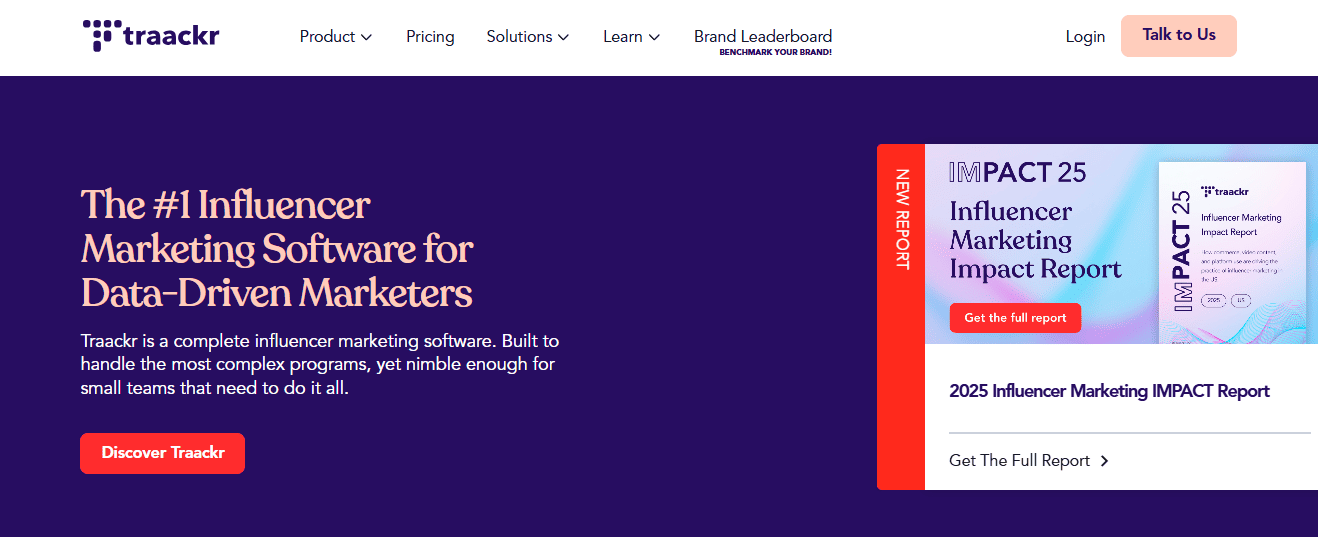
Traackr is a leading enterprise influencer marketing platform built for global brands and agencies that depend on rigorous analytics and financial modeling. Its biggest strengths lie in cost forecasting, competitive benchmarking, and standardized global reporting — making it ideal for teams managing large budgets where accuracy, governance, and cross-market visibility are essential.
Pricing
Traackr’s pricing varies by usage levels.
Growth Plan: from ≈ $25,000/year (minimum users) according to some sources.
Standard Plan: from $32,500/year (minimum ~5 users) according to published pricing.
Plus Plan: from $55,000/year (minimum ~10 users) for advanced features and support
Enterprise: Custom quote for multi-brand, multi-region setups.
Annual subscription required; no published monthly plan; free trial by case-case only.
Traackr Best Features
Cost Efficiency & ROI Forecasting: Traackr provides detailed CPC, CPM, CPV, and CPE forecasting tools that help teams predict creator performance before spending. This level of financial clarity makes it a strong fit for agencies handling large, multi-market budget allocations.
Brand Vitality Score (BVS): Traackr’s proprietary BVS metric tracks brand momentum, creator impact, and relative competitive strength. It provides executives and strategists with a holistic performance view that goes beyond traditional influencer KPIs.
Deep Competitive Intelligence: Users can analyze competitor partnerships, surface creator overlap, and benchmark share of voice across different global markets. Agencies rely on these insights to identify emerging opportunities and refine strategic positioning.
Global Market Support: Traackr’s governance tools, workflow permissions, and standardized templates support multi-country teams operating under strict operational structures. It’s built to keep regional reporting consistent and compliant at scale.
Advanced Reporting Infrastructure: The platform includes customizable dashboards that present granular, presentation-ready metrics that update dynamically. This is particularly useful for enterprise clients that require formal reporting for leadership and global alignment.
Traackr Limitations
High annual pricing makes it inaccessible for mid-market teams or agencies with multiple smaller clients.
Users occasionally report platform lag or slow data syncing, especially with fast-moving social metrics.
Less coverage and depth for niche, emerging, or micro creators — often requiring supplemental discovery tools.
Steeper learning curve due to complex analytics and financial modeling features.
Why It’s a Good Alternative to Influencity
Traackr is a strong alternative to Influencity for enterprise teams that prioritize governance, global analytics, and precise budget modeling. While Influencity offers flexible modular pricing and a more agile workflow suited to mid-market agencies and fast-moving campaigns, Traackr excels in financial forecasting, competitive intelligence, and multi-region reporting.
Both platforms serve different operational needs effectively, with Influencity supporting streamlined execution and Traackr delivering unmatched depth in measurement and strategic oversight.
4. CreatorIQ
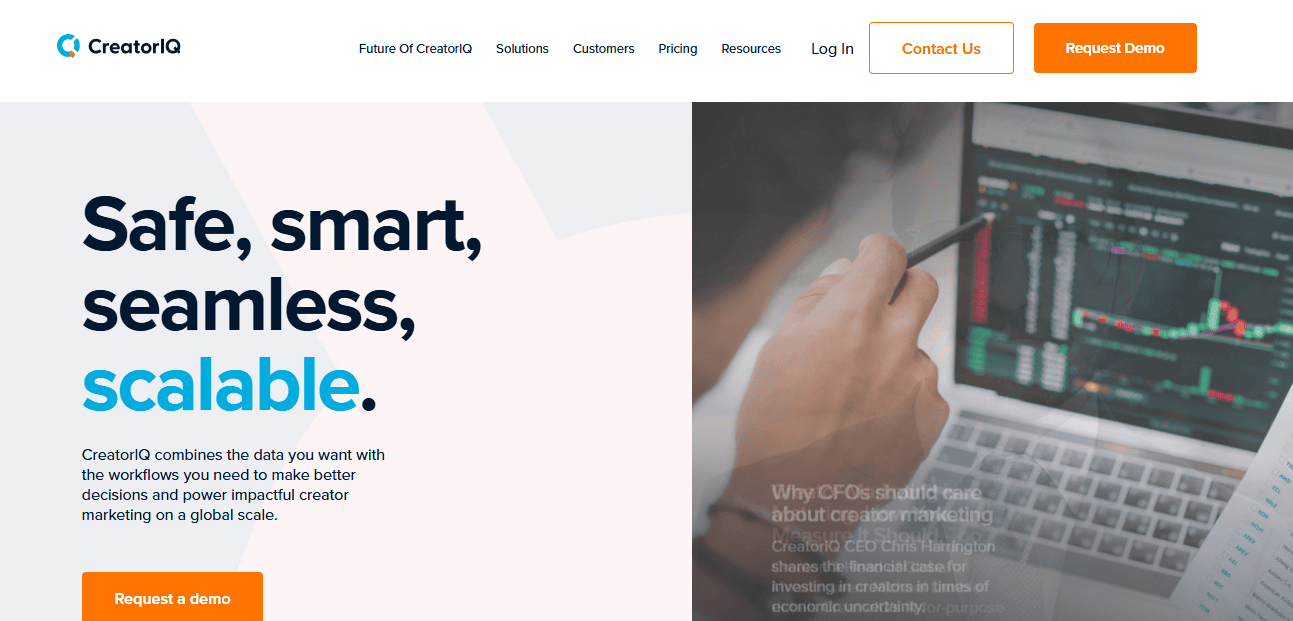
CreatorIQ is an enterprise-grade influencer marketing platform built for large agencies and global brands that require strict governance, deep data integrations, and highly structured creator operations. Its strength lies in delivering a unified, compliance-focused workflow supported by advanced data pipelines — making it well-suited for teams managing multi-region, high-budget campaigns with rigorous reporting standards.
Pricing
According to demo information, CreatorIQ provides several packages depending on support needs.
CreatorIQ offers annual contracts only, and pricing varies depending on the plan, number of creators, and seats required. The Creator Connect add-on is available for an additional $15,000/year.
CreatorIQ Best Features
AI-Powered Creator Discovery: CreatorIQ uses AI and identity-graph matching to surface creators by audience traits, engagement quality, brand affinity, and historical partnerships. This precision is particularly valuable for enterprise teams targeting segmented audiences across multiple countries.
End-to-End Campaign Workflow Management: The platform supports every step — vetting, approvals, contracting, and reporting — inside a structured permission system. For large organizations, this eliminates fragmentation and ensures consistent execution across departments and global offices.
Real-Time Analytics & EMV Reporting: CreatorIQ centralizes data into executive dashboards that track engagement, reach, impressions, spend, and EMV in real time. Brands use this to standardize reporting across markets and make better budget allocation decisions.
Deep Integrations & Governance Controls: With native integrations into Meta, TikTok, YouTube, Shopify, and major CRM/eCommerce systems, CreatorIQ ensures accurate data syncing at scale. Its permission-based controls and audit trails make it a top choice for teams with stringent compliance requirements.
Customizable Dashboards & Reporting: Users can design dashboards tailored to specific KPIs, client segments, or global regions. This flexibility supports agencies managing multiple clients or internal teams overseeing numerous markets simultaneously.
CreatorIQ Limitations
Extremely high starting price, making it inaccessible for small or mid-market teams.
No free trial offered, limiting pre-purchase evaluation.
Limited automation for affiliate, conversion, or revenue tracking workflows.
Annual contracts only — no month-to-month flexibility.
Onboarding can be complex for teams without dedicated operations support.
Why It’s a Good Alternative to Influencity
CreatorIQ is a strong alternative to Influencity for large organizations that prioritize governance, compliance, and deep integrations across multi-market operations. While Influencity offers modular flexibility and a more accessible entry point for mid-sized agencies, CreatorIQ excels in structured enterprise workflows, advanced data pipelines, and global reporting consistency.
Both platforms serve different team needs well — with Influencity supporting agile, fast-moving campaign execution, and CreatorIQ delivering the infrastructure required for large-scale, highly regulated creator programs.
5. Meltwater
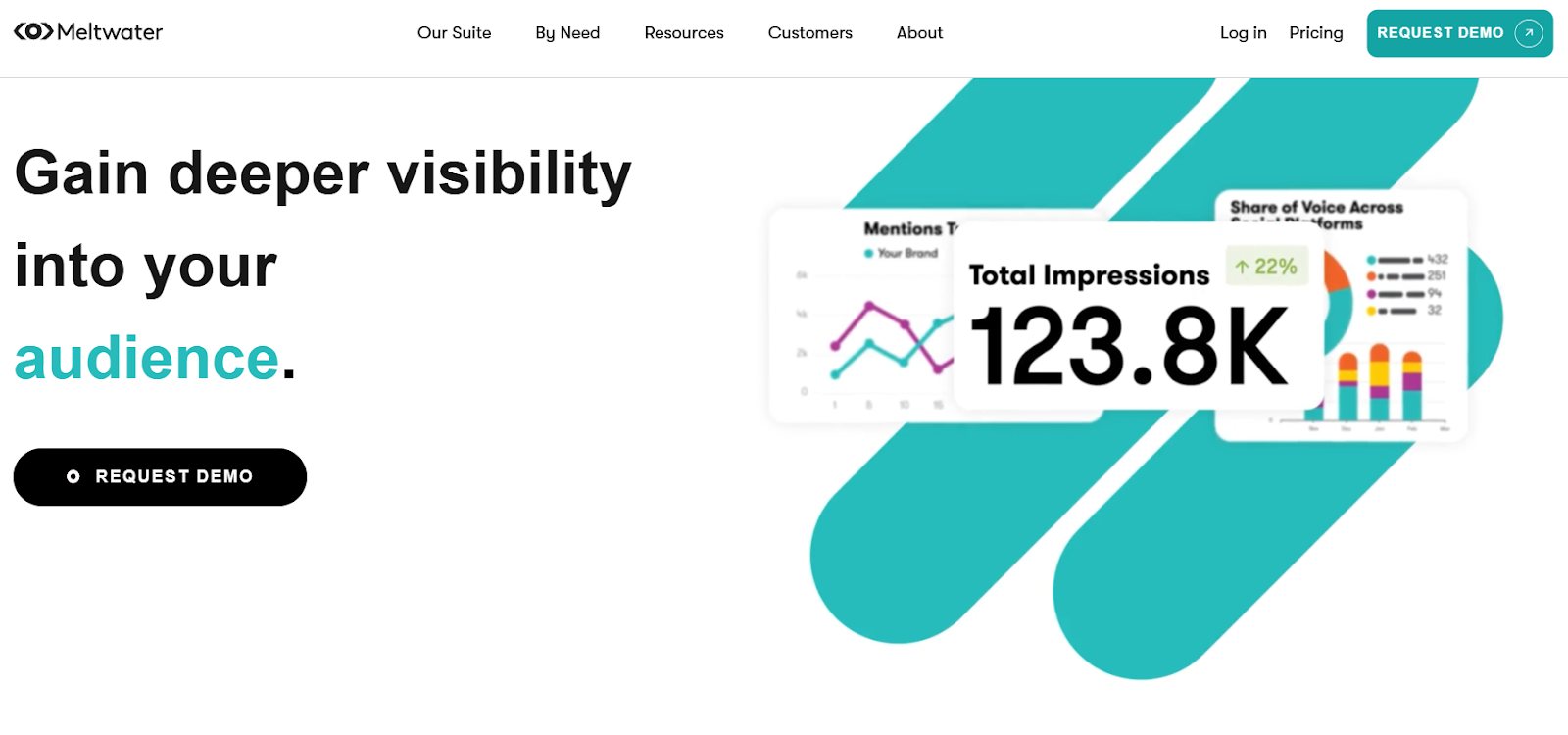
Meltwater is a leading media intelligence and social analytics platform built for enterprise PR, communications, and marketing teams that require deep cross-channel monitoring. While the platform now includes influencer discovery and basic creator workflows, its core value remains in large-scale media listening, sentiment tracking, and earned-media analysis — making it a strong fit for agencies focused on brand reputation, crisis management, and strategic communications.
Pricing
Meltwater offers enterprise annual plans with bundled consulting support:
Tier 1 — $50,000/year: 3 seats, 300 influencers
Tier 2 — $73,000/year: 5 seats, 1,000 influencers
Includes 2 consultants, 1 implementation manager, unlimited calls, and 24/7 chat support
Occasional end-of-quarter promotions drop pricing to $33,100/year (Tier 1) and $45,000/year (Tier 2)
Annual billing only; no monthly plan
Meltwater Best Features
AI-Driven Media & Sentiment Monitoring: Meltwater analyzes mentions across news, social, blogs, podcasts, and broadcast channels, classifying sentiment as positive, neutral, or negative. Agencies managing high-visibility clients rely on real-time alerts to monitor brand reputation and respond quickly to emerging issues.
PR Reporting & Earned Media Dashboards: The platform includes PESO and PR-specific reporting templates that generate executive-ready insights. This is especially useful for PR agencies needing polished, credible reports to justify budgets and demonstrate the impact of earned media coverage.
Social Media Publishing & Engagement: Although Meltwater’s core is media intelligence, it offers social scheduling, collaborative workflows, and unified inbox tools. Agencies benefit from being able to connect social publishing directly with listening insights, aligning content with real-time sentiment and trends.
Consumer & Market Intelligence: Meltwater identifies shifts in consumer interests, emerging conversation themes, and behavioral patterns across social and online channels. Agencies use these insights to shape messaging, optimize campaign timing, and support clients with data-backed strategic recommendations.
Integrations & API/Data Access: The platform integrates with Slack, Microsoft Teams, CRM systems, and enterprise data warehouses, supported by robust API access. This makes it a strong fit for agencies that need to feed media intelligence into BI dashboards, analytics pipelines, or cross-channel reporting environments.
Meltwater Limitations
High cost and opaque pricing often require multiple sales calls to receive a precise quote.
Steeper learning curve compared to influencer-first platforms, especially for smaller agency teams.
Not designed for influencer outreach, gifting, affiliate tracking, or creator payment workflows.
Occasional coverage gaps for niche creators or emerging social platforms.
Annual contracts only, offering limited flexibility for growing or seasonal teams.
Why It’s a Good Alternative to Influencity
Meltwater is a strong alternative to Influencity for agencies that prioritize full-scale media monitoring, sentiment intelligence, PR reporting, and cross-channel insights. While Influencity focuses on influencer discovery, campaign management, and streamlined execution, Meltwater brings value through its broad listening capabilities, enterprise analytics, and reputation-focused toolset.
Both platforms serve different agency needs well — Influencity for day-to-day influencer operations, and Meltwater for teams that need to merge influencer data with larger PR, communications, and brand-health initiatives.
6. InBeat
InBeat is a lightweight influencer discovery tool built for brands and agencies that want fast, affordable creator sourcing specifically on Instagram and TikTok. Instead of offering a full end-to-end workflow, the platform focuses on speed, simplicity, and cost efficiency — making it especially appealing for agencies running micro-influencer activations, rapid-fire campaigns, or early-stage D2C clients that don't need heavy operational infrastructure.
Pricing
InBeat offers flexible, budget-friendly pricing with a free starting tier:
Free Plan — $0: Basic toolkit + limited search
Growth Plan — ~$35/month
Agency Plan — ~$200/month
Business Plan — ~$400/month
Monthly billing available; pricing remains far lower than enterprise influencer tools.
InBeat Best Features
Deep Search & Filtering Engine: Teams can refine creator searches by follower count, engagement, language, hashtags, and location — ideal for niche or hyper-local campaigns. Agencies launching storefronts or running city-specific activations value the ability to source creators quickly and with high accuracy.
Bulk Contact Export: InBeat lets users export creator emails and profile data in bulk, making it easy to run outreach in tools like Instantly, HubSpot, or Lemlist. This is perfect for agencies that already have preferred outreach systems and simply need a reliable way to build highly targeted creator lists.
Lookalike Creator Search: The lookalike feature finds creators who match the style, tone, or demographic targeting of existing top performers. This helps agencies scale campaigns quickly, particularly in visually driven categories such as beauty, lifestyle, fashion, and fitness.
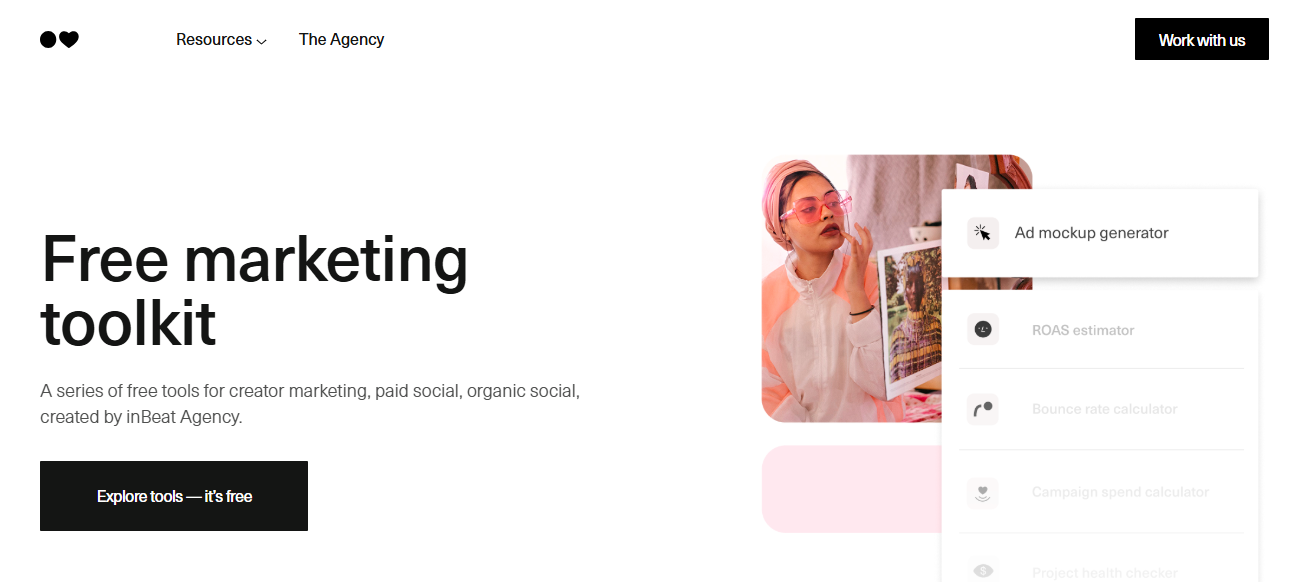
Free Marketing Toolkit: InBeat includes free calculators for ROAS, CPM/CPA, engagement rate, plus TikTok and Snapchat ad mockup generators. Smaller agencies use these tools to build pitches, forecast budgets, and plan creator strategies without needing separate software.
Clean UI & Fast Onboarding: The minimalist design and fast support make InBeat accessible to teams that prefer a simple, straightforward workflow. Agencies can get campaigns live within hours, making it useful for quick-turn or lower-budget projects.
InBeat Limitations
No CRM, workflow management, or creator payment tools.
Limited platform support (Instagram + TikTok only).
Basic analytics without conversion, revenue, or affiliate tracking.
Not suited for enterprise teams, multi-market operations, or large-scale programs.
Occasional data gaps for smaller or emerging creator segments.
Why It’s a Good Alternative to InBeat
InBeat is a strong alternative to Influencity for agencies that prioritize speed, simplicity, and budget efficiency rather than full-stack influencer operations. While Influencity offers modular workflows, CRM tools, tracking, and broader platform coverage, InBeat shines in fast discovery, micro-influencer sourcing, and low-cost list building — making it ideal for agencies handling many small campaigns or early-stage brands.
Both platforms serve different operational needs well: Influencity for structured campaign management, and InBeat for fast, lightweight creator sourcing.
7. Heepsy
Heepsy is a straightforward influencer discovery platform designed for agencies that want reliable creator data without the cost or complexity of enterprise-grade tools. Its main strengths lie in audience authenticity checks, intuitive filtering, and simple list-building — making it a practical choice for teams that prioritize speed, clarity, and efficient creator sourcing over full campaign management features.
Pricing
Heepsy offers flexible monthly, 6-month, and annual plans with seasonal discounts.
Advanced Plan: $369/month standard price.
20% off for 6-month plans ($1,771/6 months).
35% off for yearly plans ($2,878/year).
Heepsy Best Features
Audience Authenticity Metrics: Heepsy flags suspicious follower patterns, engagement inconsistencies, and credibility risks so teams can quickly identify fake or low-quality influencers. Agencies appreciate these checks when vetting creators for clients who care about genuine reach and trustworthy audiences.
Location & Niche Filtering: Users can filter creators by city, country, interests, follower size, and platform to target specific audience segments with precision. This helps agencies quickly narrow down talent pools for campaigns focused on particular geographies or niche categories.
Influencer Reports: Each creator profile includes demographic insights, audience interests, engagement quality analysis, and authenticity markers. Agencies use these reports to compare creators side by side and support client recommendations with clear, data-backed reasoning.
List Building & Organization Tools: Heepsy allows teams to save, categorize, and export influencer lists for easy collaboration. This is especially valuable for agencies juggling multiple clients or campaigns where organization and rapid list iteration matter.
Simple, Fast Onboarding: With an intuitive interface and minimal learning curve, Heepsy helps teams get up and running quickly. Smaller agencies or new team members can start sourcing creators within minutes without deep technical training.
Heepsy Limitations
No outreach, CRM, or automated workflow tools
No campaign tracking or UGC management
Limited functionality beyond search and list building
Smaller database compared to enterprise platforms
Not suited for multi-market, large-scale operations
Why It’s a Good Alternative to Influencity
Heepsy is a strong alternative to Influencity for teams that want a simple, fast, and cost-effective way to identify influencers without needing full campaign infrastructure. While Influencity offers a wider toolset — including CRM workflows, campaign tracking, and broader platform support — Heepsy shines in streamlined discovery, quick vetting, and efficient list-building.
Both platforms appeal to different agency needs: Influencity for structured, end-to-end campaign management, and Heepsy for teams that want a lightweight, data-focused sourcing tool.
8. Social Cat
Social Cat is a platform built specifically for product-exchange collaborations, creator sampling, and micro-influencer partnerships. Instead of positioning itself as a full influencer marketing suite, Social Cat focuses on helping small DTC brands run gifting campaigns at scale — making it especially appealing for teams prioritizing UGC generation, low-cost collaborations, and fast-turnaround creator partnerships.
Pricing
Based on our demo and sales data, Social Cat offers monthly subscription plans with no long-term contracts:
Essentials Plan – $99/month Best for small businesses just starting their influencer marketing journey.
Performance Plan – $199/month Best for growing brands focusing on UGC and outreach scaling.
Pro Plan – $299/month Best for established brands running consistent collaborations.
Social Cat Best Features
Matchmaking Engine: Social Cat automatically matches brands with micro-influencers who proactively apply for product collaborations. This dramatically reduces manual discovery and helps teams quickly build a pipeline of genuinely interested creators.
Product-Based Campaign Workflow: The platform is optimized for gifting and product-in-exchange partnerships, enabling brands to run collaborations without negotiating payment terms. This is ideal for small teams or lean DTC brands that want a steady flow of content without relying on paid deals.
Creator Applications: Each influencer applies directly to the campaign, ensuring strong intent and eliminating the guesswork around whether a creator is actually interested. This improves acceptance rates and simplifies onboarding for small or new brands.
Performance Summaries: Social Cat provides straightforward collaboration summaries covering delivered posts, impressions, and campaign completion. These clean reports help small teams stay organized without needing advanced analytics or external tracking tools.
Low-Lift Workflow: Because creators come to the brand rather than the other way around, the overall workload for discovery and negotiation is significantly minimized. This makes Social Cat a popular choice for marketers with limited time, resources, or internal support.
Social Cat Limitations
Primarily built for gifting — not suitable for paid campaigns or large influencer budgets.
Limited analytics compared to full-scale influencer marketing platforms.
No affiliate link, discount code, or revenue attribution tracking.
Not designed for agencies managing multiple brands or complex workflows.
Why It’s a Good Alternative to Influencity
Social Cat is a strong alternative to Influencity for brands that prioritize micro-influencer gifting, UGC creation, and quick, low-cost collaborations. While Influencity offers broader features like CRM, discovery across multiple platforms, and campaign tracking, Social Cat excels in simplicity and inbound creator interest — making it perfect for smaller teams that want to generate content without the overhead of full campaign infrastructure.
Both platforms serve their audiences well: Influencity for structured, data-driven campaigns, and Social Cat for fast, product-led creator activation.
9. Wednesday.App
Wednesday.app is a lightweight influencer discovery and outreach platform built for agencies and small teams that need an affordable, easy-to-use tool without enterprise complexity. Covering Instagram, TikTok, YouTube, Twitter, and Facebook, it combines AI-powered search, built-in messaging, and CRM capabilities — making it a practical option for agencies managing micro-influencer campaigns or fast, high-volume outreach workflows.
Pricing
Wednesday.app offers flexible, low-cost plans including a strong free tier:
AI-Powered Influencer Discovery: The platform uses AI-driven filters to help teams quickly find creators based on demographics, engagement, platform, or niche. This makes it especially useful for lean agencies that prioritize speed and efficiency over deep enterprise-level datasets.
Integrated Messaging With Gmail/Outlook Sync: Teams can send outreach directly inside the platform, with full inbox syncing available on paid tiers. For agencies handling high-volume outreach, this eliminates the need to switch between multiple email tools.
Campaign Collaboration Tools: Paid plans offer shared workspaces, contract templates, client briefs, and progress tracking to streamline teamwork. These features give smaller agencies a centralized campaign hub without requiring large, complex software.
ChatGPT Outreach Automation: Wednesday.app uses AI to generate personalized outreach messages, follow-ups, and scripts, reducing repetitive copywriting tasks. Agencies benefit from higher response rates and consistent communication across clients.
No-Code Onboarding & Simple UI: The platform is intuitive and requires no technical setup, allowing teams to get fully operational in minutes. This makes it appealing for small agencies, freelancers, or new teams who need fast, low-friction adoption.
Wednesday.App Limitations
Free plan is extremely limited for ongoing or large-volume campaigns.
No Chrome extension for live influencer vetting during browsing.
Not designed for enterprise-level automation, reporting, or multi-market operations.
FTC compliance monitoring must be done manually.
Additional seats cost extra, which can limit collaboration for larger teams on lower plans.
Why It’s a Good Alternative to Influencity
Wednesday.app is a strong alternative to Influencity for agencies that want an affordable, fast, and easy-to-use platform centered on discovery and outreach rather than full campaign infrastructure. While Influencity offers deeper analytics, CRM capabilities, and broader platform coverage, Wednesday.app excels in simplicity, AI-assisted outreach, and low-cost scalability — making it ideal for micro-influencer workflows, startup agencies, and teams focused on rapid sourcing.
Both platforms meet different needs effectively: Influencity for structured operations, and Wednesday.app for fast, lightweight execution.
10. HypeAuditor
HypeAuditor is a data-driven influencer analytics platform widely used by agencies that need deep audience verification, fraud detection, and precise creator vetting before launching campaigns. Its strength lies in delivering rigorous audience insights and market intelligence, making it especially valuable for teams focused on quality control, creator validation, and competitive benchmarking.
Pricing
HypeAuditor offers customizable pricing based on usage and needs.
Standard “Business” Plan: ~$10,000/year for 2,000 reports and includes influencer discovery, campaign tracking, and reporting tools.
Enterprise Plan: ~$60,000/year with unlimited reports and additional support for large-scale influencer marketing campaigns.
HypeAuditor provides annual contracts, and the pricing structure is flexible depending on the brand's needs and the number of reports or active campaigns required.
HypeAuditor Best Features
Audience Quality Score (AQS): HypeAuditor’s signature metric evaluates authenticity, engagement health, and audience composition to identify real vs. suspicious followings. Agencies rely on this score to quickly determine whether a creator is safe and worth pitching before committing budget.
Fraud & Fake Follower Detection: The platform flags bots, comment pods, irregular growth spikes, and artificial engagement behaviors. This protects brands from wasting resources and gives agencies a reliable foundation for high-quality creator recommendations.
Market Intelligence Tools: HypeAuditor tracks vertical trends, industry benchmarks, and creator performance patterns to help agencies understand how their clients compare within competitive landscapes. These insights are particularly helpful when planning expansion into new niches or emerging markets.
Influencer Comparison: Side-by-side creator comparison allows agencies to evaluate KPIs, audience relevance, engagement quality, and estimated costs with precision. This makes it easier to justify choices to clients using clear, empirical data rather than subjective preference.
Global Database: With coverage across Instagram, TikTok, YouTube, Twitch, X, and more, HypeAuditor provides access to creators worldwide. This makes it a strong choice for agencies managing international campaigns or sourcing creators in multiple regions.
HypeAuditor Limitations
Discovery features are less intuitive than the analytics suite, making sourcing slower for some users.
No built-in outreach, gifting, payments, or CRM workflows.
Campaign tracking is basic compared to full end-to-end platforms.
Costs can escalate quickly for teams needing high report volume or constant analysis.
Why It’s a Good Alternative to Influencity
HypeAuditor is an excellent alternative to Influencity for agencies that emphasize audience authenticity, fraud detection, and competitive market intelligence rather than full campaign execution. While Influencity offers a broader operational toolset — including CRM, tracking, and workflow management — HypeAuditor excels in creator vetting and analytical depth, helping teams choose the right influencers with confidence.
Both platforms serve complementary purposes: Influencity for executing influencer campaigns end-to-end, and HypeAuditor for identifying trustworthy creators and validating audience quality before campaigns begin.
Final Thoughts on Influencity Alternatives
Choosing the right Influencity alternative ultimately depends on how your team works, the scale of your campaigns, and how much automation or reporting depth you need. While Influencity provides a flexible modular structure with solid discovery, CRM tools, and audience insights, many teams still look for solutions that offer stronger outreach automation, faster onboarding, deeper analytics, or broader eCommerce integrations.
Platforms like Influencer Hero, Social Cat, InBeat, and Wednesday.app each excel in different areas — from AI-powered discovery and fraud detection to gifting workflows, micro-influencer sourcing, or enterprise governance. The key is understanding whether your team needs lightweight sourcing, full-funnel campaign execution, or enterprise-level measurement.
If you’re uncertain which alternative best fits your goals, NC Media can help evaluate your workflow, recommend the right tool stack, and design an influencer strategy tailored to your needs. For guidance or platform selection support, you can book a call with NC Media to get expert recommendations based on your brand or agency’s objectives.
FAQ
What should I look for when choosing an Influencity alternative?
Focus on the gaps that matter most to your team — whether that’s more automation, deeper analytics, native outreach, stronger eCommerce integrations, or faster onboarding. Different alternatives specialize in different parts of the workflow.
Which Influencity alternatives are best for micro-influencer or UGC-heavy campaigns?
Tools like InBeat, Social Cat, and Wednesday.app are strong choices for teams running fast, lightweight gifting or UGC campaigns. They’re easier to adopt and more affordable than mid-market or enterprise tools.
Which alternatives offer deeper analytics or fraud detection?
HypeAuditor, CreatorIQ, and Captiv8 stand out for analytics depth, audience authenticity tools, sentiment analysis, and competitive intelligence. These platforms are ideal for data-heavy teams and strategic agencies.
Are there more budget-friendly Influencity alternatives for small teams?
Yes — platforms like Heepsy, InBeat, and Wednesday.app offer low-cost monthly plans with simple discovery and list-building features, making them accessible for smaller brands or startup agencies.
What’s the most common reason teams explore alternatives to Influencity?
Many teams want more robust outreach automation, stronger multi-platform integrations, or a more unified end-to-end workflow. Others look for simpler tools for micro-influencer sourcing or more advanced analytics for enterprise reporting.
Articles & News
Stay ahead with insights, trends, and expert perspectives in design, technology, and business innovation.













.png)