Table Of Content
h1,h2
Compare the best influencer marketing software for Amazon sellers. Explore tools with Amazon Attribution tracking, affiliate management, creator discovery, gifting workflows, and ROI reporting. Includes Influencer Hero, GRIN, Levanta, Impact.com, and more for DTC and eCommerce brands.



Table Of Content
Amazon remains the primary revenue channel for many eCommerce brands, accounting for roughly 37.6% of all U.S. online retail sales, far ahead of any other marketplace. . Even when brands operate a strong DTC store, it often drives the majority of sales volume, and demands the most performance accountability. When we work with brands on Amazon, influencer marketing is rarely just about awareness. It’s about measurable revenue impact.
The most common needs we see are influencer discovery within specific product categories, structured product gifting, affiliate tracking through Amazon Attribution or storefront links, discount code management, and reliable revenue attribution.
This article breaks down the best influencer marketing software for Amazon, specifically for brands actively selling on Amazon and looking to track, optimize, and scale influencer-driven sales, not just run one-off collaborations.

Influencer Hero is an all-in-one influencer marketing platform built for eCommerce and DTC brands. It combines discovery, outreach, CRM, gifting, affiliate tracking, and reporting in one system.
For brands evaluating the best influencer marketing software for Amazon, it stands out for its ability to connect influencer activity directly with Amazon Attribution data and keep performance reporting centralized.
For Amazon brands, Influencer Hero can become the central operating system for influencer campaigns. Teams use it to discover creators, manage outreach and gifting, and generate trackable Amazon Attribution links directly within the platform. Clicks and attributed purchases sync back into reporting, allowing brands to tie Amazon revenue to specific influencers and campaigns without relying on manual reconciliation.
To get full value, the Amazon Attribution setup needs to be implemented properly so revenue data flows cleanly into reporting. It’s best suited for brands serious about building a structured influencer channel rather than running occasional gifting campaigns. Teams may also benefit from initial onboarding support to align workflows, commission structures, and reporting expectations.
For Amazon-focused brands that care about revenue attribution, structured outreach, and scaling influencer as a performance channel, Influencer Hero tends to be one of the more complete options available. When Amazon is a primary sales driver, having CRM and attribution tied together materially improves decision-making.

Aspire is an influencer marketing platform focused on creator discovery, relationship management, and campaign execution. It is typically used by mid-market and enterprise DTC brands running structured creator programs. For Shopify brands, it often acts as the operational hub for managing influencer relationships and campaigns.
For brands running on Shopify, this platform typically supports creator discovery, outreach management, and campaign coordination. When we’ve implemented this for Shopify brands, teams use it to manage influencer communication, organize product gifting, and track campaign deliverables. Affiliate links and discount codes can be assigned to creators to monitor sales generated through campaigns.
Aspire’s pricing generally aligns with mid-market and enterprise budgets, which can be challenging for early-stage Shopify brands. The platform is fairly comprehensive, and in client setups we’ve seen it require onboarding time before workflows and reporting are fully operational. Attribution clarity also depends on consistent use of tracking links and discount codes.
From our experience, Aspire works well for Shopify brands building structured creator relationships and ongoing campaigns. It fits best when influencer marketing is treated as a relationship-driven channel rather than purely performance-driven.
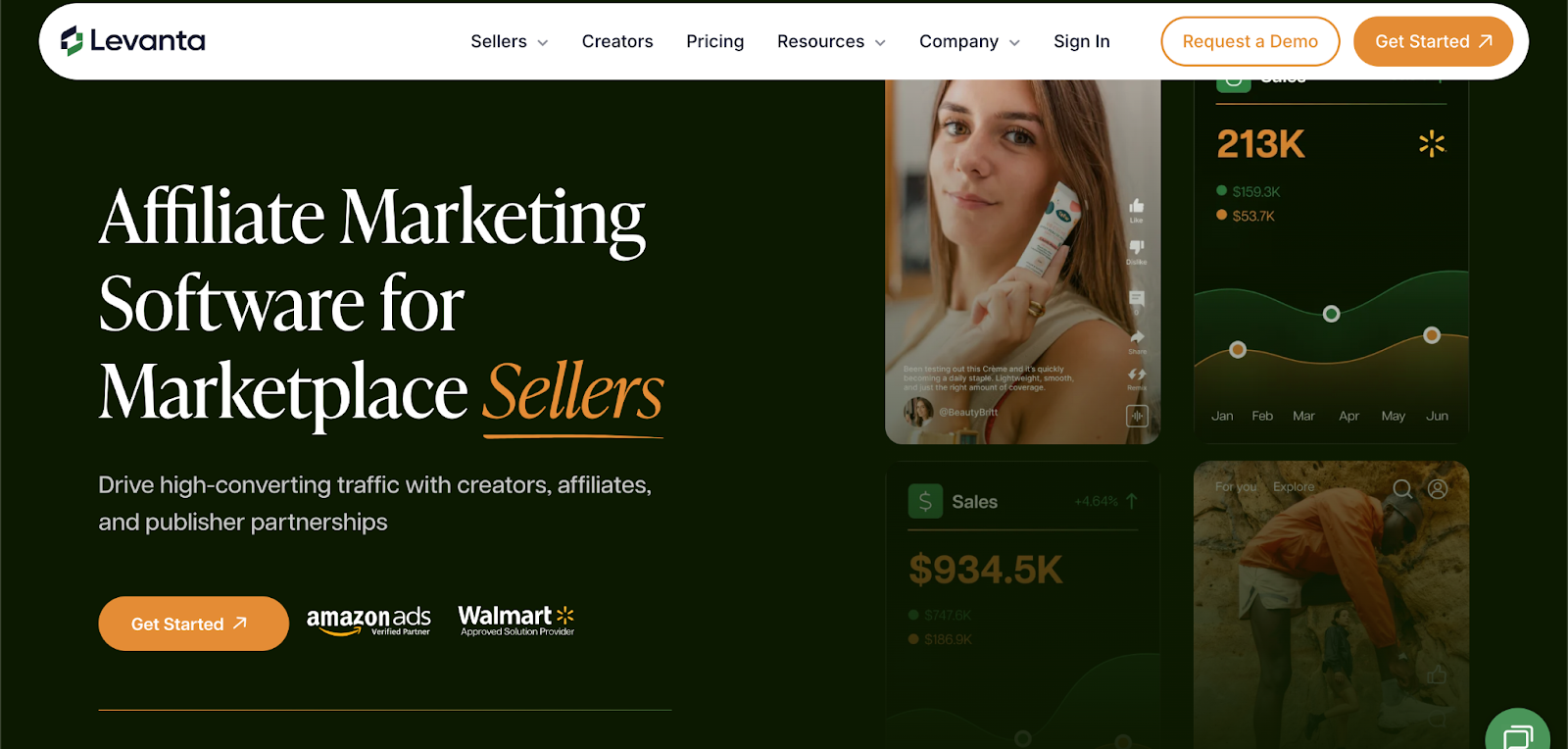
Levanta is an influencer and affiliate marketing platform designed around performance-driven creator programs. It focuses on connecting brands with creators who can drive trackable product sales. The platform is commonly used by commerce-focused brands and sellers running structured creator partnerships.
For brands running on Shopify, this platform typically functions as a creator marketplace combined with affiliate tracking. In client setups, teams use it to discover creators, distribute product offers, manage gifting, and generate trackable campaign links. This allows brands to monitor which creators are driving traffic and purchases.
Because Levanta is built around performance campaigns, it may be less suited for brands focused mainly on brand awareness or content collaborations. In practice, results depend heavily on commission structures and the competitiveness of creator offers.
Levanta can work well for Shopify brands that want influencer marketing tied closely to measurable sales. It tends to fit best when campaigns are structured around affiliate-style partnerships and clear performance incentives.
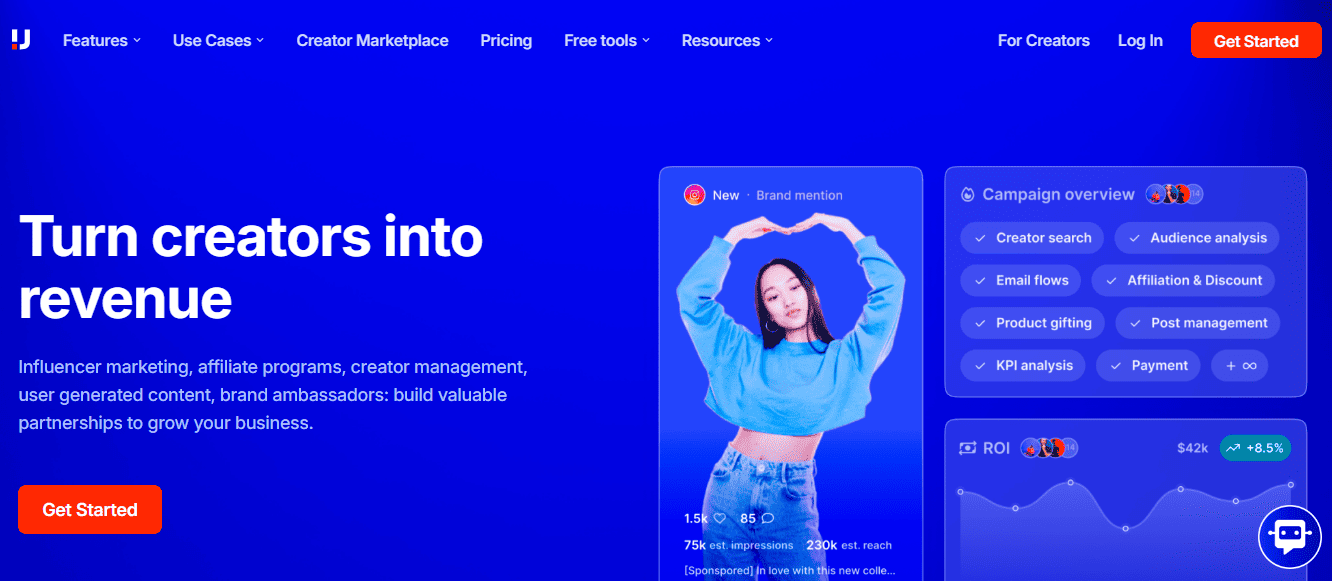
Upfluence is an influencer marketing platform that combines creator discovery, campaign management, and affiliate tracking with built-in eCommerce integrations. It’s positioned as a data-driven solution for brands that want influencer, affiliate, and customer ambassador programs managed in one system.
It typically serves mid-market and growing DTC brands, including those selling heavily on Amazon alongside Shopify or other storefronts.
For brands running on Amazon, this platform typically supports influencer discovery and outreach while layering in affiliate-style tracking and discount code management. Teams use it to identify creators, coordinate gifting campaigns, and monitor performance through tracked links and revenue reporting.
While Amazon attribution still requires structured setup on the brand side, Upfluence can function as the operational hub for managing creator relationships and performance visibility across campaigns.
Upfluence is generally better suited for brands with dedicated marketing teams, as the platform can feel robust and requires structured onboarding to unlock its full value. Pricing typically aligns with mid-market budgets, which may not fit early-stage sellers.
Attribution for Amazon campaigns can require careful internal alignment to ensure reporting clarity, and some users note a learning curve when managing larger creator databases.
We view Upfluence as a solid option for Amazon brands that are blending influencer and affiliate strategies into one structured program. It’s particularly useful when internal teams are ready to manage outreach at scale. For brands focused heavily on granular Amazon revenue attribution, additional reporting discipline may be needed to keep performance visibility clean.

GRIN is an influencer marketing platform built primarily for eCommerce brands that want to manage creator relationships in-house. It positions itself as a creator management and CRM system rather than a marketplace.
The platform typically serves mid-market and enterprise DTC brands, including those selling on Amazon who need structured workflows and internal control over influencer programs.
For brands running on Amazon, this platform typically acts as the central CRM for influencer discovery, outreach, and campaign execution.
Teams use it to manage gifting, contracts, content tracking, and affiliate links, while layering Amazon Attribution tracking into campaigns for revenue visibility. Reporting is strong on the campaign management side, though Amazon-specific performance clarity depends on how disciplined the tracking setup is internally.
GRIN is generally positioned at a higher price point, which may not suit early-stage Amazon sellers.
The platform is robust, and some teams report a learning curve during onboarding, especially when structuring campaigns and reporting properly. It works best when brands have internal resources dedicated to influencer management rather than expecting a plug-and-play solution.
GRIN can be a strong option for Amazon brands that want full control over their influencer operations and have the team to manage it internally. It’s particularly useful for structured, long-term creator programs.
For brands focused heavily on granular Amazon revenue attribution, additional internal reporting discipline is often required to maintain clarity.
%2010.00.49%E2%80%AFa.%C2%A0m..png)
Refersion is primarily an affiliate marketing platform that many eCommerce brands use to manage referral and ambassador programs. It positions itself around performance tracking, commission management, and partner payouts rather than full influencer campaign management.
It typically serves Shopify and DTC brands, but can also support Amazon sellers who structure influencer marketing as an affiliate-driven channel.
For brands running on Amazon, this platform typically functions as the affiliate tracking and commission layer of the influencer program. Teams use it to manage creator sign-ups, generate trackable links, assign commission structures, and monitor performance tied to Amazon Attribution links.
It does not focus heavily on influencer discovery or gifting workflows, so brands often use it alongside other systems for campaign execution while relying on Refersion for payout and revenue visibility.
Refersion is not a full influencer CRM, so brands looking for discovery, outreach, and gifting management will need additional tools. Attribution clarity depends on how well Amazon Attribution links are structured internally.
Some users note that while the tracking and payout features are strong, reporting can feel more affiliate-centric than campaign-centric, which may not suit brands focused on broader content performance.
Refersion can be a strong option for Amazon brands treating influencer marketing primarily as an affiliate channel. It’s particularly effective when commission tracking and payout automation are the priority.
For brands looking to manage the entire influencer lifecycle in one place, additional systems or structured workflows are typically required.

Impact.com is a partnership automation platform that supports affiliate, influencer, and other performance-based partnerships. It’s positioned more as an enterprise-grade partnership infrastructure than a pure influencer marketplace.
The platform typically serves larger DTC brands, marketplaces, and multi-channel sellers - including Amazon brands that treat influencer marketing as part of a broader affiliate strategy.
For brands running on Amazon, this platform typically operates as the tracking and payout backbone of a performance-driven influencer program. Teams use it to manage creator contracts, generate tracked links, assign commission structures, and monitor revenue tied to Amazon Attribution.
Discovery and gifting may happen inside the platform or externally, but Impact often becomes the central reporting and commission engine when influencer efforts are tied closely to measurable Amazon sales.
Impact is generally positioned at a higher pricing tier and can feel complex for smaller Amazon-first brands. Implementation often requires internal resources to configure contracts, tracking rules, and reporting dashboards properly.
While attribution is strong on the affiliate side, influencer discovery and gifting workflows are not its core strength, meaning some teams supplement it with additional tools.
Impact.com can be a strong option for Amazon brands that view influencer marketing as part of a broader partnership ecosystem. It’s particularly effective when commission automation and scalable reporting are priorities. For brands focused primarily on creator discovery and campaign management, additional structure or complementary systems may be needed.

CreatorIQ is an enterprise influencer marketing platform focused on large-scale creator programs, data governance, and advanced reporting. It positions itself as a data infrastructure layer for global brands managing high volumes of creators across multiple markets.
While not Amazon-specific, it can support Amazon sellers that need structured reporting and centralized oversight across complex influencer initiatives.
For brands running on Amazon, this platform typically acts as the strategic management and reporting layer rather than a simple campaign tool.
Teams use it for influencer discovery, campaign planning, content approvals, and performance tracking, while integrating Amazon Attribution data into broader reporting dashboards. It supports gifting coordination and affiliate-style tracking, but the core strength lies in visibility and governance at scale rather than lightweight campaign execution.
CreatorIQ is generally positioned for larger organizations with significant budgets and internal marketing infrastructure.
The platform can be resource-intensive to implement, and smaller Amazon-focused brands may find it more robust than necessary. While reporting capabilities are strong, Amazon-specific attribution clarity depends on disciplined internal tracking setup and alignment between teams.
CreatorIQ can be a good option for large Amazon brands operating at enterprise scale, particularly when governance and reporting depth are priorities. It’s well suited for complex, multi-market programs. For leaner Amazon sellers focused primarily on performance-driven influencer growth, it may require more internal resources than needed.

Modash is an influencer discovery and analytics platform focused heavily on data transparency and creator search depth. It positions itself as a database-driven tool that gives brands direct access to creator contact information and audience insights.
It typically serves DTC and eCommerce brands, including Amazon sellers, that want strong discovery capabilities without committing to a full influencer CRM suite.
For brands running on Amazon, this platform typically serves as the discovery and vetting engine within the influencer workflow. Teams use it to identify relevant creators by niche, audience demographics, and engagement metrics, then manage outreach and gifting externally or through other systems.
Affiliate tracking and Amazon Attribution reporting are layered in separately, with Modash primarily supporting front-end sourcing and performance evaluation rather than end-to-end campaign management.
Modash is strongest in discovery and analytics, but it does not function as a full campaign CRM. Brands will need additional tools for gifting logistics, affiliate management, and commission payouts.
Some teams appreciate the clean interface and data access, while others note that scaling workflows requires internal organization since campaign management is not deeply built in.
Modash can be a strong option for Amazon brands that want robust influencer discovery without committing to a comprehensive campaign platform. It works well when internal teams are comfortable managing outreach and tracking separately. For brands seeking centralized revenue attribution tied directly to Amazon sales, additional systems are typically required.

Captiv8 is an enterprise influencer marketing platform focused on large-scale campaign management, paid amplification, and advanced analytics.
It positions itself as a data-heavy solution for brands managing complex, multi-channel influencer programs. It typically serves enterprise and upper mid-market brands, including those selling on Amazon as part of a broader omnichannel strategy.
For brands running on Amazon, this platform typically supports high-level campaign planning, influencer discovery, and performance reporting across channels. Teams use it to manage creator contracts, track deliverables, coordinate gifting, and analyze campaign impact.
Amazon Attribution can be incorporated into reporting, but Captiv8 generally functions as the strategic campaign oversight layer rather than a lightweight affiliate tracking system.
Captiv8 is positioned at an enterprise pricing level and may be out of scope for smaller Amazon-first sellers. The platform is robust and can require onboarding time to fully configure workflows and reporting dashboards.
While analytics capabilities are strong, Amazon-specific revenue attribution still depends on disciplined internal tracking setup and coordination between marketing and marketplace teams.
Captiv8 can be a strong option for larger Amazon brands operating at scale and needing advanced reporting infrastructure. It’s particularly useful when influencer campaigns are integrated into broader media strategies.
For brands primarily focused on performance-driven Amazon affiliate programs, it may offer more infrastructure than necessary.
Choosing the best influencer marketing software for Amazon comes down to how performance-focused your program is. Brands that prioritize revenue attribution and structured affiliate tracking will need strong Amazon Attribution visibility, while others may value discovery depth, CRM workflows, or enterprise reporting. In our experience, Amazon brands succeed when influencer efforts are tightly aligned with measurable sales outcomes, not just engagement metrics.
If you’re evaluating platforms and want clarity on what setup fits your growth stage, strategic guidance can make the difference. At NC Media, we help Amazon and DTC brands build influencer programs designed around measurable revenue. You can book a demo with NC Media to review your current approach and explore how to scale influencer marketing more effectively.
FAQ

The best influencer marketing software for Amazon sellers depends on your goals. If you prioritize revenue attribution and affiliate-style tracking, platforms like Influencer Hero, Levanta, and Impact.com are strong options. For brands focused more on discovery and campaign management, tools like GRIN or Aspire may also fit.
Yes, influencer sales can be tracked on Amazon using Amazon Attribution links. Platforms like Influencer Hero and Levanta help centralize that tracking so brands can attribute clicks and purchases to specific creators instead of relying on surface-level engagement data.
Not always. Some platforms, such as Influencer Hero, combine influencer discovery, outreach, gifting, and Amazon attribution tracking in one system. Others, like Refersion or Impact.com, focus more on affiliate tracking and may require additional tools for discovery and campaign management.
It can be highly effective when structured around performance metrics. Amazon brands that use trackable links, clear commission structures, and structured outreach workflows often see measurable revenue impact — especially when using software built for attribution visibility.
Amazon brands should prioritize accurate revenue attribution, structured campaign workflows, affiliate tracking, and reporting visibility at the creator level. Platforms like Influencer Hero, GRIN, or Impact.com vary in strengths, so the right choice depends on whether your focus is performance scaling, relationship management, or enterprise reporting.









.png)