Table Of Content
h1, h2
Statusphere Preise 2026 ab $3,500/Monat – Pläne, Reviews & Alternativen vergleichen


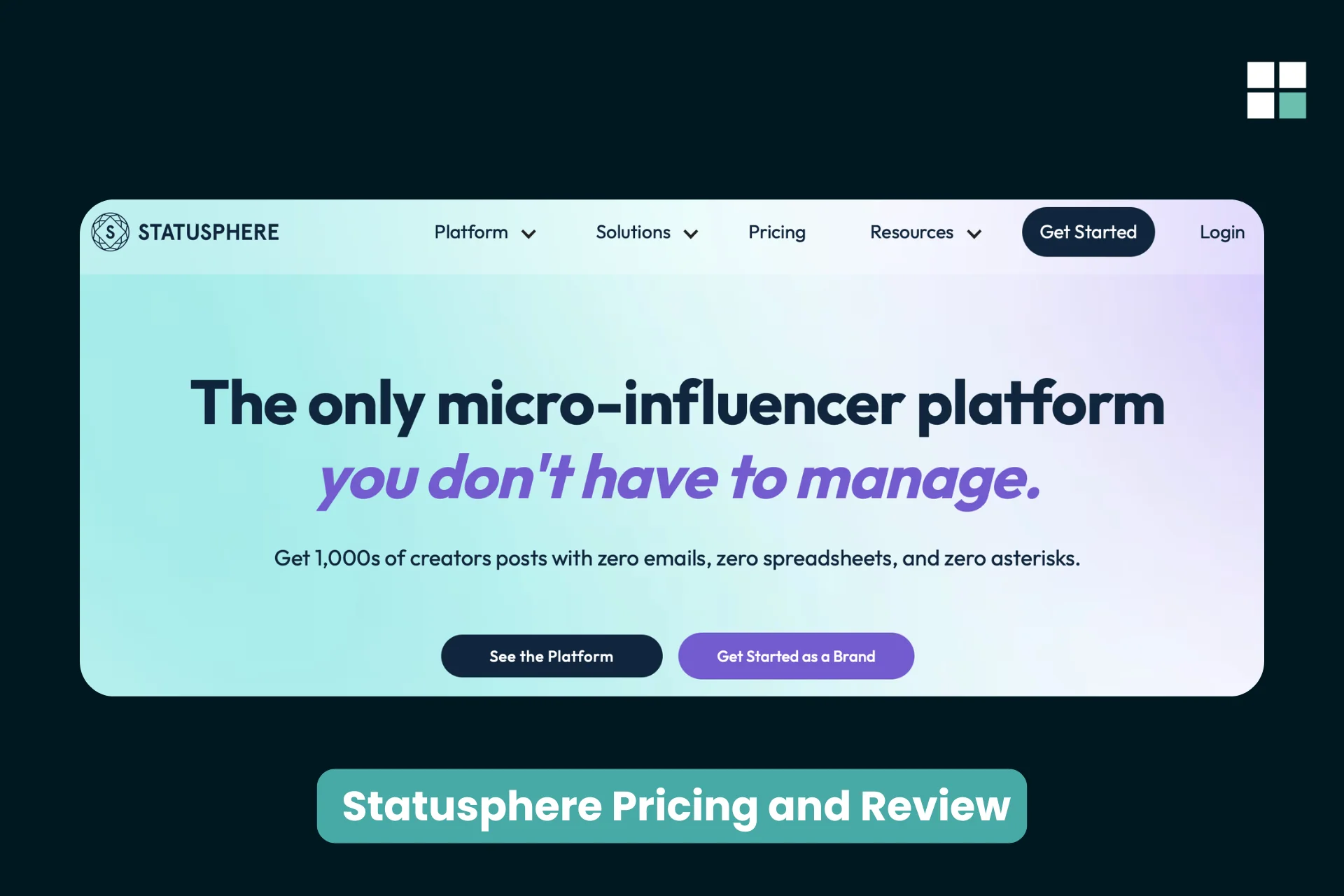
Table Of Content
Statusphere-Preise beginnen bei $3.500/Monat und sind vollständig individualisiert – es gibt keine veröffentlichten Pläne, keine öffentliche Plan-Übersicht und keine kostenlose Testversion. Sie buchen eine Demo, teilen Ihre Anforderungen und erhalten ein individuelles Angebot basierend auf Ihrem Volumen.
Das positioniert Statusphere am oberen Ende des Influencer-Software-Markts, besonders für ein Tool, das sich auf Micro-Influencer-Seeding und UGC konzentriert. Für Marken mit ausreichend Budget, aber ohne internes Team zur Durchführung ist die Software-Investition nur ein Teil der Rechnung.
Nachfolgend finden Sie eine vollständige Übersicht der Statusphere-Kosten, was das Tool wirklich tut, und eine Option, die die meisten recherchierenden Marken übersehen: Eine Full-Service-Agentur das ganze Projekt übernehmen zu lassen.
Statusphere veröffentlicht keine gestaffelten Pläne wie die meisten SaaS-Plattformen. Die Preisgestaltung erfolgt auf Angebotsbasis und beginnt bei $3.500/Monat, skaliert je nach Kampagnen-Volumen, Anzahl der Creator-Posts und aktivierten Kanälen.
Es gibt kein Self-Service-Signup und keine kostenlose Testversion. Alles läuft über eine Demo und ein individuelles Angebot – die einzige Möglichkeit, eine exakte Zahl zu erhalten, besteht darin, mit dem Sales-Team zu sprechen.
| Plan | Monatliche Abrechnung | Jährliche Abrechnung |
|---|---|---|
| Individuell (Angebotsbasis) | Ab $3.500/Monat | Jährlich verhandelbar |
• Beginnt bei $3.500/Monat, skaliert mit Post-Volumen und Kanälen
• Umfasst TikTok, Instagram (Stories, Feed, Reels), YouTube Shorts, Bewertungen, Social SEO und Product Seeding
• Garantierte Creator-Posts und rechtlich freie UGC inbegriffen
Die Preisgestaltung hängt davon ab, wie viele garantierte Posts Sie möchten und welche Aktivierungen Sie durchführen. Statusphere ist für Konsummarken konzipiert, die einen stets aktiven Content-Engine betreiben möchten, daher geht das Modell von konstanter Auslastung statt einzelner Kampagnen aus. Der Nachteil: es gibt keine Einstiegslösung, was kleinere Marken ausschließt und günstiges Testen erschwert.
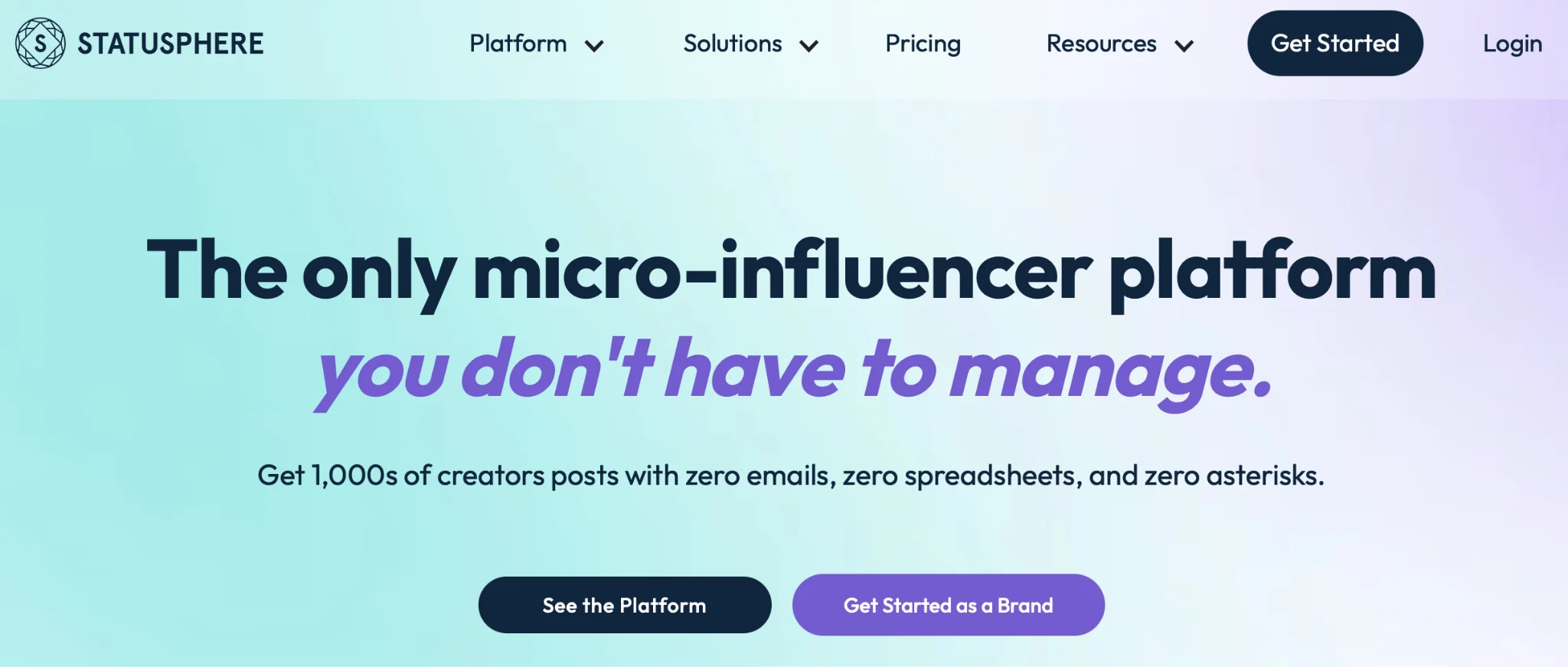
Statusphere ist eine Micro-Influencer-Marketing-Plattform für Konsummarken, die garantierte, rechtlich freie UGC in großem Maßstab möchten. Sie automatisiert die operative Arbeit von Creator-Kampagnen – Creator-Sourcing, Product Seeding, Fulfillment, Content-Rechte und Reporting – mit AI zur Zuordnung von Creatorn zu Marken und automatisierter Logistik. Das Unternehmen hat bisher $27 Millionen eingesammelt und zielt auf Enterprise- und Mid-Market-Konsummarken ab.
Das Kernversprechen ist Volumen ohne manuelle Arbeit: tausende authentische Posts zur Befüllung von organischen Social-Kanälen, Paid Ads und Social SEO, ohne dass Ihr Team Tabellen und DMs verwalten muss.
Statusphere hat positive Resonanz über alle Review-Seiten hinweg, mit Capterra-Tests, die günstige Bewertungen aus einer relativ kleinen Review-Basis von etwa einem Dutzend Nutzern zeigen. Nutzer loben konsistent, wie viel Zeit das spart und wie es Content in Großmengen generiert – einige beschreiben es als Extension des Teams, die Evergreen-Kampagnen fast mühelos macht.
Die häufigste Kritik ist Kontrolle. Ein Capterra-Reviewer wünschte sich, Influencer vor dem Opt-in bewerten oder auswählen zu können und merkte an, dass man bei Nano-Creator-Seeding im großen Maßstab nie genau weiß, was man bekommt. Andere haben tiefere KPIs wie Engagement-Raten und Video-Completion-Daten angefordert, und manche nennen Credit-Limitierungen bei niedrigeren Volumen.
In Foren und Bewertungsplattformen zeigt sich ein wiederkehrendes Muster: Das Budget kann ein Hindernis darstellen – Statusphere ist eine starke Lösung für finanzierte Consumer Brands, weniger geeignet für kleinere Teams in der Testphase.
Das ist der Unterschied, den die meisten Brands beim Vergleich von Software übersehen. Statusphere bietet dir die Infrastruktur und Automatisierung, um ein Seeding-Programm intern zu betreiben – du behältst Strategie, Briefings, Creator-Steuerung und Ergebnisse selbst. NC Media führt das gesamte Influencer-Programm für dich durch und ist verantwortlich für die ROAS und CAC, die es erzielt.
| Statusphere | NC Media | |
|---|---|---|
| Modell | SaaS-Tool – du verwaltest das Programm | Full-Service Agentur – wir übernehmen alles |
| Preisgestaltung | Ab $3,500/Monat (nur Software) | Je nach Anforderungen und Zielen deiner Brand |
| Leistungsumfang | Sourcing, Seeding, Fulfillment, UGC, Reporting-Tools | Strategie, Creator-Auswahl, Outreach, Execution, UGC, Reporting |
| Creator-Kontrolle | Begrenzt – Creators melden sich an, weniger Handauswahl | Vollständig – Creators werden nach deinem Briefing ausgewählt und gesteuert |
| Erforderlicher interner Aufwand | Moderat – Strategie, Briefings, Genehmigungen, Analyse | Minimal – NC Media übernimmt den operativen Betrieb vollständig |
| Verantwortung | Content-Volumen garantiert | Ergebnisse gesichert – ROAS und CAC Ziele |
Wann die Software gewinnt. Wenn du ein engagiertes internes Team für Influencer Marketing oder Content mit der Kapazität für Strategie, Briefings und die Umwandlung von UGC in performante Anzeigen hast, ist Statusphere eine starke Wahl. Die Automatisierung nimmt dir wirklich die Seeding- und Fulfillment-Arbeit ab, und für ein Content-hungriges Team mit immer laufenden Kampagnen ist das echter Mehrwert.
Wann NC Media gewinnt. Brands ohne dedizierte Influencer-Marketing-Position – oder die Software ausprobiert haben und die strategische und analytische Arbeit unterschätzt haben – profitieren mehr von einem Full-Service-Modell. NC Media bringt 8 Jahre Erfahrung mit, hat durchschnittlich ROAS-Steigerungen von 8X+ erzielt und CAC-Reduktionen von -52% durchgesetzt, 120.000+ UGC-Assets produziert und 50.000+ Influencer-Partnerschaften für Brands wie Lululemon, Decathlon, Nespresso und Under Armour durchgeführt.
Die versteckten Kosten von Software. Der Sticker-Preis von $3,500+/Monat ist nicht die Gesamtkosten. Jemand in deinem Team muss noch immer die Strategie setzen, die Briefings schreiben, die Brand-Ausrichtung verwalten, Inhalte genehmigen und dieses UGC in Ergebnisse umwandeln. Wenn du ein Gehalt für diese Stunden hinzurechnest, schrumpft die Lücke zwischen einem Software-Abonnement und einer verwalteten Agentur oft schneller als Brands erwarten.
Für finanzierte Consumer Brands, die einen stetigen, vorhersehbaren Strom von rechts-klaren UGC-Inhalten benötigen und jemanden intern zur Steuerung haben, lohnt sich Statusphere. Die Seeding-Automatisierung und garantierten Posts lösen ein echtes Problem, und die Zeitersparnisse sind konsistent das, wofür Nutzer das Tool am meisten loben.
Wo es schwach wird, sind Kontrolle und Verantwortung. Du bekommst Volumen, aber weniger Möglichkeit, Creators vor der Anmeldung auszuwählen, leichtere Analytics als Performance-Teams wünschen, und ein Preisminimum, das kleinere Brands ausschließt. Und wie jedes Tool produziert es Inhalte – es trägt nicht die Verantwortung, ob dieser Inhalt deine CAC senkt.
Wenn Statuspheres Preisminimum oder die unpersönliche Creator-Auswahl nicht zu dir passt, decken diese Tools ähnliche Anforderungen ab – UGC in großem Maßstab, Seeding und Creator Management – mit unterschiedlichen Kompromissen.
• All-in-One-Influencer-Plattform für D2C Brands und Agenturen, die Discovery, Outreach und UGC an einem Ort durchführen
• Tarife: Standard $649/Mo, Pro $1,049/Mo, Business $2,490/Mo
• Mehr des kompletten Workflows in einem Plan gebündelt, mit einem niedrigeren Einstiegspunkt als Statusphere
Influencer Hero umfasst Discovery, KI-personalisierte Outreach, CRM, UGC und Content-Erfassung, Affiliate und Influencer-Zahlungen in einer einzigen Plattform – ohne eine Mindestgebühr von $3.500 nur zum Einstieg. Während Statusphere Seeding automatisiert, aber die manuelle Auswahl begrenzt, ermöglicht dir Influencer Hero, Creator direkt zu suchen, zu filtern und auszuwählen, um dann die gesamte Beziehung von der Outreach bis zur Zahlung zu verwalten. Für Marken, die mehr Kontrolle über ihre Partner und einen niedrigeren Einstiegspreis möchten, ist es die stärkste All-in-One-Lösung.
• UGC- und Creator-Ads-Plattform, speziell für Shopify und Performance Brands entwickelt
• Self-Service ab ~$500/Monat; Managed Service ab ~$1.800/Monat (Creator-Zahlungen und Marketplace-Gebühren fallen separat an)
• Ideal, wenn dein Fokus auf UGC für bezahlte Anzeigen liegt, nicht auf garantiertem organischen Post-Volumen
Insense ist die bessere Wahl für Marken, die UGC in Spark Ads und Meta Partnership Ads umwandeln möchten, mit einem Shopify-nativen Seeding-Workflow. Es ist günstiger im Einstieg als Statusphere, allerdings fallen Creator-Zahlungen zusätzlich zur Abonnement an, also kalkuliere das Gesamtbudget ein.
• Enterprise-Plattform für Gifting, Seeding, Ambassador-Programme und Creator-Discovery
• Individualisierte Preisgestaltung (typischerweise Mid-Market bis Enterprise)
• Glaubwürdige Alternative, wenn du mehr Kampagnentypen über Micro-Seeding hinaus brauchst
Aspire deckt mehr ab als Statusphere – Ambassador-Programme, Affiliate und größere Creator-Partnerschaften neben Seeding. Es passt zu Marken, die eine Plattform für Micro-Seeding und größere Creator-Kooperationen möchten, obwohl die Preisgestaltung in einem ähnlich hohen Bereich liegt.
Und wenn die Verwaltung dieser Tools selbst für dich zu viel wird, genau dafür ist eine Full-Service-Agentur da – mehr dazu unten.
Statusphere ist eine leistungsstarke Plattform: Sie automatisiert die schwierigen Teile des Micro-Influencer-Seeding, garantiert Content-Volumen und liefert rechte-freie UGC für Marken mit dem Budget und dem internen Team, um es zu steuern. Der Haken: die Mindestgebühr von $3.500+/Monat, die begrenzte Creator-Auswahl und die Tatsache, dass die Software dir Content gibt, nicht aber Rechenschaftspflicht für Ergebnisse.
Für Marken, die Influencer Marketing als messbaren Wachstumskanal – mit dokumentiertem ROAS und CAC-Ergebnissen – funktionieren lassen möchten, ohne eine interne Abteilung aufzubauen, ist eine Full-Service-Agentur die bessere Wahl. NC Media übernimmt Strategie, Creator-Auswahl, Umsetzung, UGC und Reporting von Anfang bis Ende und ist verantwortlich für die Zahlen, die sie produziert.
Wenn du Statusphere evaluierst und überlegst, ob eine Full-Service-Agentur besser passt, bietet NC Media eine kostenlose Beratung ohne Verpflichtung.
FAQ





.png)